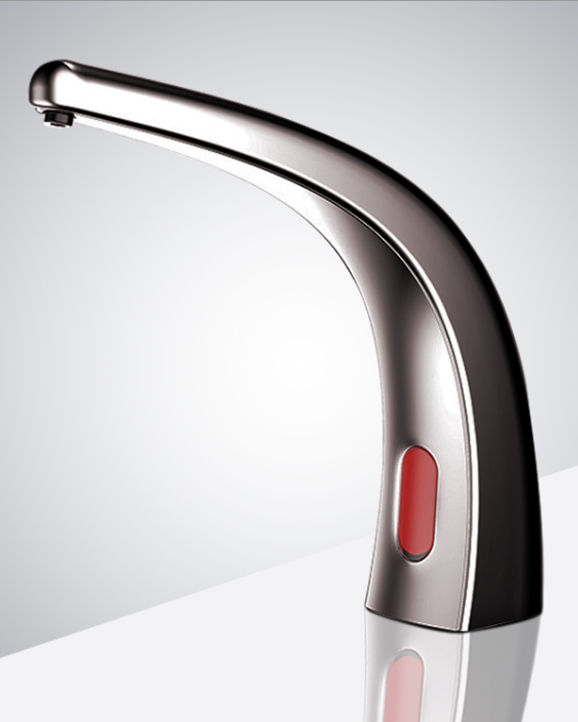
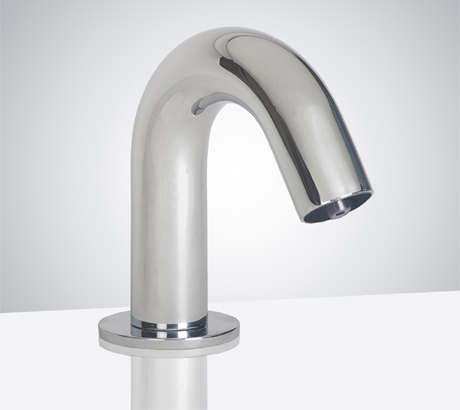
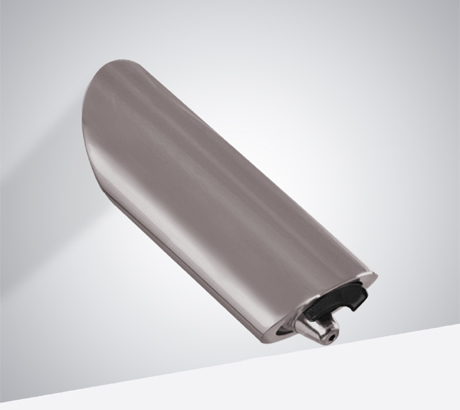
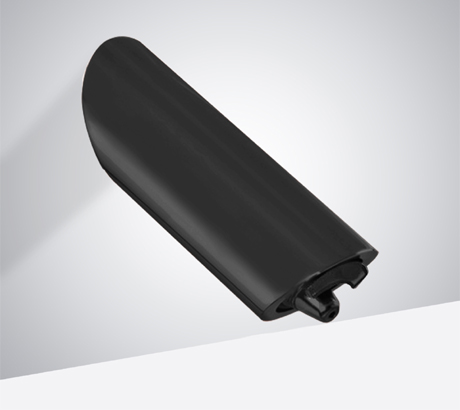
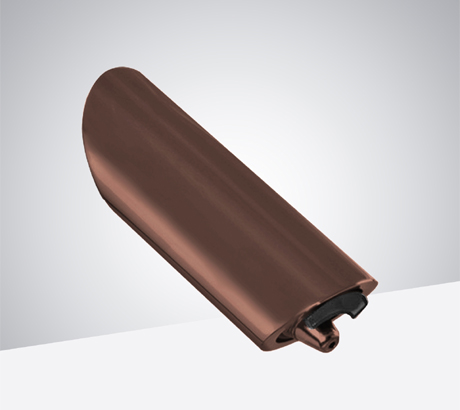
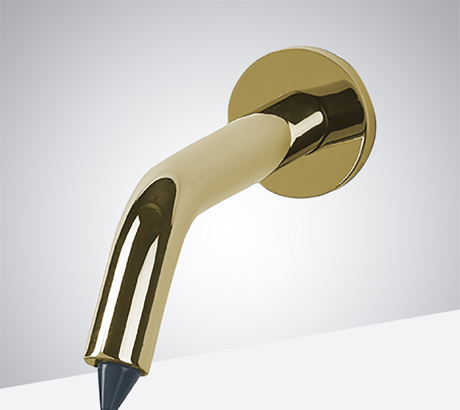
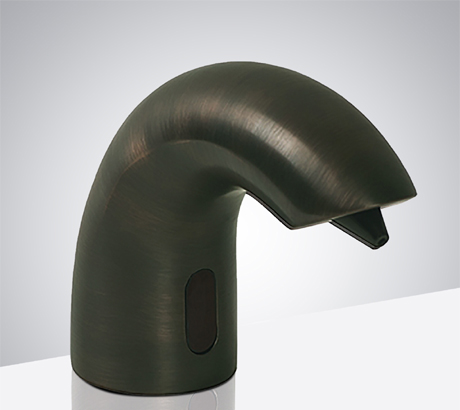
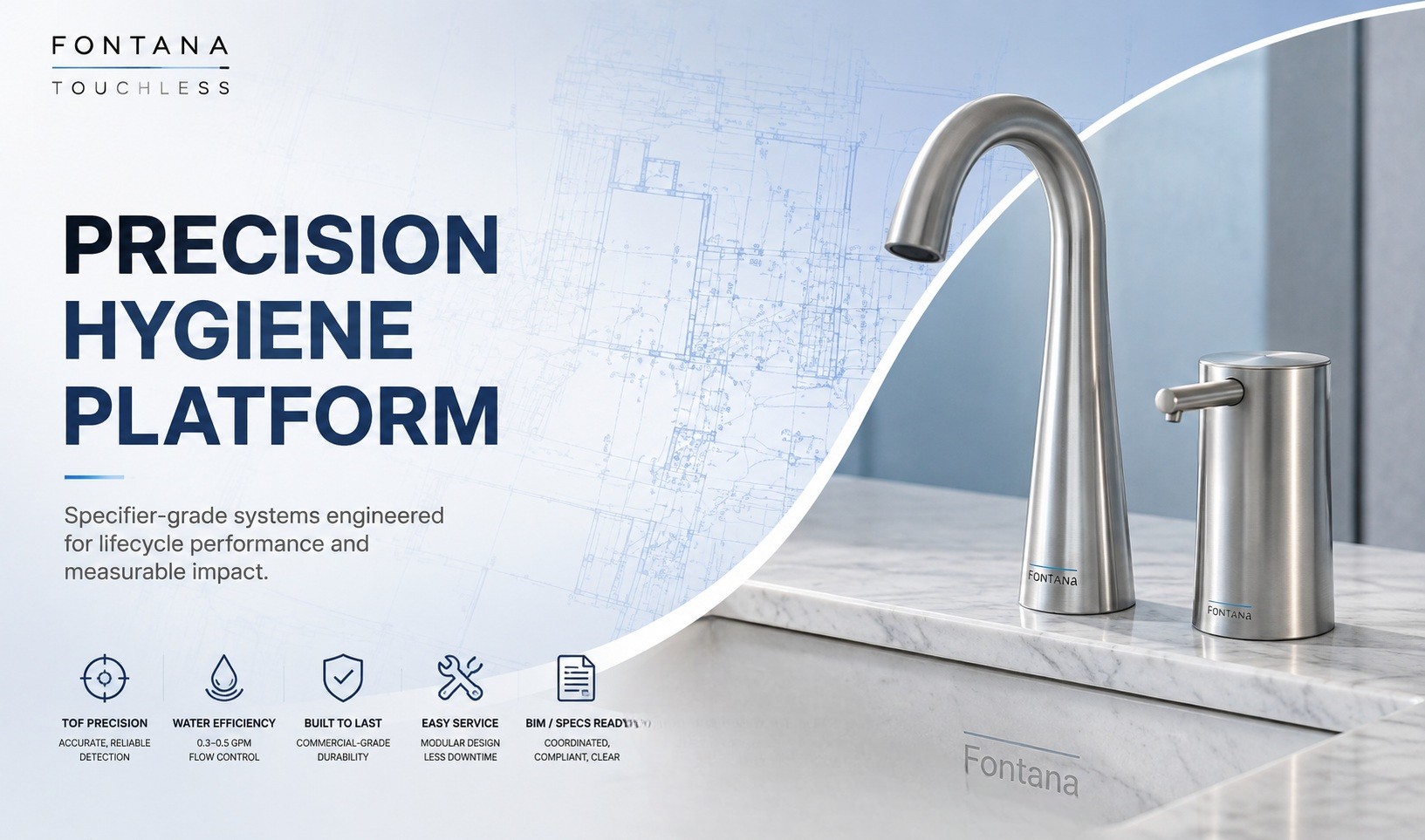
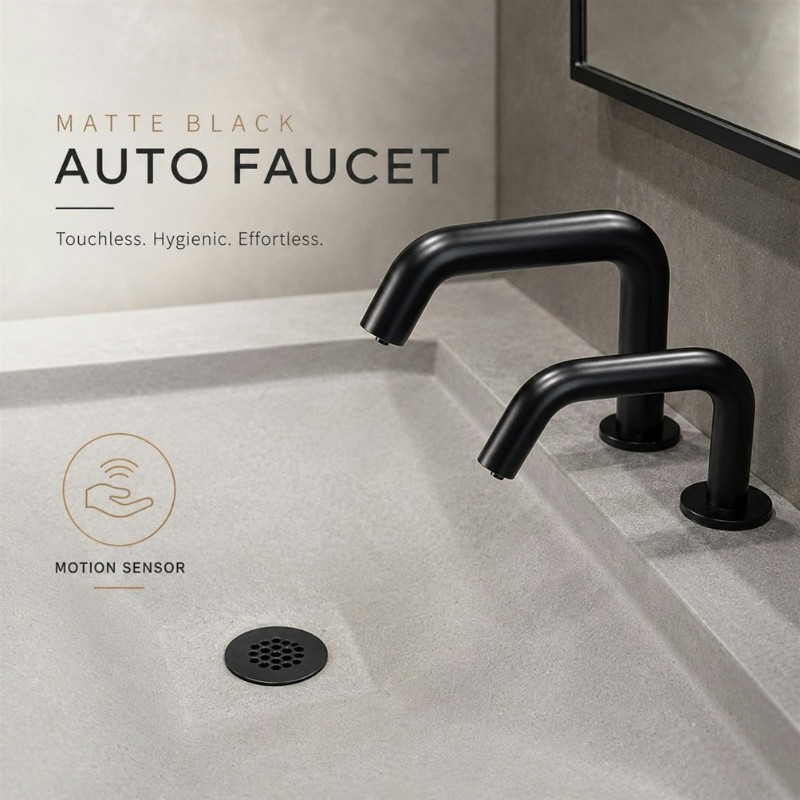
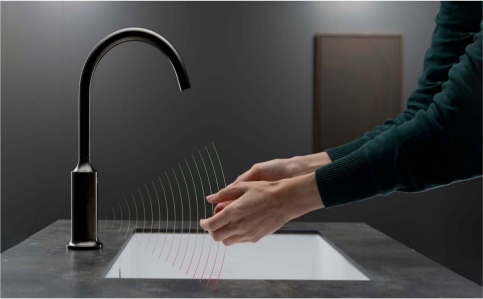
Brushed nickel is a popular choice for those seeking a more subtle and muted look with a touch of sophistication. The brushed texture gives the dispenser a matte appearance, reducing the visibility of fingerprints and water spots, making it easier to maintain a clean and polished look. This finish complements a wide range of bathroom theme styles, from modern to transitional and even traditional designs. Whether you prefer the sleekness of chrome or the understated elegance of brushed nickel, Fontana ensures our soap dispensers not only meet your functional needs but also elevate the visual appeal of your space with high-quality and visually appealing designs.
In high-traffic bathrooms,
automatic soap dispensers are becoming increasingly popular due to their convenience and hygienic benefits. Fontana offers a wide array of
automatic brushed nickel soap dispensers, making it easier for customers to find the perfect fit for their needs. Among the options available, you can choose from wall-mount or deck-mount designs, providing flexibility in installation based on your restroom layout. These touchless dispensers are particularly well-suited for busy restroom spaces, as they ensure a hygienic handwashing experience. Crafted from durable materials, Fontana brushed nickel
commercial soap dispensers are built to withstand heavy usage, ensuring long-lasting performance and value for your commercial restroom
Brushed Nickel Automatic Soap Dispensers Built for High-Traffic Reliability
Fontana Touchless brushed nickel dispensers are engineered for commercial restrooms where
controlled dosing, maintenance predictability, and uptime matter more than marketing claims.
Use this page as a specifier-ready overview (capacity, dosing, sensor, power, duty cycle, mounting, viscosity, PM notes, and compliance planning).
✔ Controlled Dosing✔ Bulk-Feed Ready✔ ToF / IR Options✔ Retrofit + New Build✔ ADA Planning Notes
Unique Differentiator
Dual-Supply Architecture
Position select models as
onboard + bulk-feed compatible: rapid top refills for low traffic,
plus under-counter bulk container routing for high-traffic duty cycles. This is a real operational advantage
(labor and downtime reduction), not decorative copy.
Engineering Signal
ToF Activation Option
Where competitors simply say “IR sensor,” specify
Time-of-Flight (ToF) options (select models)
to reduce false triggers near mirrors, stainless counters, and bright LED lighting environments.
Facility Manager Value
Controlled Dosing + PM Notes
Consistent output per activation supports soap-use forecasting and reduces over-dispense.
Include real-world PM guidance: nozzle wipe-down, line priming after refills, and viscosity matching to pump type.
Use the structure below to differentiate Fontana Touchless as a
specifier-grade hygiene platform—not a commodity dispenser.
This is the content architects and facility teams look for when evaluating lifecycle reliability and service impact.
Controlled output per activation with calibration-oriented messaging.
Specifier value: cost control, reduced mess, better hygiene protocol consistency.
Power Options
Battery for retrofit simplicity; AC / hardwire planning recommended for heavy duty-cycle installations.
Specifier value: uptime strategy for airports/hospitals vs tenant build-outs.
High-traffic suitability framing with
bulk feed recommended for heavy activation environments.
Specifier value: fewer refill/service rounds across multi-stall facilities.
Mounting Types
Deck-mount for consolidated sink decks and retrofit; wall-mount for countertop clearance and ADA coordination.
Specifier value: layout flexibility, cleaning efficiency, reach-range planning.
Refilling Method
Onboard refill access + under-counter bottle replacement for bulk feed.
Specifier value: faster bottle swaps with minimized disruption.
Soap Compatibility
Viscosity matching to pump module (liquid vs foam vs gel) with explicit guidance.
Specifier value: prevents under-dispense, clogging, and premature pump wear.
Maintenance Notes
Practical PM language: nozzle cleaning, line priming after refills, traffic-based preventive intervals.
Specifier value: predictable service planning and longer lifecycle performance.
Compliance Notes
ADA reach compliance when installed to plan set; coordinate mounting height, clearance, and service access.
Specifier value: smoother inspections and fewer change orders.
Specifier Note (Soap Viscosity):
Soap formulations vary widely in viscosity. Specify soap type to match the dispenser pump module (liquid vs foam),
and avoid high-viscosity products unless the pump is rated for that range. Mis-matched viscosity commonly leads to
under-dispense, clogging, or accelerated wear in high duty-cycle environments.
Best For
Airports, hospitals, universities, stadiums, hospitality, Class-A offices, government facilities
Deck vs wall mounting and under-counter routing notes reduce layout conflicts and rework
How Fontana Touchless Differentiates vs Commodity IR Dispensers
This comparison language is designed to rank for specifier searches (bulk feed, duty cycle, ToF, controlled dosing, viscosity compatibility).
It avoids generic claims and focuses on operational engineering differences.
Evaluation Area
Fontana Touchless (Spec-Grade Framing)
Typical Commodity IR Dispenser
Supply Architecture
Dual strategy (onboard + bulk compatible on select models) for refill optimization.
Single onboard reservoir; frequent refills under heavy traffic.
Sensor Options
IR + ToF option (select models) to reduce reflective-surface misfires.
Basic IR only; higher risk of false triggers in reflective/bright restrooms.
Dosing Control
Controlled output messaging tied to cost control and clean counters.
“Adjustable” stated without operations context or calibration guidance.
Power Planning
Battery for retrofit + AC planning for high duty-cycle uptime strategy.
Battery only; service labor increases with traffic.
Maintenance Guidance
Explicit PM notes: nozzle cleaning, line priming, viscosity matching.
Minimal guidance; higher risk of avoidable clogs and nuisance service calls.
Add this section to signal “specifier authority.” Competitors rarely document coordination, traffic planning, and maintenance reality.
Traffic Planning
Duty Cycle Strategy
For heavy-traffic restrooms, specify bulk-feed compatible configurations to reduce refill intervals and improve uptime.
Centralized refills support multi-stall planning and reduce service route burden.
Reflective Surfaces
False Trigger Mitigation
Restrooms with stainless counters, mirrored walls, and bright LED lighting can increase IR misfires.
ToF options (select models) improve activation precision and reduce nuisance discharge.
Cabinet Coordination
Under-Counter Routing
When specifying remote bulk supply, verify hose routing clearance and service access within the vanity.
Coordinate with trap/drain placement to prevent line interference and simplify bottle replacement.
Installation Coordination Tip:
Confirm mounting height and reach range for ADA planning, then validate service clearance so maintenance can be performed
without disassembling the vanity or removing other fixtures.
Answers to common questions from facility managers, contractors, architects, and distributors.
Is the brushed nickel finish suitable for high‑traffic public restrooms?
Yes. Brushed nickel visually reduces fingerprints and water spotting, and it stays specification-friendly for modern and transitional restroom palettes across airports, schools, hospitality, and healthcare.
Is the brushed nickel finish PVD‑coated or electroplated?
It varies by model. PVD generally offers higher abrasion and chemical resistance than many plated finishes. Confirm the finish process and test standards on the product cut sheet for the exact SKU.
Does the finish resist disinfectants and harsh cleaners?
Cleaning chemistry matters. Verify compatibility with chlorine-based cleaners, quats, alcohol, and ammonia per the manufacturer care guide to reduce haze, pitting, or sheen shift in maintenance cycles.
Will the brushed pattern hide wear and micro-scratching?
In most commercial applications, the brushed grain diffuses light and masks minor abrasions better than mirror finishes. For high-abuse environments, confirm protective clear-coat or PVD options where available.
Is the unit ADA-friendly for reach and operation?
Confirm mounting height, reach range, and service access with the project drawings. Automatic activation supports hygienic operation, but the final installation must meet accessibility requirements for the facility type.
Is the housing solid metal or metal over polymer?
Both exist. Solid metal housings typically increase impact resistance and long-term rigidity; metal-over-polymer may reduce weight and cost. Confirm base material, thickness, and reinforcement in the cut sheet.
What impact rating (IK) does the dispenser meet?
Not all dispensers publish IK ratings. For transit, stadium, or vandal-prone restrooms, request tested impact documentation or select models explicitly positioned as heavy-duty public-restroom hardware.
Are internal components isolated from shock vibration?
Rugged units may incorporate reinforced mounts, damping features, and protected electronics compartments. Confirm whether the pump, battery cradle, and PCB are mechanically supported for high-traffic environments.
Are seals and electronics protected from moisture intrusion?
Look for gasketed covers, sealed sensor windows, and protected cable routing. In high-humidity restrooms or splash zones, prioritize documented ingress protection or clearly described sealing architecture.
Is there tamper resistance for public restrooms?
Commercial units often include locking covers, concealed fasteners, and restricted access to settings. Confirm key type, security screws, and whether refill access is service-only.
What is the rated activation count per day?
Duty-cycle capability varies by pump design and power strategy. For airports, stadiums, and schools, request daily activation guidance and recommended preventive maintenance intervals for the selected model.
Is the motor rated for continuous peak‑hour operation?
Commercial pumps differ by motor torque, gearbox design, and thermal protection. Confirm whether the unit is specified for sustained peak traffic and whether overload or stall protection is built in.
How does performance change after 100,000+ cycles?
Long-cycle stability depends on seals, check valves, gear wear, and soap viscosity. For spec-grade projects, request lifecycle testing data or a replaceable pump module plan with standard service parts.
What power options are available?
Many models support battery and/or AC adapters. In high-volume restrooms, AC or hybrid power reduces maintenance labor and helps maintain consistent output during peak demand.
Can we connect to bulk soap containers?
Some models support 1-gallon bulk containers with under-counter placement and extended hoses. Confirm hose length, priming method, and container compatibility to reduce refill frequency.
Are there foam‑soap compatible options?
Yes, but foam typically requires a dedicated pump module and validated viscosity range. Confirm compatibility, cartridge requirements, and whether conversion kits exist for liquid-to-foam.
Do these use ToF sensors?
Some models specify Time-of-Flight for precise activation and reduced false triggers. Verify sensor type, detection range, and sensitivity settings in the product spec sheet.
How do we access install instructions and cut‑sheets?
Use the Installation Instructions link above and the Documents section on each product detail page for PDFs, manuals, and cut sheets needed for submittals.
BRUSHED NICKEL SOAP DISPENSERS
Brushed Nickel Automatic Soap Dispensers
Brushed nickel automatic soap dispensers provide a professional finish with excellent resistance to fingerprints and water spots. While polished surfaces often require frequent cleaning, brushed nickel models maintain appearance longer, offering reliable touchless operation, commercial durability, and enhanced restroom hygiene for demanding facility environments.