AEC / B2B • High-Traffic Restroom Spec
Commercial Touchless Bathroom Faucets for High-Traffic Restrooms
Spec-grade touchless faucet systems engineered for hygiene assurance, vandal resistance, reliable activation,
and water efficiency across airports, healthcare, education, office towers, and hospitality developments.
Engineering Value for Specifiers
From an architectural and engineering perspective, touchless faucets support standardization across large restroom
deployments and reduce operational risk through controlled runtimes, predictable shutoff behavior, and durable materials.
- Hygiene: eliminates handle touchpoints and supports consistent user behavior.
- Reliability: commercial-grade solenoid/controls for continuous daily use.
- Water efficiency: controlled run times and automatic shutoff minimize waste.
- Lifecycle: fewer service events and clearer maintenance planning for facility teams.
System Coordination (Restroom Ecosystem)
For large facilities, the best performance comes from coordinating faucets with soap dispensing and drying workflows
to reduce recontamination and simplify O&M.
- Consistent activation zone improves usability and reduces false triggers.
- Controlled stream behavior helps reduce splash and keeps counters cleaner.
- Commissioning notes reduce RFIs and speed up closeout packages.
Did you know? In high-traffic restrooms, touchless operation supports hygiene by reducing contact with
high-touch controls and helps facility teams standardize performance across large deployments.
COMMERCIAL BATHROOM FAUCETS · TOUCHLESS ENGINEERING · AEC SPECIFICATION
Commercial Touchless Faucets for High-Traffic Facilities
Engineered for
high-traffic commercial bathrooms where reliable sensor activation,
controlled water delivery, durability, hygiene, and long-term serviceability
are essential. Our
commercial bathroom faucets support
architects, MEP engineers, plumbing consultants, contractors, facility
managers, and procurement teams specifying hands-free fixtures for airports,
hospitals, universities, office towers, stadiums, luxury hotels, public
facilities, and other demanding environments. Fontana commercial touchless
faucet systems combine precision sensing, automatic shutoff, durable
construction, and flexible power configurations to support dependable
operation across large-scale restroom deployments. Available system
configurations include ToF advanced sensing technologies,
AC, DC/battery, or hybrid power, plus serviceable valve and control components.
Commercial Applications
Airports & Transportation Hubs
Hospitals & Healthcare
Universities & Education
Office Towers
Stadiums & Large Venues
Luxury Hotels & Resorts
Specifier focus:
Commercial faucet selection should coordinate sensor performance,
basin geometry, rated flow, power strategy, accessibility,
maintenance access, and long-term lifecycle requirements.
AEC · MEP · FACILITY ENGINEERING · COMMERCIAL RESTROOM SPECIFICATION
Commercial Touchless Faucet Specification Guide
Commercial touchless faucets should be evaluated as complete plumbing
and control systems—not simply by finish or faucet appearance.
Architects, MEP engineers, plumbing consultants, contractors, and
facility teams should consider sensing technology, power strategy,
rated flow, mounting conditions, material construction, accessibility,
maintenance access, and lifecycle serviceability when specifying
commercial bathroom faucets for high-traffic facilities.
|
Specification Criterion
|
Fontana Commercial Configuration
|
Specification Consideration
|
|
Sensor Technology
|
Infrared (IR) / advanced sensing including ToF
on applicable systems
|
Select sensing architecture according to basin geometry,
activation zone, surrounding surfaces, traffic conditions,
and project requirements.
|
|
Power
|
AC / DC-battery / hybrid configurations
|
Coordinate electrical requirements, battery access,
power continuity, and maintenance strategy during design.
|
|
Flow
|
Model-specific flow configurations
|
Verify rated flow for the selected faucet and coordinate
performance with project water-efficiency requirements.
|
|
Mounting
|
Deck-mounted / wall-mounted configurations
|
Coordinate faucet reach, mounting position, basin geometry,
backsplash clearance, and accessibility conditions.
|
|
Material
|
Solid brass / stainless-steel configurations by model
|
Specify construction and finish according to traffic level,
cleaning protocols, corrosion exposure, and architectural intent.
|
|
Applications
|
Airports / healthcare / hospitality / education /
offices / stadiums / public facilities
|
Match faucet construction, sensor architecture,
power strategy, and serviceability to anticipated
occupancy and operating conditions.
|
|
Serviceability
|
Serviceable solenoid, sensor, power, and control
components on applicable systems
|
Prioritize accessible components to reduce troubleshooting
time, fixture downtime, and lifecycle maintenance costs.
|
|
AEC Documentation
|
BIM / CAD / cut sheets / technical documentation
where available
|
Confirm project documentation for the selected model
during specification, coordination, and submittal review.
|
|
ADA / Accessibility
|
Applicable touch-free configurations
|
Verify the selected model, mounting conditions,
reach ranges, clearances, basin coordination,
and complete installation against project accessibility requirements.
|
|
Water Efficiency
|
Controlled flow + sensor activation + automatic shutoff
|
Coordinate rated flow and runtime behavior with
project water-use targets and applicable requirements.
|
SPECIFIER GUIDANCE
What Architects and MEP Engineers Should Specify
A commercial touchless faucet specification should define more
than the fixture's appearance. Project teams should document
sensing performance, rated flow, power strategy, mounting conditions,
automatic shutoff behavior, basin coordination, component access,
and applicable project requirements before procurement.
-
Sensor architecture:
sensing technology, activation zone, range,
response behavior, and commissioning requirements.
-
Power strategy:
AC, battery/DC, or hybrid power with clear service access.
-
Hydraulic performance:
rated flow, runtime control, shutoff behavior,
and compatibility with project water targets.
-
Basin coordination:
spout reach, deck or wall mounting,
sink geometry, splash control, and clearances.
-
Maintenance pathway:
access to solenoids, sensors, control modules,
power components, and replaceable service parts.
-
Submittal documentation:
dimensions, technical data, power requirements,
installation information, and applicable compliance documentation.
HIGH-TRAFFIC APPLICATIONS
Designed Around Commercial Restroom Performance
Large-scale facilities require predictable activation,
controlled water use, durable construction, and a clear
maintenance strategy. Commercial bathroom faucet selection
should reflect the operating environment—not simply fixture appearance.
Airports
Hospitals
Universities
Office Towers
Stadiums
Luxury Hotels
Public Facilities
Transportation Hubs
Specification note:
Product capabilities vary by model. Confirm sensing technology,
power options, rated flow, documentation, construction material,
and accessibility requirements for the selected faucet before
final specification.

Shop by Environment
Quick pathways for specifiers and facility teams
High-Traffic Performance, Simplified
For spec packages, focus on measurable outcomes: stable activation, controlled runtime, cleanability,
and long-term serviceability. This improves approval speed and reduces post-install RFIs.
In commercial restrooms, performance must remain consistent under thousands of activation cycles per month. Sensor accuracy should prevent false triggers while maintaining immediate response. Runtime limits must balance hygiene rinse quality with water conservation targets. Cleanability is critical — smooth housings, minimal seams, and corrosion-resistant finishes reduce maintenance labor and chemical damage risk.
Serviceability also matters. Replaceable solenoids, accessible power modules, and standardized mounting configurations reduce downtime and lifecycle cost. When these measurable criteria are clearly documented in the specification, facility managers gain predictability, contractors reduce callbacks, and procurement teams approve with confidence.
|
|
COMMERCIAL TOUCHLESS SYSTEMS · FACILITY ENGINEERING · SPECIFICATION REFERENCE
Why Specify Fontana Commercial Touchless Systems®?
Engineering questions covering sensor technology, lifecycle performance, maintenance planning, and commercial restroom specification.
SYSTEM SELECTION
Why are touchless systems preferred for commercial facilities?
Hands-free operation improves user experience while supporting dependable performance in continuously occupied public restrooms.
ASPE Plumbing Engineering →
HYGIENE
How do touchless fixtures improve restroom hygiene?
Automatic activation reduces contact with frequently touched fixtures during routine handwashing.
CDC Hand Hygiene →
LIFECYCLE VALUE
What reduces long-term maintenance costs?
Accessible service components, stable sensing, and durable construction minimize downtime and simplify facility maintenance.
GSA Design Excellence →
APPLICATIONS
Which facilities specify commercial touchless systems?
Airports, hospitals, universities, office buildings, hotels, stadiums, government facilities, and transportation hubs.
OSHA Workplace Safety →
Related Technical Knowledge
Explore commercial touchless faucets, automatic soap dispensers, sensor technology, and engineering resources.
COORDINATED SYSTEMS · TOUCHLESS HYGIENE · COMMERCIAL ENGINEERING
Fontana Commercial Touchless Faucets & Coordinated Soap Dispenser Sets
Engineering questions addressing coordinated handwashing systems, installation efficiency, maintenance, and commercial restroom performance.
COORDINATION
Why specify coordinated faucet and soap dispenser sets?
Matching systems simplify specification, installation, maintenance, and deliver a consistent user experience.
CDC Hand Hygiene →
HYGIENE
How do coordinated systems improve handwashing?
Touch-free soap and water reduce surface contact throughout the complete handwashing process.
WHO Hand Hygiene →
FACILITY MANAGEMENT
Why are coordinated systems preferred in commercial buildings?
Common finishes and components simplify maintenance planning and replacement inventories.
EPA Best Practices →
WATER EFFICIENCY
Can coordinated systems reduce restroom water waste?
Sensor activation limits unnecessary water flow during complete handwashing cycles.
EPA Commercial Buildings →
Related Technical Knowledge
Explore coordinated touchless faucet and soap dispenser systems for commercial restroom applications.
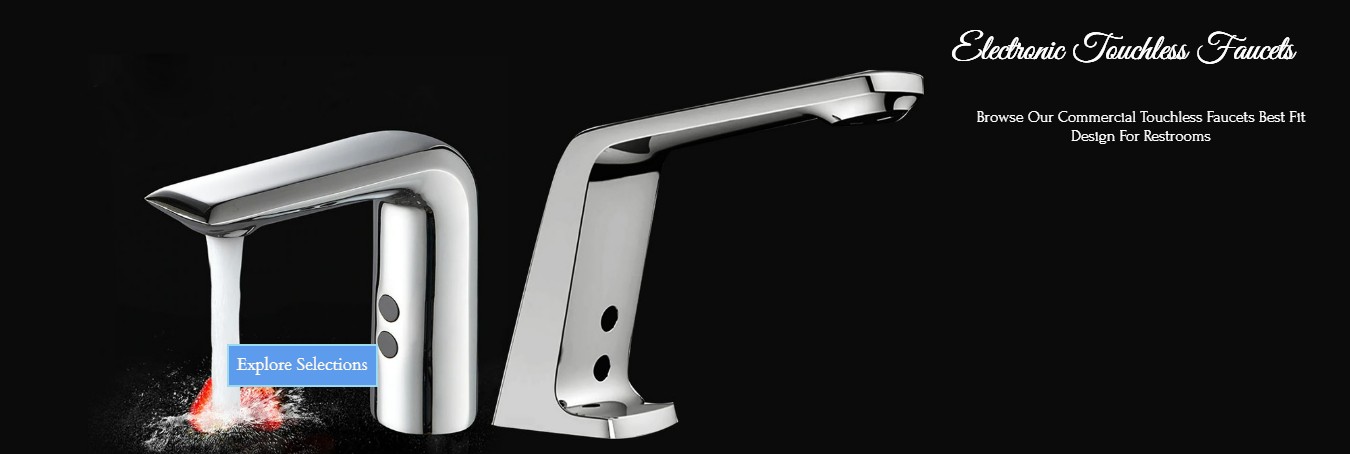
Award-Winning Commercial Touchless Bathroom Faucets
Designed for reliable infrared activation, vandal resistance, and predictable performance in high-traffic washrooms.
Specified to support hygiene, durability, and operational uptime across public venues.
Hygiene assurance
Vandal resistance
Water efficiency
Lifecycle value
Fast commissioning
Specifier-Ready Proof Points
Most "sensor faucet problems" come from miscalibration, poor basin pairing, weak power planning, or low-quality valve components.
A commercial-grade system reduces these risks with sealed sensor housings, stable control modules, and serviceable architectures.
- Reduced false triggers: defined activation zone and commissioning guidance.
- Power continuity: AC/DC or hybrid planning to reduce downtime.
- Controlled runtime: automatic shutoff to minimize water waste.
- Serviceability: faster diagnosis, parts replacement, and lifecycle planning.
Installation + Support Resources
Best User Experience (What Actually Matters)
A superior user experience comes from stable sensing + correct spout/basin pairing + predictable shutoff.
For high-traffic restrooms, the goal is consistent activation without false triggers, splash control, and fast recovery after cleaning.
- Commissioning: define sensor range + timeout to match the environment.
- Water management: limit runtime and flow while maintaining rinse quality.
- Durability: sealed housings and reinforced mounting reduce downtime risk.
.jpg)

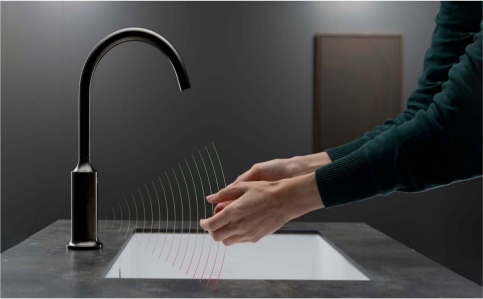
Presence detection technologies (infrared, time-of-flight, capacitive) are selected to deliver precise activation without contact,
improving hygiene outcomes and reliability under continuous use.
FAQ (Specifier + Facility Teams)
What causes false activation or "sensor misfires" in busy restrooms?
Most misfires come from wide sensor zones, reflective surfaces, or incorrect calibration for sink depth and traffic patterns.
A spec-grade system should include commissioning guidance (range/timeout) to lock performance for the site.
How do touchless faucets reduce water waste in high-traffic facilities?
Controlled runtimes and automatic shutoff prevent run-on events and help standardize water use across users.
For projects tracking sustainability, pair runtime control with rated flow documentation in the submittal.
What should be included in an AEC submittal for touchless faucets?
Include cut sheets (dimensions + flow), power options (AC/DC/hybrid), commissioning notes, maintenance pathway,
and applicable compliance documents. This reduces RFIs and speeds plan review and closeout.
Are coordinated soap dispensers worth specifying?
Yes. In high-traffic commercial restrooms, coordinated faucet and soap dispenser systems simplify specification, installation, finish coordination, maintenance, and replacement-parts planning. They are especially useful in airports, universities, healthcare facilities, office buildings, stadiums, and hospitality projects where dozens or hundreds of wash stations may need standardized components and service procedures.
How many activations can a commercial touchless faucet realistically survive before major service?
High-duty commercial solenoids are commonly engineered around 500,000+ activation cycles. At 200 uses/day, 500,000 cycles equals about 6.8 years; at 500/day, 2.7 years; and at 1,000/day, about 1.4 years. For high-traffic facilities, cycle rating, replaceable solenoids, accessible filters, and modular electronics are more useful lifecycle indicators than a simple years-of-service estimate.
What actually fails first in a commercial sensor faucet?
The sensor is often not the first service issue. Diagnosis should typically follow: water supply → filter/aerator → power → wiring → sensor → solenoid → valve. Commercial systems may use 500,000+ cycle solenoids, 300,000–500,000-cycle battery architectures, and 0.35–0.5 GPM lavatory flow rates. Accessible filters, replaceable valves, and modular controls can significantly reduce downtime and unnecessary fixture replacement.
How does building water pressure affect sensor-faucet performance and component life?
Pressure primarily affects hydraulic performance after the sensor activates the valve. Commercial faucet systems may operate across roughly 10–100 psi depending on the specified model, while 0.35–0.5 GPM is common for high-efficiency lavatory applications. Low dynamic pressure can reduce usable flow; excessive or unstable pressure can increase noise, hydraulic shock, connection stress, and valve wear. Engineers should verify dynamic pressure during peak simultaneous demand—not only static pressure when the restroom is idle.
|
|
|




.jpg)
.jpg)
.jpg)
.jpg)
.jpg)
.jpg)