Fluid Metering Engineering
Soap Pump, Viscosity and Dose-Control Engineering
A technical guide to pump architecture, soap viscosity, calibrated
delivery, priming, anti-drip performance and volumetric repeatability
in Fontana Soap Dispensers®.
Engineering Overview
The Dispenser Is a Controlled Fluid-Delivery System
Fontana Soap Dispensers®
should be evaluated as integrated fluid-metering systems rather than
simple countertop accessories. The delivered dose depends on pump
displacement, soap viscosity, tubing length, reservoir height, nozzle
geometry, power condition and control timing.
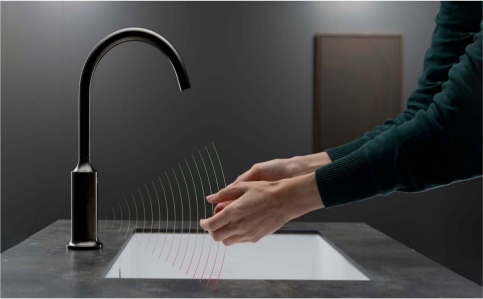
A well-engineered automatic soap dispenser must detect the user's
hand, initiate the pump, move the selected soap formulation through
the fluid path and terminate flow without dripping. Each stage affects
the user's perception of speed, cleanliness and reliability.
The
CDC handwashing guidance
recognizes soap as a fundamental component of effective handwashing.
For commercial facilities, this makes dependable soap availability
and controlled delivery essential operating requirements.
Broader hand-hygiene infrastructure guidance from the
World Health Organization
can also inform facility-level planning for reliable and accessible
hand-hygiene stations.
Core Variables
Four Factors That Control Every Soap Dose
Pump Stroke
Mechanical displacement or controlled pumping time
Viscosity
Resistance of the soap to internal flow
Pressure
Suction and discharge conditions within the fluid path
Calibration
Measured relationship between command and delivered volume
Performance values must be confirmed for the applicable Fontana commercial
soap dispenser model, pump architecture, soap formulation, temperature,
reservoir configuration and power system.
Pump Function
How an Automatic Soap Pump Produces a Measured Dose
The controller inside Fontana Soap Dispensers®
converts the sensor signal into a pump command. Depending on the mechanism,
the command may specify a fixed motor rotation, piston stroke, solenoid pulse
or timed peristaltic movement.
The pump then creates suction at the inlet, draws soap from the reservoir,
moves it through the metering chamber or tubing and produces discharge
pressure at the nozzle.
A complete pump evaluation should measure displacement, suction lift,
priming time, current draw, operating noise, check-valve sealing, dose
repeatability and response after extended inactivity.
Research related to automatic dispensing technology can be explored through
PubMed automatic soap dispenser studies
and
Google Scholar dispenser research.
Pump Architectures
Peristaltic, Piston, Diaphragm and Solenoid Pumps
| Pump Type |
Operating Principle |
Primary Strength |
Primary Wear Concern |
| Peristaltic |
Rollers compress flexible tubing |
Soap remains primarily inside replaceable tubing |
Tube fatigue and permanent compression |
| Piston |
A moving piston displaces a defined chamber volume |
Controlled volumetric displacement |
Seal wear and check-valve leakage |
| Diaphragm |
A flexible membrane changes chamber volume |
Isolation of the drive mechanism from soap |
Membrane fatigue and valve contamination |
| Solenoid Metering |
An electromagnetic actuator moves a plunger or valve |
Fast controlled actuation |
Seal wear, spring fatigue and contamination |
Fontana automatic soap dispensers may use different pump architectures
depending on the required soap type, dose range, installation configuration
and commercial application. Final pump selection should always follow the
product-specific technical documentation.
Pump Selection
No Pump Is Best for Every Soap
The correct mechanism depends on soap viscosity, chemical compatibility,
required suction distance, target dose, expected cycle life and the
maintenance strategy of the facility.
Peristaltic Engineering
How Peristaltic Pumps Control Soap Without Internal Valves
A peristaltic pump moves soap by sequentially compressing flexible tubing.
The compressed section advances through the pump head, pushing soap toward
the nozzle while creating suction behind the roller.
This architecture can simplify fluid isolation because the soap primarily
contacts the tubing. Maintenance may involve replacing the tube rather than
disassembling a complex wetted chamber.
Tube material remains critical. Repeated compression can cause flattening,
cracking, hardening or reduced elastic recovery. Fontana Soap Dispensers®
using peristaltic technology should therefore be evaluated for tube life,
soap compatibility and replacement access.
Performance Indicator:
Increasing motor current combined with declining output can indicate
progressive tube stiffness or pump-path resistance.
Piston Engineering
How Piston Pumps Produce Controlled Displacement
A piston pump draws soap into a chamber during the intake stroke and forces
it toward the nozzle during the discharge stroke. Check valves control the
direction of flow.
When chamber geometry and stroke length remain stable, the mechanism can
provide predictable volumetric displacement. Long-term accuracy depends on
piston sealing, valve closure, soap viscosity and the absence of trapped air.
Piston-equipped Fontana commercial soap systems should be evaluated for
seal-material compatibility, check-valve replacement, resistance to
crystallized soap and performance after extended cycle testing.
Fluid Resistance
How Soap Viscosity Changes Pump Performance
Viscosity describes a fluid's resistance to flow. Higher-viscosity soap
requires more force to move through the suction tube, pump chamber, valves
and nozzle. Lower-viscosity soap moves more easily but can increase leakage
or post-dispense dripping.
A pump calibrated with one soap may not deliver the same volume when the
formulation changes. The electronic command may remain identical while
hydraulic resistance changes substantially.
For Fontana Soap Dispensers®,
soap viscosity should be treated as a specified operating parameter. The
approved range should be confirmed before procurement and again if the
facility changes soap suppliers.
Viscosity Effects
What Happens When Soap Is Too Thick or Too Thin?
| Fluid Condition |
Pump Effect |
Observed User Effect |
Engineering Response |
| Excessively Thick |
Higher suction and motor load |
Delayed or reduced dose |
Confirm compatibility and recalibrate |
| Within Approved Range |
Stable pump displacement |
Consistent soap delivery |
Maintain the approved formulation |
| Excessively Thin |
Reduced resistance and weaker valve sealing |
Over-delivery or dripping |
Adjust dose and verify anti-drip control |
| Entrained Air |
Compressible fluid path |
Incomplete or inconsistent dose |
Repair air entry and reprime |
Temperature Effects
Why Ambient Temperature Changes the Delivered Dose
Soap generally becomes more viscous as temperature decreases and less
viscous as temperature rises. A Fontana soap dispenser calibrated in a warm
mechanical room may therefore deliver a different volume when the reservoir
is installed in a colder service area.
Temperature affects pump load, priming time, valve closure and nozzle
drainage. Dose testing should record both ambient temperature and soap
temperature so that results can be compared meaningfully.
Calibrated Dose = Pump Command + Fluid Condition + System Geometry
No pump-duration setting can be interpreted independently of viscosity,
temperature and fluid-path resistance.
Soap Chemistry
Can One Pump Support Multiple Soap Formulations?
A pump may be mechanically capable of moving several compatible
formulations, but identical pump timing does not guarantee identical
volumetric output.
Liquid soap, antimicrobial soap, foam concentrate and alcohol-containing
formulations can differ in viscosity, density, surface tension, solids
content and compatibility with seals or tubing.
Fontana Soap Dispensers®
should be recommissioned whenever the soap chemistry changes unless
documented testing confirms equivalent output within the approved range.
Healthcare soap selection should also be coordinated with
CDC healthcare hand-hygiene guidance
and the facility's infection-prevention policies.
Dose Calibration
What Calibrated Soap Delivery Actually Means
Calibrated soap delivery means that the programmed pump command has been
compared with a measured output under defined operating conditions. It does
not mean that every soap formulation will automatically produce the same
dose.
Fontana calibrated dispensing technology should be verified using the actual
soap, reservoir position, tubing layout and power source intended for the
project.
The measurement should include several consecutive cycles rather than one
isolated activation. The result should report average dose, minimum dose,
maximum dose and variation from the target.
Dose Error = Measured Volume − Programmed Target
Record the test soap, temperature, power condition and number of samples.
Repeatability Testing
Why One Correct Dose Does Not Prove Accuracy
A Fontana automatic soap dispenser may produce one dose close to the target
while the next several doses vary because of air, voltage, valve closure or
incomplete priming.
Repeatability testing evaluates a series of consecutive activations. A useful
test records average output, minimum output, maximum output, dose range and,
where appropriate, standard deviation.
Published hand-hygiene and dispenser studies can be reviewed through
PubMed touchless soap dispenser research
and
Springer soap dispenser research.
Commissioning Method
How to Verify Soap Dose After Installation
Confirm the approved soap formulation and batch.
Record ambient and soap temperature.
Fill and vent the reservoir correctly.
Prime the pump until all air is removed.
Verify tubing length, elevation and connection tightness.
Collect at least ten consecutive doses.
Calculate average, minimum and maximum output.
Check for dripping after each activation.
Verify battery or transformer voltage under load.
Record the final setting as the maintenance baseline.
Priming Engineering
Why Air-Locks Produce Incomplete Soap Doses
An air-lock occurs when air enters the suction line and prevents the pump
from maintaining a continuous soap column. Because air compresses, the pump
may move without delivering a complete volume at the nozzle.
Common causes include an empty reservoir, loose tubing, cracked lines,
incorrect venting, excessive suction lift and poor refill procedures.
Fontana Soap Dispensers®
should be reprimed after reservoir replacement, tubing service or prolonged
depletion. Increasing pump duration without repairing the air-entry point is
not a permanent correction.
Self-Priming
Can Fontana Soap Systems Reprime Automatically?
Selected automatic pump systems may be capable of self-priming, but
the capability depends on soap viscosity, suction lift, tubing
distance, pump displacement and check-valve sealing.
A meaningful self-priming specification should state the maximum
vertical lift, maximum tubing length and approximate number of
activations required to restore stable delivery.
Commissioning should verify when the output becomes repeatable, not
merely when the first soap appears at the nozzle.
Reservoir Position
How Reservoir Height Influences Soap Output
A reservoir below the pump increases suction lift and can slow priming.
A reservoir above the pump creates positive static pressure and may
contribute to seepage if the outlet valve does not seal completely.
| Reservoir Position |
System Effect |
Potential Dose Effect |
| Below Pump |
Increased suction lift |
Longer priming or reduced delivery |
| Level with Pump |
Balanced hydraulic condition |
More stable calibration |
| Above Pump |
Positive static head |
Possible overfeeding or dripping |
MultiFeed Distribution
How Centralized Soap Supply Changes Pump Design
Fontana MultiFeed systems use a centralized reservoir to support multiple
dispensing points. This can reduce refill labor and simplify soap inventory,
but it introduces tubing distance, elevation, balancing and isolation
requirements.
Longer tubing increases hydraulic resistance and can delay priming,
particularly with high-viscosity soap. Each dispensing point should be
verified individually after the complete system is filled.
Facility teams can review broader maintenance strategy through
IFMA operations and maintenance resources
and
FacilitiesNet maintenance guidance.
Pressure Equalization
Improving Output Consistency Across Multiple Dispensers
Dispensers connected to one reservoir may experience different hydraulic
conditions because of unequal tubing lengths, different elevations and
varying numbers of fittings.
Pressure equalization, dedicated metering, balanced tubing layouts or
individual pump control can improve consistency. Each Fontana MultiFeed
dispensing point should still be measured during commissioning.
Design Principle:
A centralized reservoir does not automatically produce equal dosing at every
nozzle. Distribution geometry must be engineered and verified.
Anti-Drip Control
Why Soap Continues Dripping After the Pump Stops
Post-dispense dripping can result from residual pressure, positive reservoir
head, thin soap, delayed valve closure, worn seals or residue at the nozzle.
Fontana Soap Dispensers®
may use pump reversal, fast-closing check valves, resilient outlet closures
or pressure-relief logic to reduce residual flow.
Anti-drip performance should be tested after repeated cycling because valve
and seal wear may gradually increase leakage.
Important:
Reducing the pump duration may reduce dripping but can also create an
insufficient dose. The cause of residual flow should be diagnosed before
changing calibration.
Nozzle Engineering
Preventing Blockage, Crystallization and Residual Buildup
Soap can dry at the outlet when water or volatile components evaporate.
High-solids soaps, long idle periods and incompatible concentrates can
increase crystallization.
A commercial nozzle may use a short flow path, removable tip, flexible
outlet closure or controlled suction at cycle completion.
Cleaning teams should follow the applicable Fontana maintenance instructions
and broader facility-cleaning guidance such as the
CDC cleaning and disinfection guidance.
Cleaning-industry training and custodial planning can also be supported by
ISSA education resources
and
ISSA technical articles.
Foam Engineering
Mechanical Differences Between Foam and Liquid Dispensing
Liquid dispensers meter the finished soap directly. Foam systems combine
soap concentrate with air inside a mixing chamber or specialized nozzle.
The foam ratio depends on liquid dose, air volume, concentrate chemistry,
mixing geometry and outlet restriction. Electronic adjustment may alter
pump timing or air-liquid proportion, but it cannot compensate for an
incompatible concentrate.
| Engineering Factor |
Liquid System |
Foam System |
| Delivered Fluid |
Finished liquid soap |
Air-and-soap mixture |
| Metering Requirement |
Soap volume only |
Soap and air proportion |
| Nozzle Design |
Direct liquid outlet |
Mixing and foam-forming geometry |
| Clogging Risk |
Dried liquid residue |
Concentrate residue and blocked air path |
Power Effects
How Battery Voltage Changes Pump Output
A battery-powered pump may operate at a lower speed or reduced torque as
voltage declines. The dispenser may continue activating while the delivered
dose gradually falls below the initial calibration.
Fontana battery-powered soap dispensers may use voltage monitoring,
low-battery alerts or controller compensation depending on the specific
model. Output should be evaluated under actual pump load.
Estimated Battery Life = Rated Activations ÷ Daily Activations
Standby current, false activations, temperature and battery aging can
reduce actual service life.
Long-Term Wear
Which Pump Components Usually Wear First?
Flexible Tubing
Repeated compression, chemical exposure and temperature can cause
hardening, flattening or cracking.
Check Valves
Residue, seal fatigue and crystallized soap can reduce closing
performance and permit backflow.
Piston Seals
Wear may allow internal bypass, reducing the effective displacement
of each stroke.
Motors and Gears
Long-term loading can increase noise, current draw and mechanical
backlash.
Nozzle Closures
Repeated cycling and chemical buildup can reduce anti-drip
performance.
Electrical Connections
Moisture, vibration and cleaning exposure can contribute to
intermittent operation.
Maintenance Strategy
Engineering-Based Maintenance Intervals
A fixed calendar interval does not reflect actual use. One Fontana soap
dispenser may complete 30,000 cycles annually while another in an airport
completes more than 500,000.
Maintenance intervals should consider cycle count, refill frequency, dose
drift, pump current, priming time, nozzle condition and battery status.
Facilities can use resources from
APPA facilities management,
Facility Executive maintenance
and
Buildings cleaning and maintenance
to coordinate dispenser service with broader asset-management programs.
Specification Checklist
What to Verify Before Selecting a Soap Pump System
| Engineering Factor |
Required Verification |
Why It Matters |
| Pump Type |
Peristaltic, piston, diaphragm or solenoid |
Determines wear and service characteristics |
| Viscosity Range |
Approved minimum and maximum |
Prevents under-delivery and pump overload |
| Dose Range |
Adjustable output and calibration method |
Controls soap use and repeatability |
| Soap Chemistry |
Liquid, foam, antimicrobial or other approved formulation |
Protects tubing, seals and valves |
| Priming Capability |
Maximum lift and tubing distance |
Ensures reliable startup after service |
| Anti-Drip Control |
Valve, pump reversal or nozzle closure |
Reduces residue and countertop contamination |
| Power System |
Battery, hardwired or hybrid |
Affects torque and lifecycle maintenance |
| Replaceable Components |
Pump, tubing, valves, nozzle and controller |
Reduces downtime and replacement cost |
| Testing Documentation |
Dose accuracy, repeatability and endurance results |
Supports defensible commercial specification |
Plumbing project teams may also review
ASPE publications,
International Plumbing Code resources
and
Uniform Plumbing Code resources
for broader project coordination.
Engineering Questions
Frequently Asked Pump and Dose-Control Questions
Does soap viscosity affect sensor timing?
Viscosity does not normally change the sensor's electronic detection
speed. It changes the hydraulic delay between pump activation and soap
arrival at the nozzle.
Why do identical Fontana soap dispensers deliver different volumes?
Differences may result from tubing length, soap temperature, reservoir
height, air intrusion, voltage, pump wear or incomplete priming.
Can the dose be adjusted without testing?
A setting may be changed, but the resulting volume should always be
measured using the actual installed system and selected soap.
What determines pump suction efficiency?
Pump displacement, seal quality, tubing diameter, soap viscosity,
vertical lift, line length and air leakage all influence suction.
Can hard water damage the soap pump?
Hard water normally remains outside a sealed soap circuit. It can still
create mineral deposits around the nozzle where water splashes onto the
dispenser outlet.
How much soap remains unusable in the reservoir?
Residual soap depends on reservoir shape, suction-tube position,
viscosity and pump lift. It should be measured during depletion testing.
What is the optimal commercial soap dose?
The correct dose depends on soap formulation, foaming ratio, handwashing
procedure and facility preference. Too little encourages multiple
activations; too much increases waste.
Can Fontana MultiFeed reduce maintenance cost?
It can reduce individual-bottle refill labor in high-volume restrooms,
but the lifecycle benefit depends on system size, tubing layout,
monitoring and maintenance procedures.
Premium Engineering
What Distinguishes Premium Soap Pump Technology?
Defined Compatibility
Approved viscosity and chemistry ranges rather than unsupported
universal-soap claims.
Measured Calibration
Documented dose output verified under stated operating conditions.
Stable Repeatability
Low variation across consecutive dispensing cycles.
Serviceable Components
Replaceable pump, tubing, valves, nozzle and control modules.
Anti-Drip Control
Engineered pressure termination rather than simple pump shutoff.
Lifecycle Documentation
Endurance testing, maintenance procedures and replacement-parts
support.
Final Engineering Principle
The Soap Is Part of the Machine
Fontana Soap Dispensers®
perform as complete systems in which the pump, soap chemistry, tubing,
reservoir, nozzle, power source and calibration must work together.
The strongest specification verifies measured dose consistency under the
actual operating conditions of the project.
Technical Notice:
Pump descriptions, viscosity effects, dosing methods and operating principles
on this page are general engineering guidance. Model-specific pump architecture,
approved soap chemistry, viscosity range, dose tolerance, tubing distance,
environmental limits, power requirements and maintenance procedures must be
confirmed from the applicable Fontana Soap Dispensers®
technical documentation before final specification, procurement or installation.
```