FAQs for Commercial Buyers & Specifiers
Answers to common questions from facility managers, contractors, architects, and distributors.
Is the brushed nickel finish suitable for high‑traffic public restrooms?
Yes. Brushed nickel visually reduces fingerprints and water spotting, and it stays specification-friendly for modern and transitional restroom palettes across airports, schools, hospitality, and healthcare.
Is the brushed nickel finish PVD‑coated or electroplated?
It varies by model. PVD generally offers higher abrasion and chemical resistance than many plated finishes. Confirm the finish process and test standards on the product cut sheet for the exact SKU.
Does the finish resist disinfectants and harsh cleaners?
Cleaning chemistry matters. Verify compatibility with chlorine-based cleaners, quats, alcohol, and ammonia per the manufacturer care guide to reduce haze, pitting, or sheen shift in maintenance cycles.
Will the brushed pattern hide wear and micro-scratching?
In most commercial applications, the brushed grain diffuses light and masks minor abrasions better than mirror finishes. For high-abuse environments, confirm protective clear-coat or PVD options where available.
Is the unit ADA-friendly for reach and operation?
Confirm mounting height, reach range, and service access with the project drawings. Automatic activation supports hygienic operation, but the final installation must meet accessibility requirements for the facility type.
Is the housing solid metal or metal over polymer?
Both exist. Solid metal housings typically increase impact resistance and long-term rigidity; metal-over-polymer may reduce weight and cost. Confirm base material, thickness, and reinforcement in the cut sheet.
What impact rating (IK) does the dispenser meet?
Not all dispensers publish IK ratings. For transit, stadium, or vandal-prone restrooms, request tested impact documentation or select models explicitly positioned as heavy-duty public-restroom hardware.
Are internal components isolated from shock vibration?
Rugged units may incorporate reinforced mounts, damping features, and protected electronics compartments. Confirm whether the pump, battery cradle, and PCB are mechanically supported for high-traffic environments.
Are seals and electronics protected from moisture intrusion?
Look for gasketed covers, sealed sensor windows, and protected cable routing. In high-humidity restrooms or splash zones, prioritize documented ingress protection or clearly described sealing architecture.
Is there tamper resistance for public restrooms?
Commercial units often include locking covers, concealed fasteners, and restricted access to settings. Confirm key type, security screws, and whether refill access is service-only.
What is the rated activation count per day?
Duty-cycle capability varies by pump design and power strategy. For airports, stadiums, and schools, request daily activation guidance and recommended preventive maintenance intervals for the selected model.
Is the motor rated for continuous peak‑hour operation?
Commercial pumps differ by motor torque, gearbox design, and thermal protection. Confirm whether the unit is specified for sustained peak traffic and whether overload or stall protection is built in.
How does performance change after 100,000+ cycles?
Long-cycle stability depends on seals, check valves, gear wear, and soap viscosity. For spec-grade projects, request lifecycle testing data or a replaceable pump module plan with standard service parts.
What power options are available?
Many models support battery and/or AC adapters. In high-volume restrooms, AC or hybrid power reduces maintenance labor and helps maintain consistent output during peak demand.
Can we connect to bulk soap containers?
Some models support 1-gallon bulk containers with under-counter placement and extended hoses. Confirm hose length, priming method, and container compatibility to reduce refill frequency.
Are there foam‑soap compatible options?
Yes, but foam typically requires a dedicated pump module and validated viscosity range. Confirm compatibility, cartridge requirements, and whether conversion kits exist for liquid-to-foam.
Do these use ToF sensors?
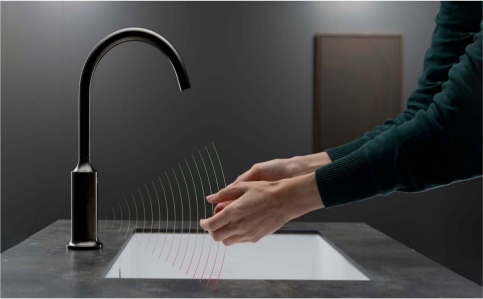
Some models specify Time-of-Flight for precise activation and reduced false triggers. Verify sensor type, detection range, and sensitivity settings in the product spec sheet.
How do we access install instructions and cut‑sheets?
Use the Installation Instructions link above and the Documents section on each product detail page for PDFs, manuals, and cut sheets needed for submittals.
|
|
|