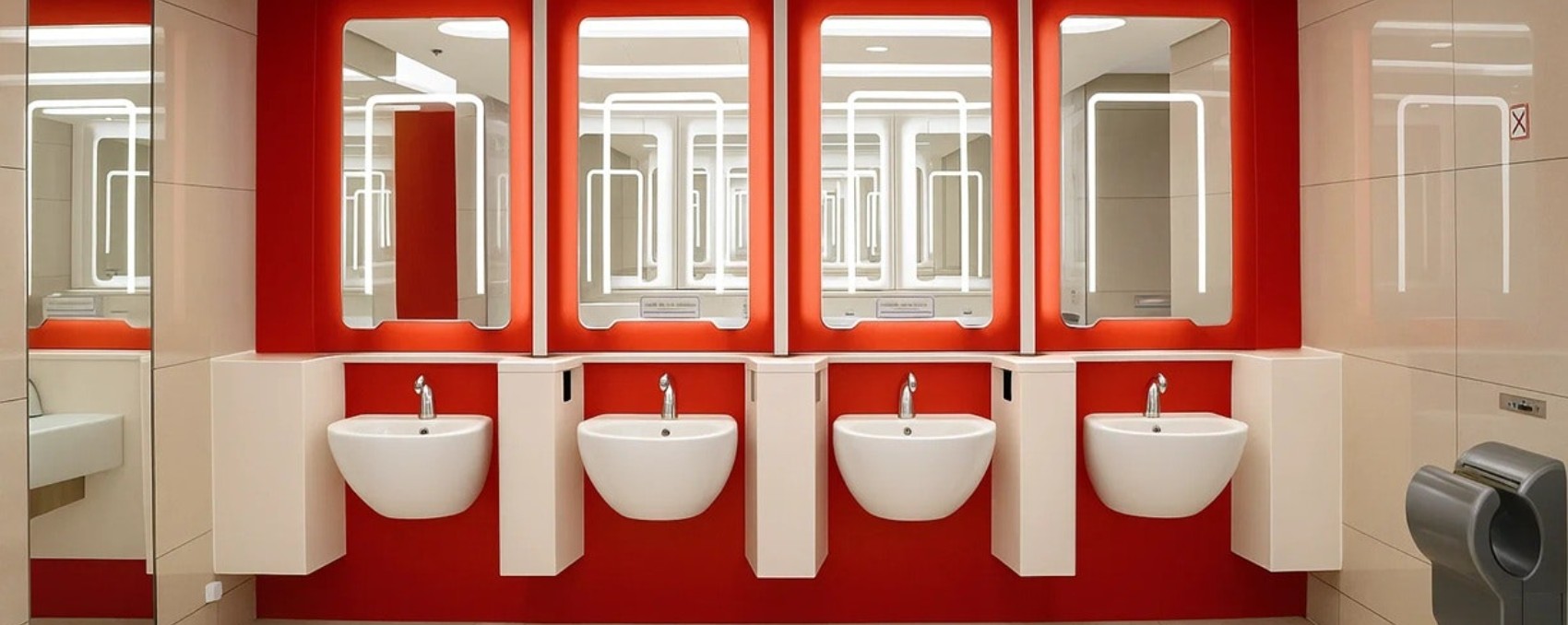
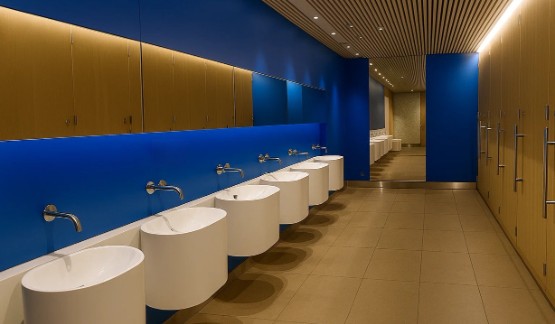
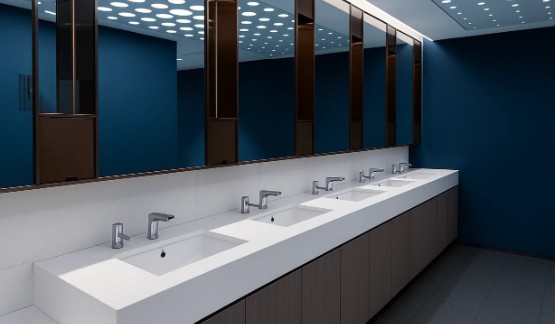
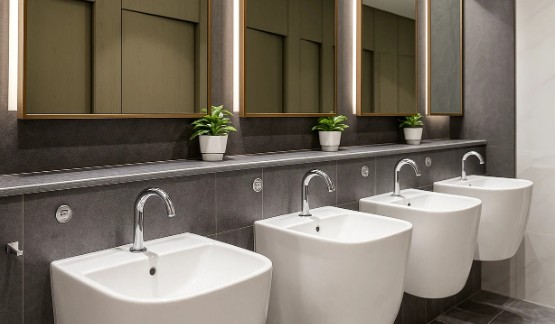
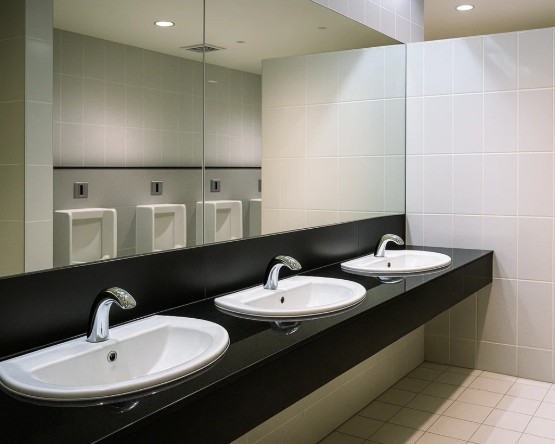
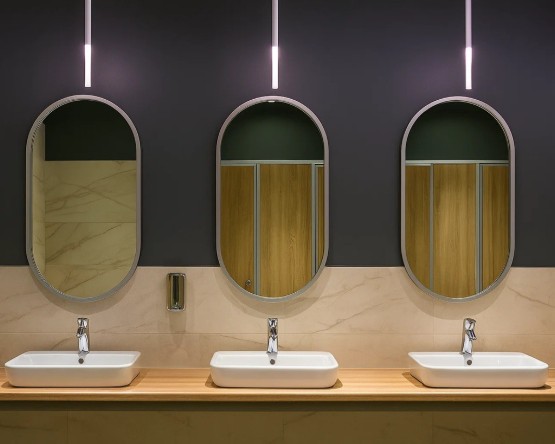
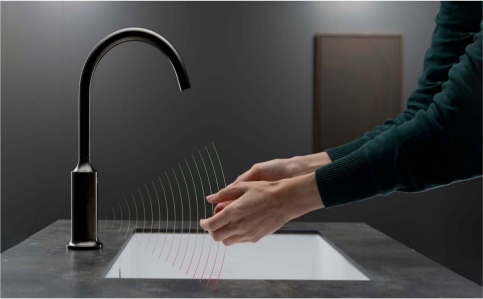
EPDs and HPDs detail life-cycle impacts and chemical safety, and recycled stainless steel, brass, and plastics reduce embodied carbon.
Smart BMS Integration
Telemetry integrates to BACnet/IP, Modbus, and MQTT platforms, with dashboards, predictive analytics, and certification-ready reporting.
Real-World Applications
Airports, hospitals, stadiums, and office towers use leak detection, adaptive controls, and WELL-compliant materials for effect.
Executive Reviews
Theme
Summary
LEED & WELL
Low-flow fittings, EPDs, HPDs, and recycled content enable LEED Water Efficiency and WELL health & material transparency credits.
Smart Conservation
Adaptive dwell times, auto-learn occupancy, anomaly detection, and leak prevention maximize use and sanitation.
Materials
Recycled brass/steel, life-cycle data EPDs, and safe chemistry HPDs reduce carbon and increase occupant trust.
Applications
Airports, hospitals, stadiums, and offices are enhanced by predictive analytics, leak detection, and WELL-compliant solutions.
Project Gallery
Airports — Low-flow documentation and leak detection prevent massive water loss and gain LEED points.Hospitals — HPD-verified products and adaptive flushes balance infection control with conservation.Stadiums — Adaptive controls conserve water during off-peak periods while scaling up for events prior to their occurrence.
Video Showcase
Sustainability in Action
Low-flow fixtures, EPD/HPD reporting, and adaptive smart controls integrated in LEED and WELL platforms.
Smart Conservation Technologies
Auto-learn occupancy, adaptive dwell times, anomaly detection, and leak detection for sustainable restroom operation.
Quick Spec Guidance
LEED/WELL
Report low-flow fixtures, EPDs, HPDs, and recycled content for certification points and occupant health compliance.
Smart Systems
Use telemetry and adaptive dwell to conserve resources, prevent leaks, and provide BMS dashboards for sustainability reporting.
Materials
Direct recycled brass/steel, recycled plastics, and HPD/EPD-approved products to minimize embodied carbon and enhance safety.
Frequently Asked Questions
Why are restrooms so important to sustainability?
Because they consume a disproportionate amount of water, energy, and materials, making them prime targets for conservation programs.
What LEED/WELL credits are available to bathrooms?
Water Efficiency, Materials & Resources, and WELL Health & Comfort credits through low-flow documentation, EPDs, HPDs, and recyclable content.
How are resources utilized in the least possible way by smart technologies?
Adaptive dwell, auto-learn occupancy, anomaly detection, and leak alerts prevent waste while maintaining hygiene.
What materials are appropriate for sustainability?
Recycled stainless steel, brass, plastics, and EPD/HPD-certified products with safe chemistry and low embodied carbon.
Order Spec Kit & BIM
Get LEED/WELL reports, low-flow labels, EPD/HPD documents, and guides to incorporate sustainability in your projects.