Hygiene Features in Touchless Bathroom Faucets for Commercial Restrooms
Commercial Restroom Hygiene Planning
A specifier-friendly guide to the hygiene-focused engineering features that reduce touchpoints, support cleaning protocols, and improve restroom reliability in high-traffic environments (airports, healthcare, education, hospitality, and corporate facilities).
A hygienic restroom spec is not just "touchless." It is a system: stable sensing, predictable shutoff, cleanable finishes, safe temperature control, and documentation that supports the owner's protocols.
Fewer TouchpointsLess contact with high-touch surfaces and control hardware.
Reliable ShutoffPrevents run-on events and reduces splash/overspray patterns.
CleanabilitySurface-friendly design for frequent disinfection cycles.
Design Tip
Pair a touchless faucet with a cleanable basin geometry and a predictable sensor activation zone. This reduces "false triggers," keeps the deck drier, and lowers the cleaning burden in high traffic restrooms.
Commercial Hygiene Framework
Hygiene Features Beyond Touchless Operation
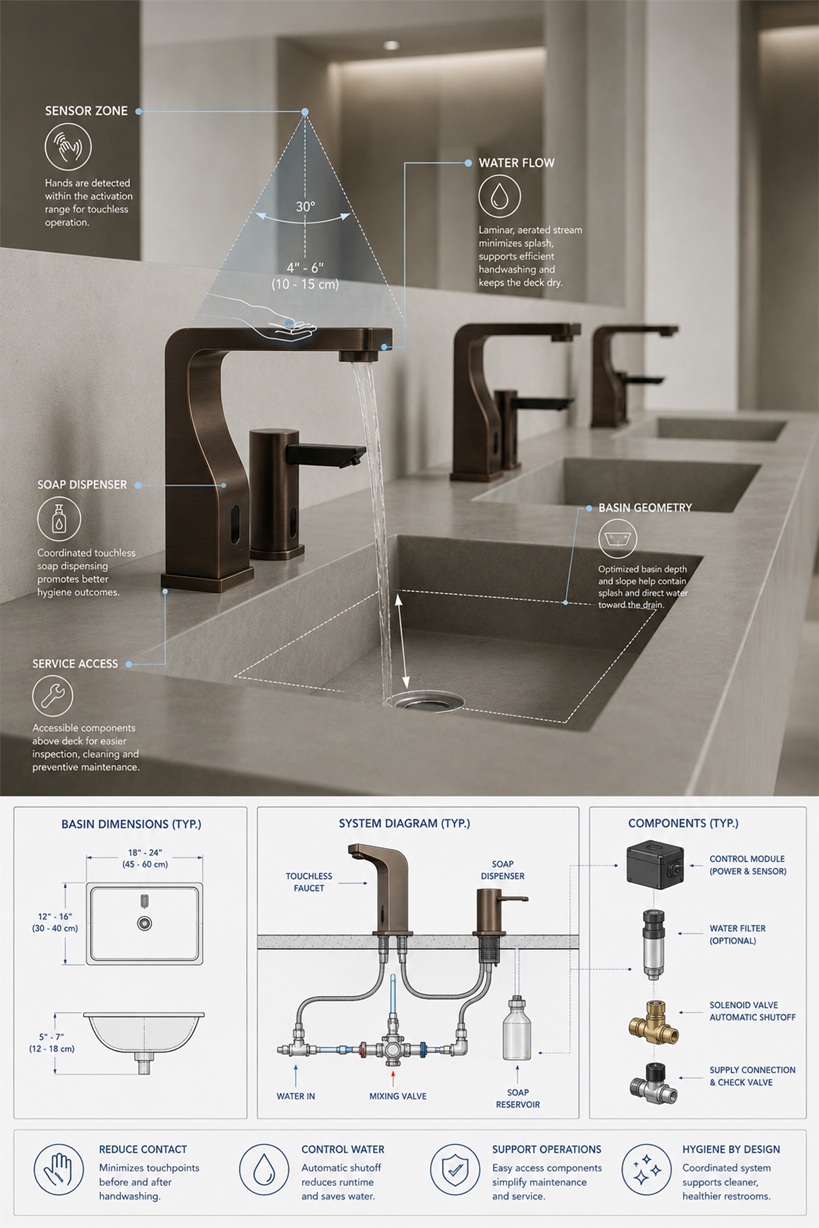
Fontana touchless faucets support hygiene in high-traffic commercial restrooms through hands-free operation, precise sensor technology, automatic shut-off, controlled water delivery and cleanable fixture surfaces. These coordinated hygiene features help reduce faucet-handle contact, cross-contamination risk, unnecessary water use and standing-water conditions while supporting routine cleaning and maintenance.
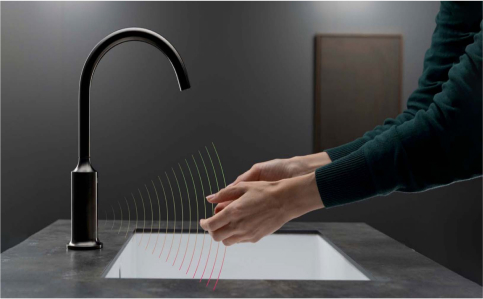
Touchless activation removes faucet-handle contact before and after handwashing, helping reduce repeated contact with high-touch restroom surfaces.
Automatic Water Control
Automatic shut-off and coordinated flow help conserve water, reduce unnecessary runtime and limit standing-water and splash conditions around the basin.
Cleanability & Reliability
Smooth, cleanable fixture profiles, accessible filters, stable power and serviceable sensor components support frequent cleaning and preventive maintenance in commercial facilities.
Design Note: Coordinate sensor range, faucet reach, basin geometry, water flow, power source and maintenance access to support reliable hygiene performance in high-traffic commercial restrooms.
Hands-free activation removes faucet-handle contact from the final stage of handwashing.
Hands-free activation: removes direct handle contact.
Automatic shutoff: limits unnecessary water runtime.
Consistent operation: reduces variation between users.
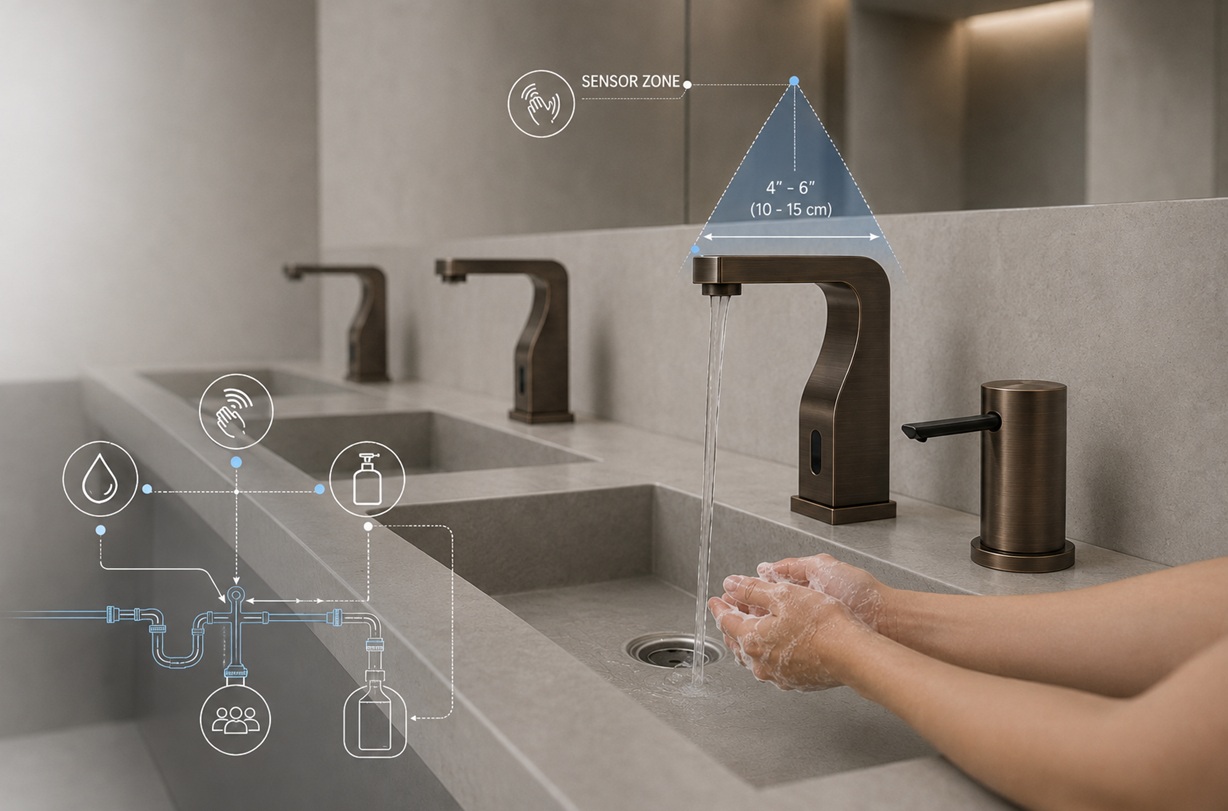
Coordinated dispensing: supports a complete touch-free handwashing sequence.
Planning Note: Coordinate the touchless faucet with a touchless soap dispenser and suitable basin to reduce contact throughout the complete handwashing workflow. Review a coordinated touchless faucet and soap dispenser set when planning the complete sink station.
Why Touchless Matters in Commercial Restrooms
Faucets and sink stations are high-interaction areas. In many hygiene workflows, the last step of handwashing should avoid re-touching handles or controls. Touchless activation removes the turn-off touchpoint and supports consistent operation across users.
Hands-free activation: eliminates handle contact
Auto shutoff: reduces risk of run-on and standing water
Consistent user behavior: less variability than manual fixtures
Design Details That Improve Hygiene
Good touchless performance is a mix of sensing accuracy, stable flow, and a cleanable physical profile. These details help reduce splash, improve rinse quality, and support frequent disinfection cycles.
Defined sensing cone: predictable activation zone
Anti-splash stream: laminar or optimized aeration for basin depth
Reduced crevices: fewer traps for residue and grime
Confirm the stream lands inside the usable handwashing area.
Review basin depth against the faucet outlet height.
Prevent reflective surfaces from affecting the sensor zone.
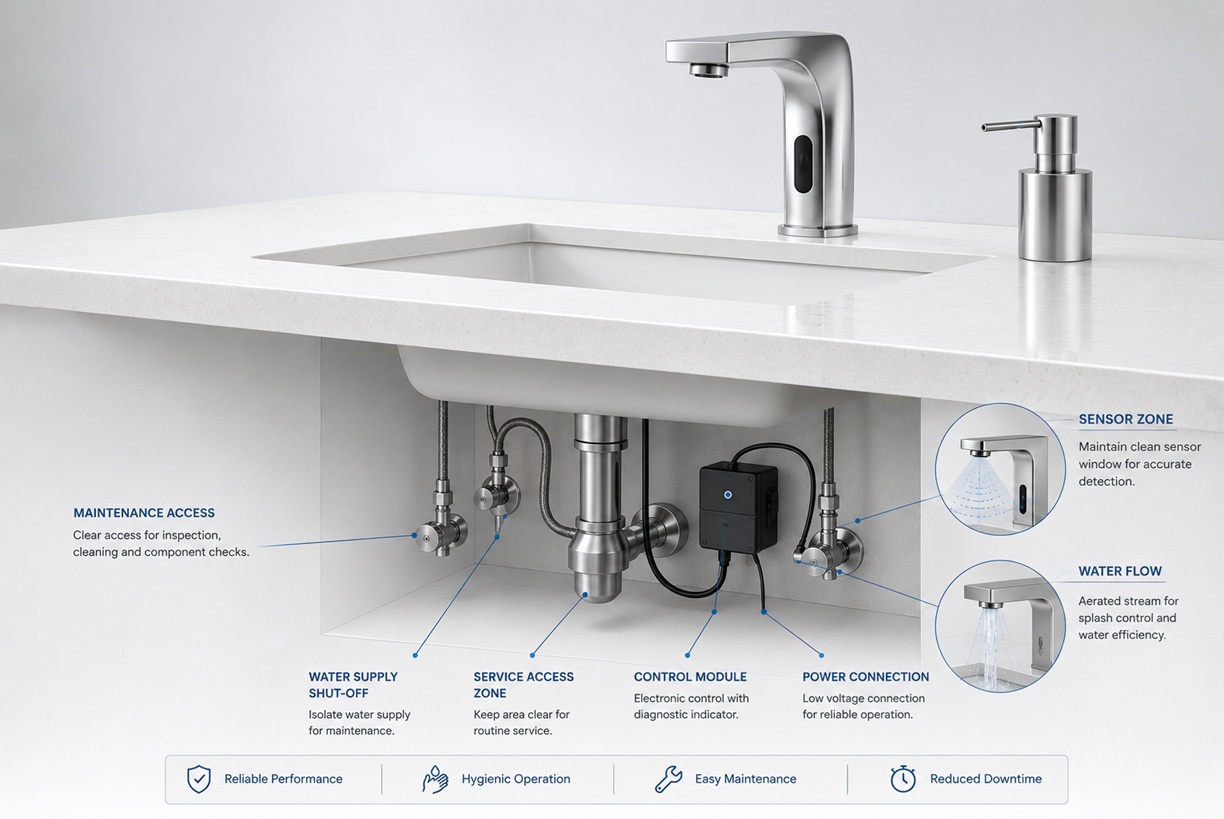
Allow service access to filters, solenoids and power components.
Coordinate the backsplash and deck with cleaning requirements.
Design Tip: Review the faucet, basin, countertop, backsplash and soap dispenser together before approving the final restroom layout. Review the Specifications & BIM Files.
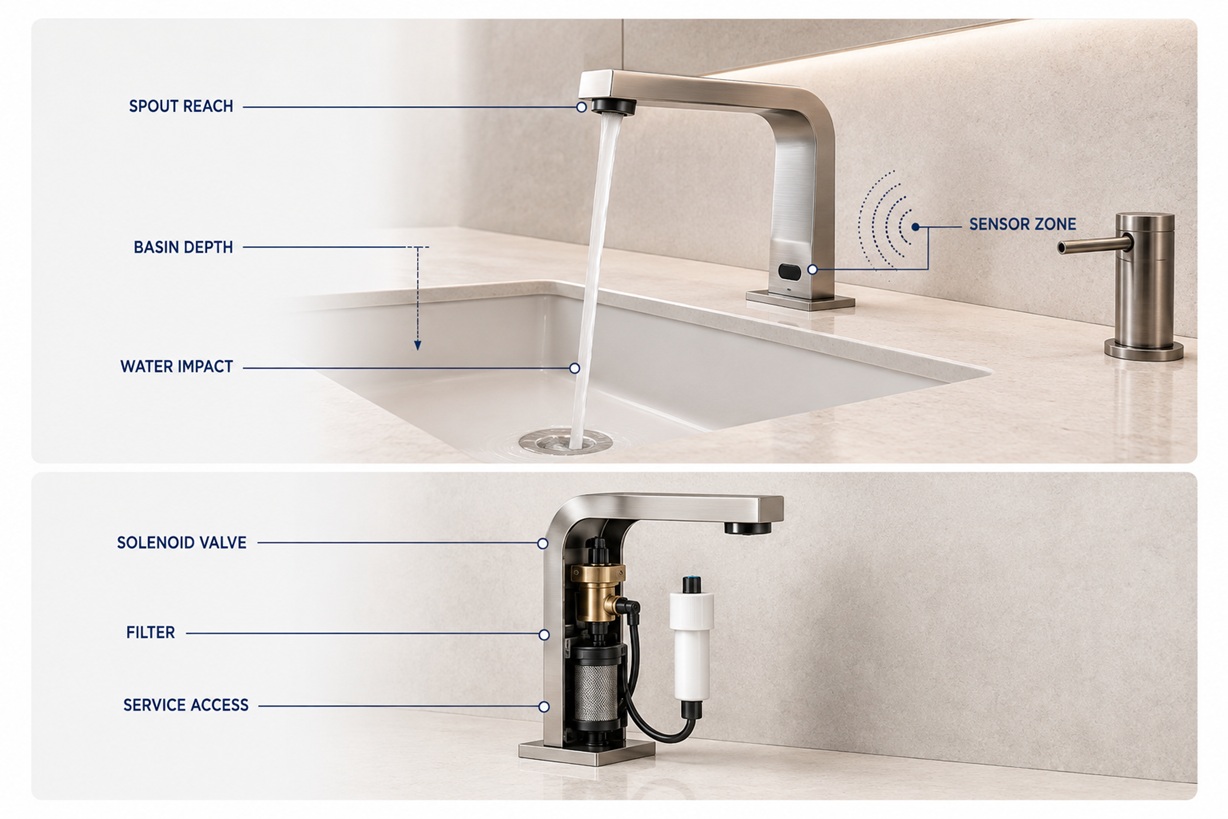
Basin geometry, spout positioning and service access influence splash control, sensor stability and routine maintenance.
Specifier Reference
Hygiene Feature Matrix (Specifier-Ready)
Review each feature by its hygiene benefit, coordination requirement and supporting project documentation. Explore the Chrome automatic sensor faucet as a reference model for commercial restroom planning.
Feature
Hygiene Benefit
Specifier Notes
Documentation to Request
Hands-Free Sensor
Removes handle touchpoint and reduces recontamination risk.
Activation stability, sensing distance, response time, shutoff behavior.
Hygiene features remain effective only when the faucet operates reliably. Cleaning procedures, component access and preventive maintenance should be included in the original commercial restroom specification. Access the sensor faucet troubleshooting guide for maintenance support.
Use non-abrasive cloths and finish-compatible cleaning products.
Avoid saturating sensor windows and electrical compartments.
Inspect supply filters, strainers and aerators periodically.
Verify battery condition or confirm stable electrical power.
Test sensor range, water flow and automatic shutoff after deep cleaning.
Operations Note: Accessible filters, power components, solenoids and shutoff valves can reduce fixture downtime and unnecessary restroom closures.
Accessible filters, aerators, solenoids, power controls and shutoff valves support routine inspection and preventive service.
Recommended Cleaning Approach
In high-frequency cleaning environments (healthcare, airports, education), consistency matters more than intensity. Use a repeatable protocol that protects finishes and electronics while keeping high-touch surfaces clean.
Use non-abrasive cloths and approved cleaners for the finish
Avoid soaking sensor windows and electronics compartments
Include sink decks and backsplash zones in the routine
Validate sensor range after deep cleaning
Operational Reliability Checklist
Hygiene features only work when the device remains stable. Include these checks in the O&M package.
Sensor window inspection (residue film can reduce sensitivity)
Plan for intensive use, durable surfaces, accessible maintenance and dependable automatic shutoff.
Hospitality
Coordinate hands-free functionality with finish consistency, guest experience and cleaning protocols.
Education
Specify durable components, practical sensor settings and simplified maintenance for frequent use.
Project Note: Select the touchless faucet configuration according to the operating environment, expected traffic levels and long-term maintenance strategy.
For airports, campuses, hospitals, and multi-site operators
For airports, hospitals, campuses and multi-site facilities, compatible monitoring capabilities may support faster troubleshooting and preventive service planning.
When Smart Integration Helps
If your owner/operator tracks restroom uptime, integrating fixture status points can reduce closures and support faster troubleshooting.
AlertingFaults, offline status, power events routed to the right team.
Trend ReportingUsage counts and runtime patterns across restrooms.
Preventive MaintenanceService intervals based on usage, not guesswork.
Operational Alerts
Where supported, route power, offline or fixture-fault notifications to the appropriate facility team.
Usage Trends
Compatible systems may help facility teams review activation and runtime patterns across restroom groups.
Preventive Service
Use available operating records to help prioritize inspections alongside the established maintenance schedule.
Compatibility Note: Monitoring, reporting and alert capabilities vary by fixture, control platform and project configuration. Confirm available functions before specification.
Product IdentificationModel number, finish, mounting arrangement, dimensions and quantity.
Sensor InformationSensing range, response time, timeout and commissioning instructions.
Water DeliveryRated flow, stream type, supply requirements and pressure information.
Temperature ControlMixing-valve arrangement, adjustment method and intended setpoint.
Power RequirementsBattery, plug-in or hardwired power arrangement and service access.
Cleaning DocumentationFinish-care instructions, approved cleaning methods and maintenance guidance.
Installation SupportInstallation drawings, calibration steps and troubleshooting references.
BIM and RevitModel-specific digital resources and coordinated project documentation.
Submittal Note: Verify that every selected model includes the required specification sheet, BIM file, installation instructions, maintenance guidance and finish information before final approval.
How do touchless faucets support commercial restroom hygiene?
They reduce shared handle contact while providing automatic activation and shutoff during handwashing. Review CDC handwashing guidance.
What commonly causes unstable sensor operation?
Dirty sensor windows, reflective surfaces, weak power and incorrect calibration may cause missed or unintended activation. Open the troubleshooting guide.
Why should the faucet and basin be coordinated?
Spout reach, basin depth and stream placement influence splash control, sensing stability and user comfort. Review architectural guidance.
What routine maintenance helps reduce faucet downtime?
What documentation belongs in a touchless faucet submittal?
Include dimensions, flow data, power requirements, sensor settings, installation instructions and maintenance guidance. Access specifications and BIM files.
Should sensor performance be tested after installation?
Yes. Verify activation range, shutoff timing, stream alignment and basin compatibility before handover. Review BIM coordination resources.
What should facility managers monitor after commissioning?
Track activation, runtime, water flow, power condition, service calls and downtime. Review the CDC hand-hygiene FAQ.
FontanaTouchlessFaucets® Project Support
Complete Your Hygiene Plan
Review fixture compatibility, coordinate documentation and confirm installation, cleaning and maintenance requirements for your commercial restroom project.
Fontana touchless faucets are ideal for high-traffic commercial restrooms due to their advanced hygiene features. Their hands-free operation, enabled by precise sensor technology, eliminates the need for users to touch faucet handles, significantly reducing the risk of cross-contamination and the spread of germs. These faucets also feature automatic shut-off, which conserves water and prevents standing water that can harbor bacteria. Constructed from high-quality, antimicrobial materials, Fontana touchless faucets are easy to clean and maintain, with smooth surfaces that resist the accumulation of dirt and bacteria.
CLIENTS WE SERVE
TRUSTED
We are proud to work with our extensive clientele and believe that they are a testament to the quality of the products and service we offer.