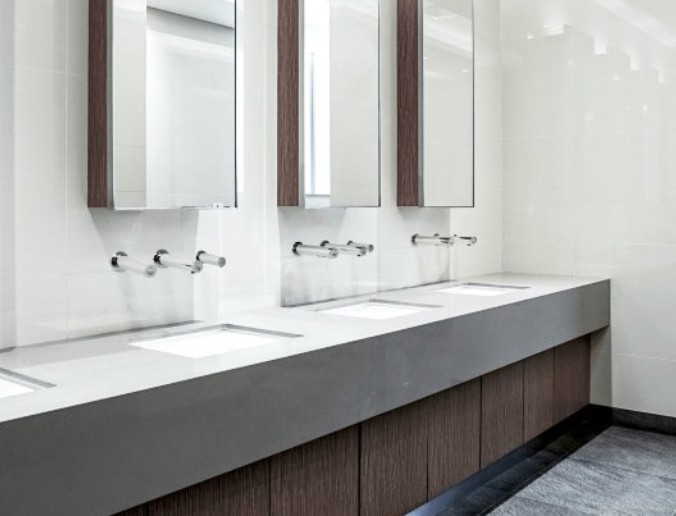
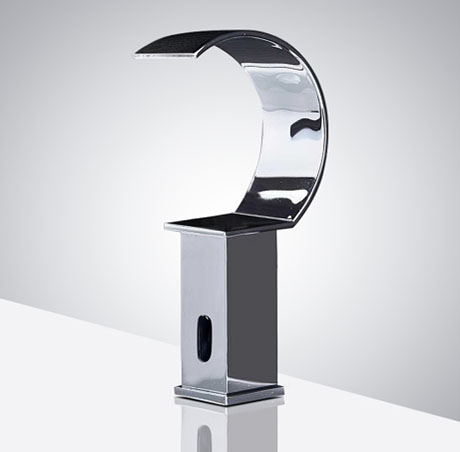
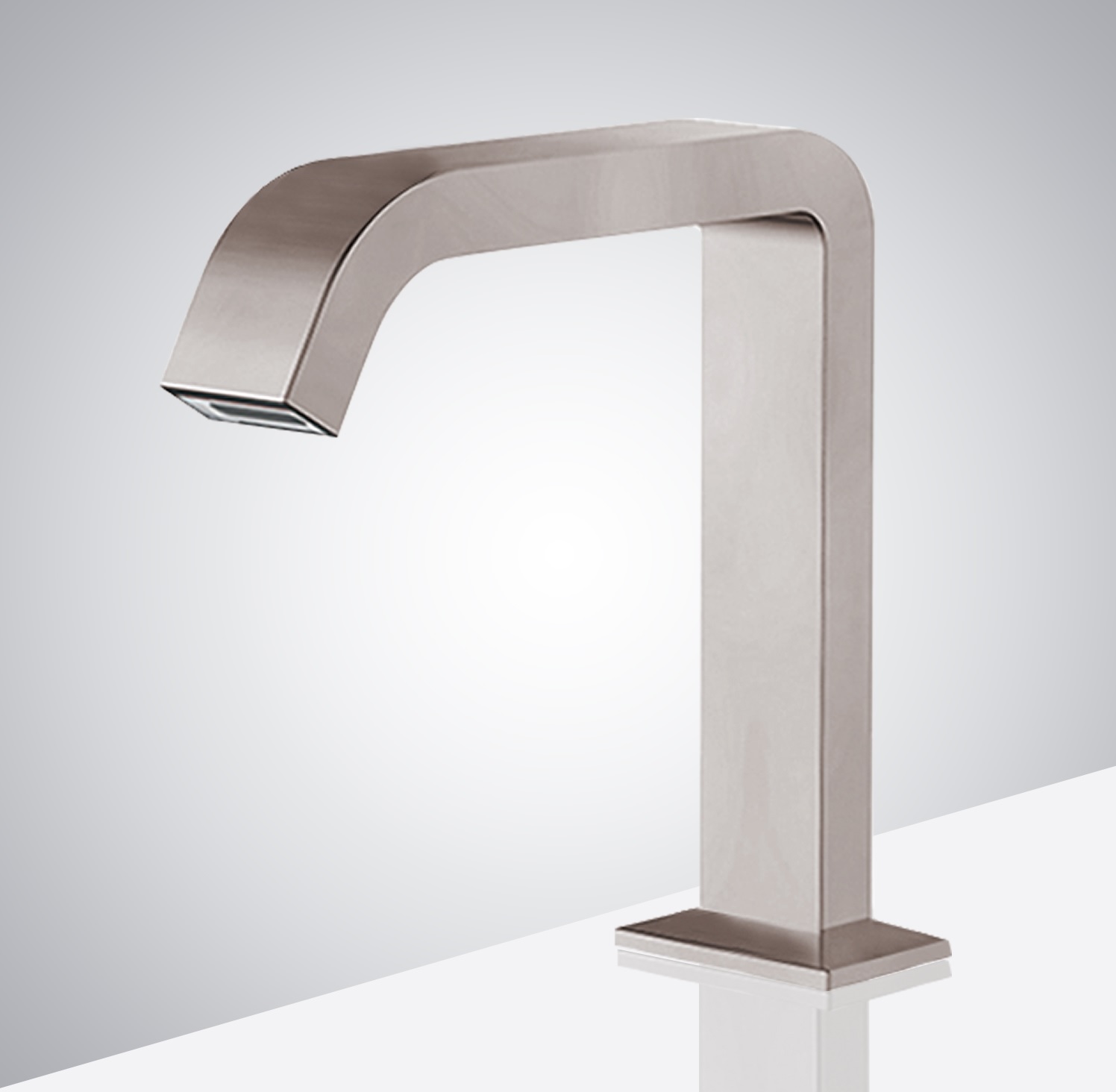
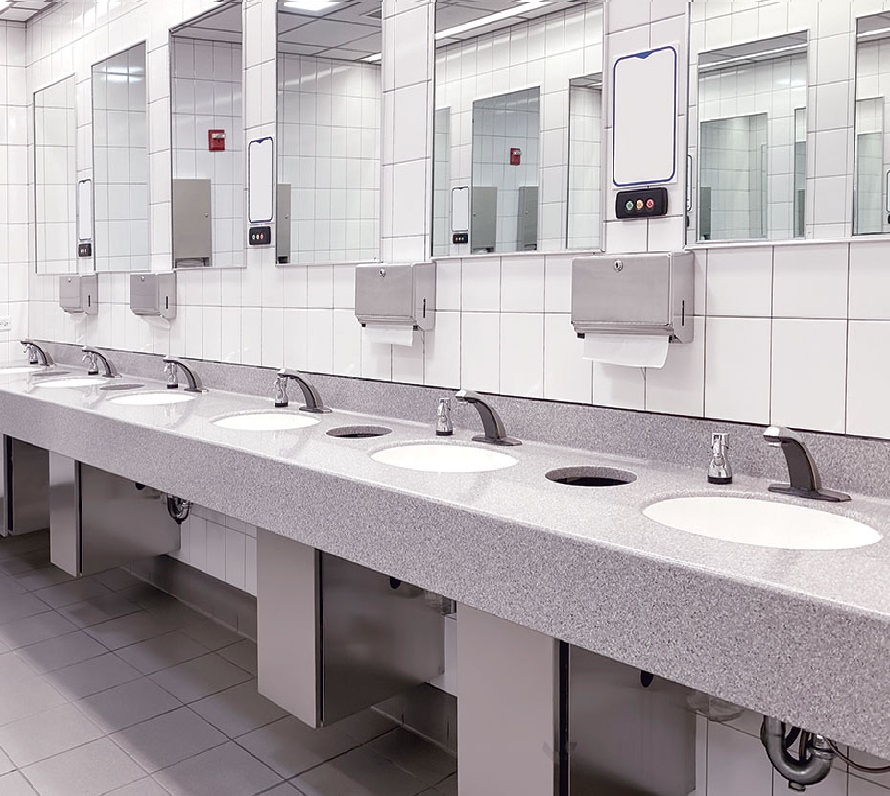
Sensor-driven faucets reduce waste by shutting water off instantly, controlling flow rates, and improving user compliance in high-traffic restrooms.
Engineered for airports, healthcare, education, corporate and hospitality facilities.
Fast shut-off logic0.35–0.5 GPM capablePressure-compensating optionsSpec-grade durability
Manual faucets waste water through user behavior—running water longer than necessary, incomplete shutoff, or leaving taps on while soaping.
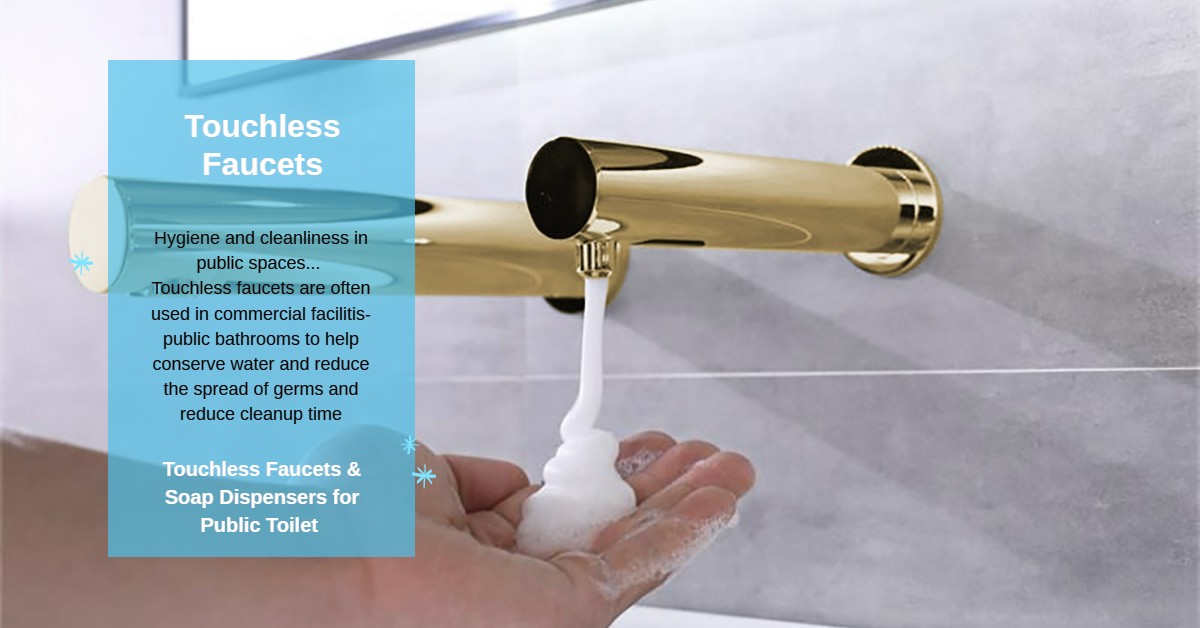
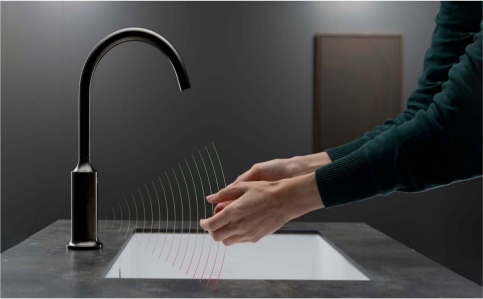
Touchless faucets use sensor-controlled activation to open the valve when a user is detected and automatically stop water flow according to the system's programmed shut-off logic.
In high-traffic washrooms, even small timing improvements translate into major annual water savings.
Newer commercial sensor faucets add flow restrictors, aerators, and pressure-compensating regulators to keep output stable across variable supply conditions
(multi-story buildings and older campuses). Many spec-grade models also support thermostatic mixing to reduce energy waste and improve user comfort.
Note: Several links in the source content were written as fontanatouchlessfaucets.com.com. In this clean version, they are corrected to fontanatouchlessfaucets.com.
Commercial Touchless
Touchless Bathroom Faucets for Commercial Restrooms
Spec-grade sensor faucets engineered to reduce water waste, improve hygiene, and withstand high-frequency use in airports, healthcare, education, office buildings, and hospitality projects.
Traditional faucets waste water through partial shutoff, unnecessary run time during soaping, and extended flow during high-traffic periods.
Touchless faucets limit flow to true hand presence and can be configured with 0.35–0.5 GPM aerators for maximum conservation.
Spec-grade sensor faucets also use pressure-compensating regulators to keep output stable across fluctuating supply (multi-story buildings).
The result is consistent user experience and predictable consumption for sustainability tracking.
What flow rate is best for commercial handwashing?
Most projects specify 0.35–0.5 GPM where allowed, balancing perceived performance with conservation. Pressure compensation improves consistency.
Battery or hardwired for high-traffic restrooms?
Hardwired offers maximum reliability and supports more advanced sensor logic; battery is ideal for retrofit speed—choose based on traffic + access.
How do you avoid false activation?
Use optical shielding, digital filtering, correct sensor window placement, and avoid high-reflect surfaces directly under the sensor line-of-sight.
Touchless Operation
Plan & Design a Water-Saving Touchless Restroom
AEC-ready touchless faucet design guidance with specifier links, performance considerations, and direct collection entry points
for high-traffic commercial environments.
Engineering Principles that Drive Water Conservation
Touchless faucets conserve water through precise valve timing, shut-off delay calibration, low-flow aerators,
and pressure compensation. When users remove hands, the valve closes immediately—eliminating overrun that is common in manual fixtures.
Spec-grade systems also reduce micro-drips through high-quality sealing and serviceable solenoid architecture.
For reflective countertops, high lumen lighting, or direct sunlight conditions, choose models with improved optical shielding and digital filtering.
This minimizes false activation and protects conservation performance over time.
Specifier CTA: Build a Submittal-Ready Package
Standardize your touchless faucet specification with a repeatable checklist: sensor performance, flow rate inserts, power configuration,
rough-in dimensions, finish durability, and maintenance access.
Specifier-friendly entry points for finish selection, architectural models, and commercial IR series—built to reduce water waste and support hygiene-first restroom planning.
Use this technical checklist to standardize touchless faucet selection for commercial restrooms (airports, healthcare, education, corporate, hospitality).
It aligns sensor performance, water conservation targets, and service access requirements to reduce lifecycle cost.
Codes: ADA clearances; local plumbing code; finish and accessibility requirements.
Maintenance: aerator cleaning interval; battery replacement cadence; service access without removing deck.
Recommended Project Notes
Specify adjustable shut-off delay and defined GPM inserts to prevent "open-ended" water use. Include strainer access and
serviceability requirements for long-term reliability in high-traffic applications.
Master Spec Snippet (Editable)
TOUCHLESS LAVATORY FAUCET (COMMERCIAL)
- Sensor-operated, hands-free activation; sealed electronics
- Flow rate: [0.35 / 0.5] GPM with pressure-compensating regulator
- Shut-off timing: model-specific automatic shut-off and configurable timing options; verify available settings for the selected faucet
- Valve: serviceable solenoid; debris strainer accessible; anti-drip aerator
- Power: [battery / hardwired AC / hybrid]; low-battery or diagnostic indication
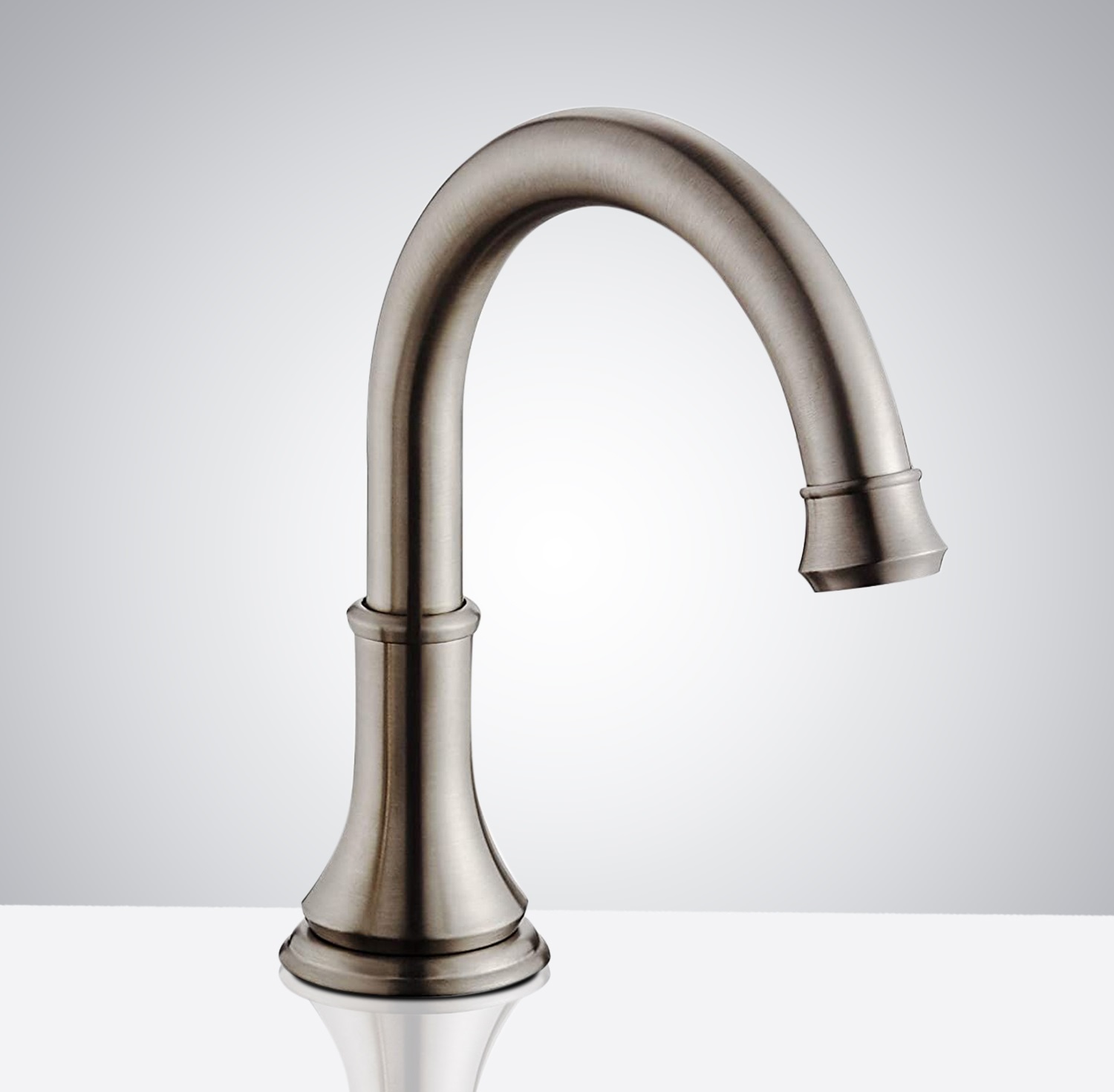
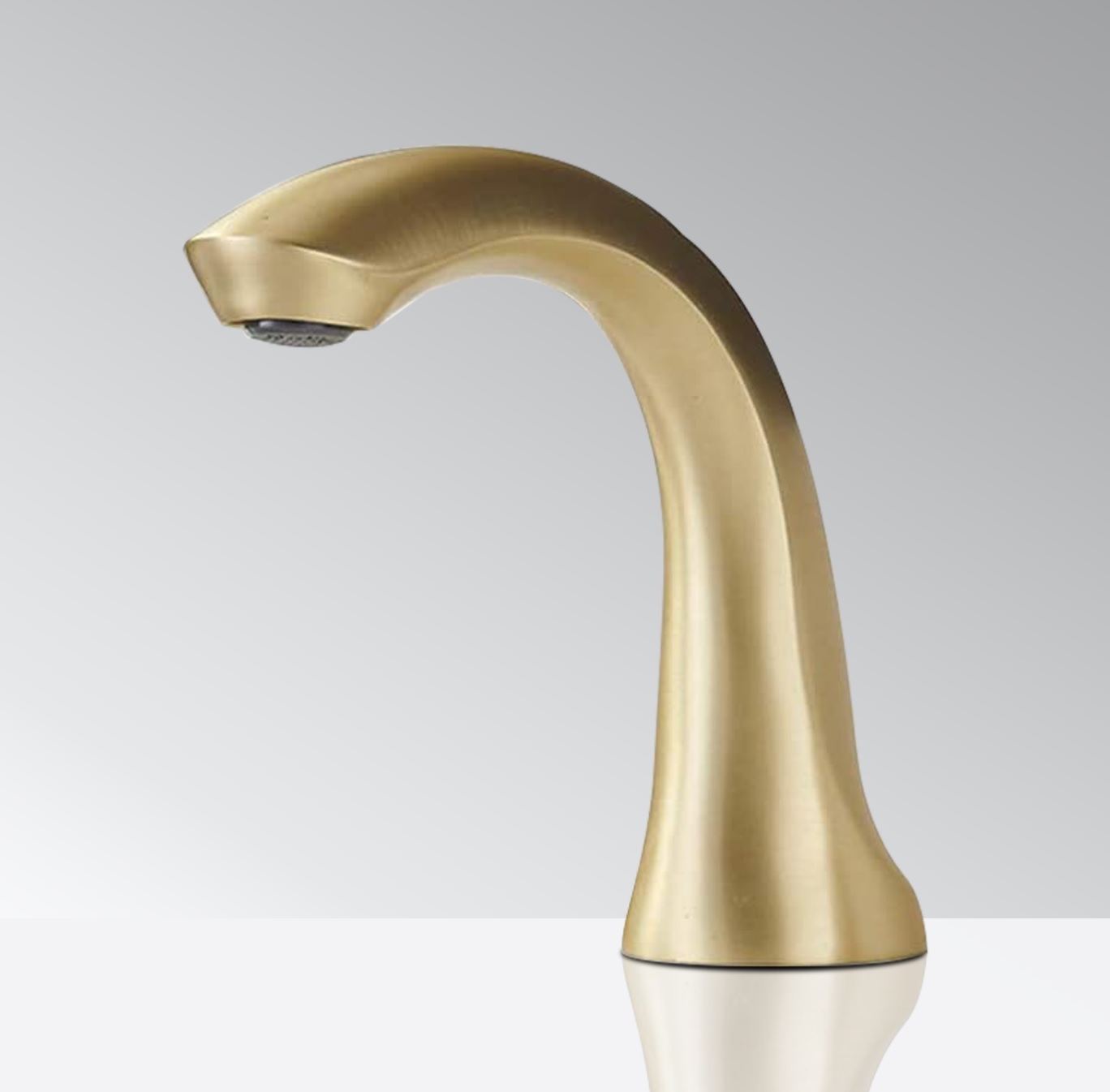
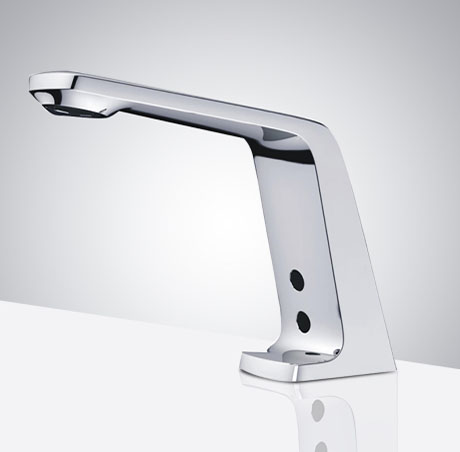
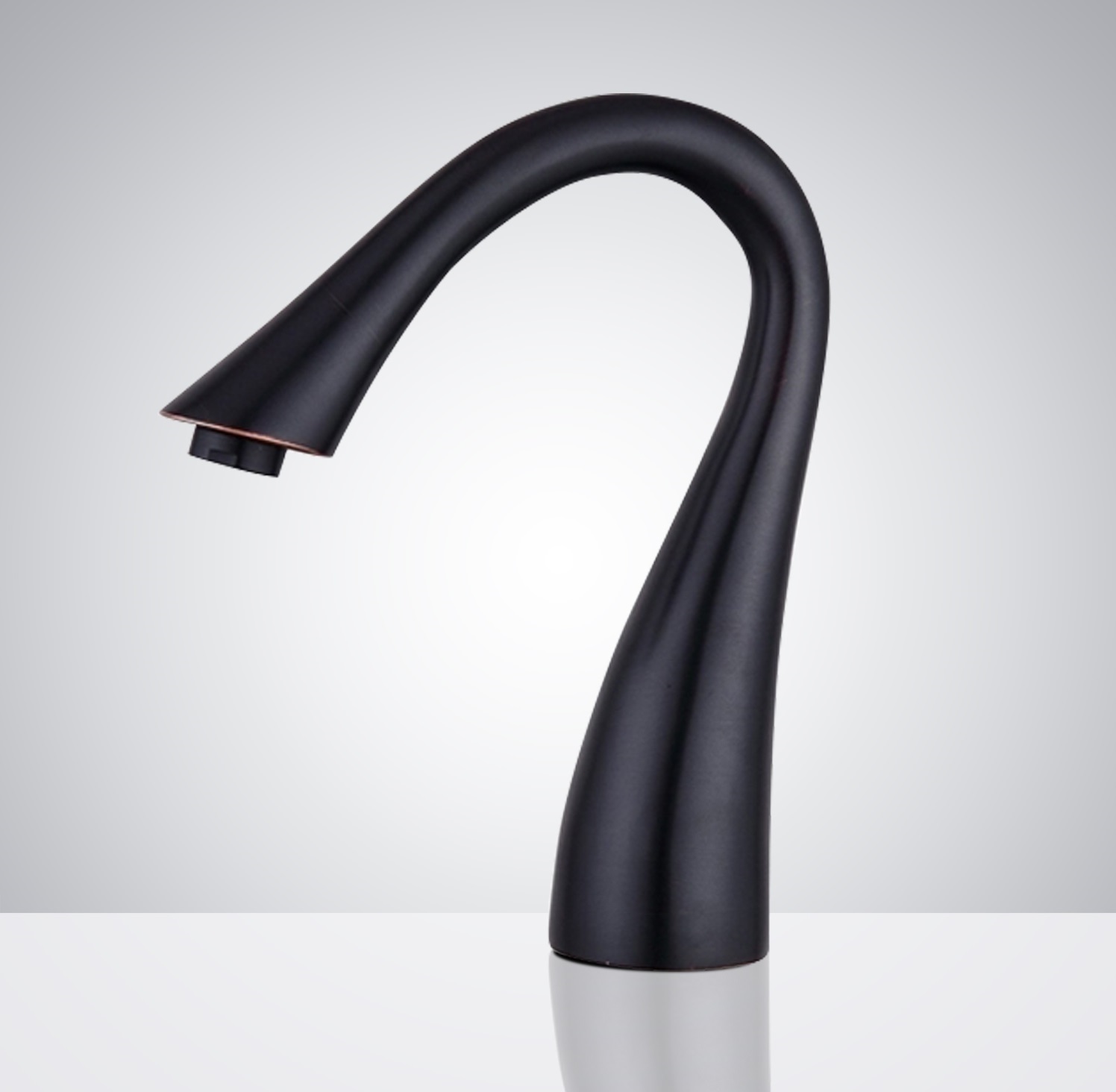
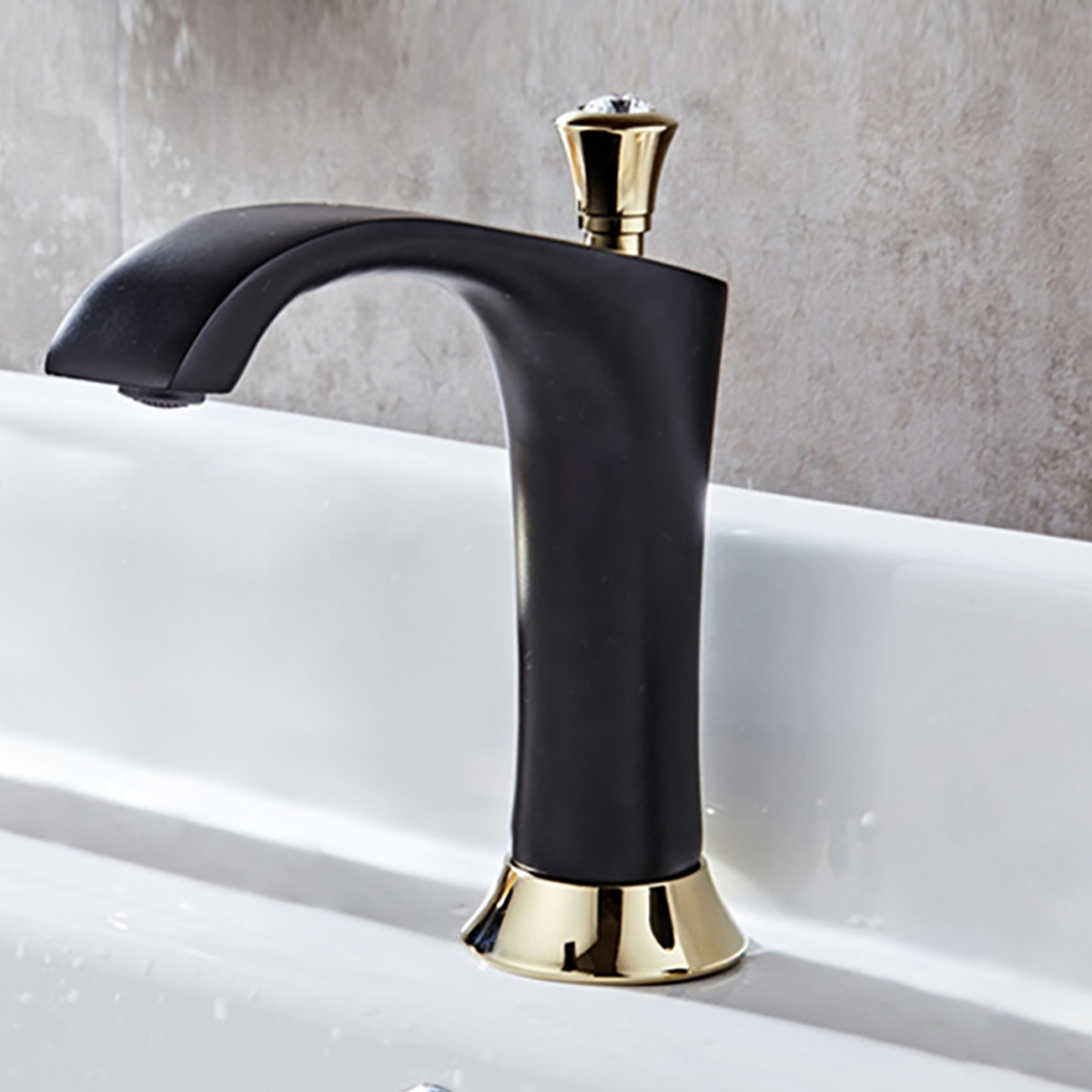
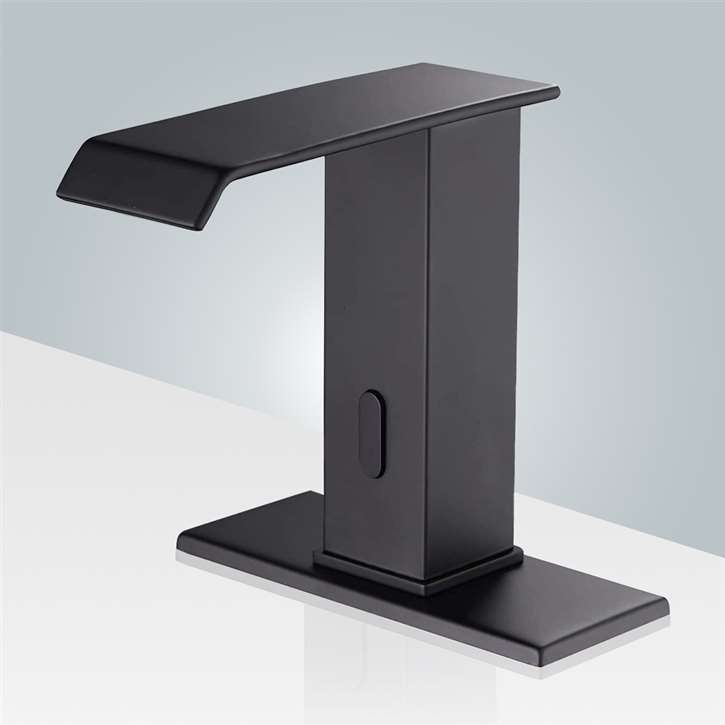
- Construction: cast brass body; corrosion-resistant finish [chrome / stainless / brushed nickel / matte black / brushed gold]
- Accessibility: ADA-compliant installation clearances; compliant operability
- Maintenance: replaceable wear components; aerator service access; documented service instructions