Fontana · Restroom Specification
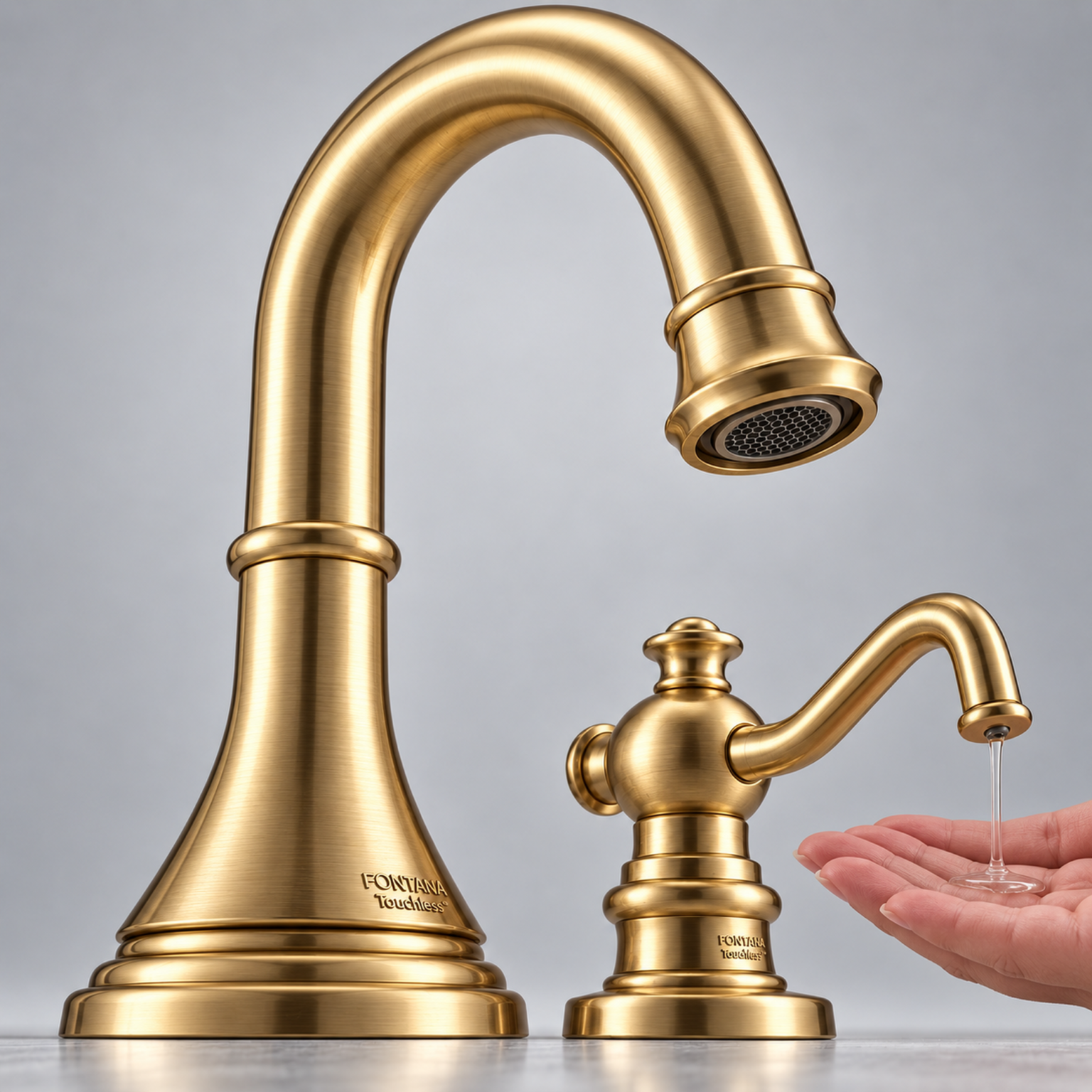
Best Soap Dispenser
Controlled Delivery
Refill Architecture
Cleaning Compatibility
Service Continuity
Choose for the Building’s Daily Routine
The best soap dispenser is the one whose delivery mechanism, refill
method and service requirements fit the building. A hotel washroom,
an office floor and a clinical handwashing station can require different
assemblies even when their visible finishes match. Start with the
owner’s cleaning routine and approved soap, then compare
commercial dispensing options
against the installation details and available replacement parts.
For architects and facility teams, the decisive questions extend beyond
appearance: can staff replenish the unit without removing adjacent
fittings, does the outlet deliver cleanly into the user’s palm, and can
a failed pump be exchanged without taking apart the counter? These
checks turn a product shortlist into a maintainable wash-station
specification.
AEC Selection Criteria
Decisions That Shape Long-Term Use
· Delivery Quality
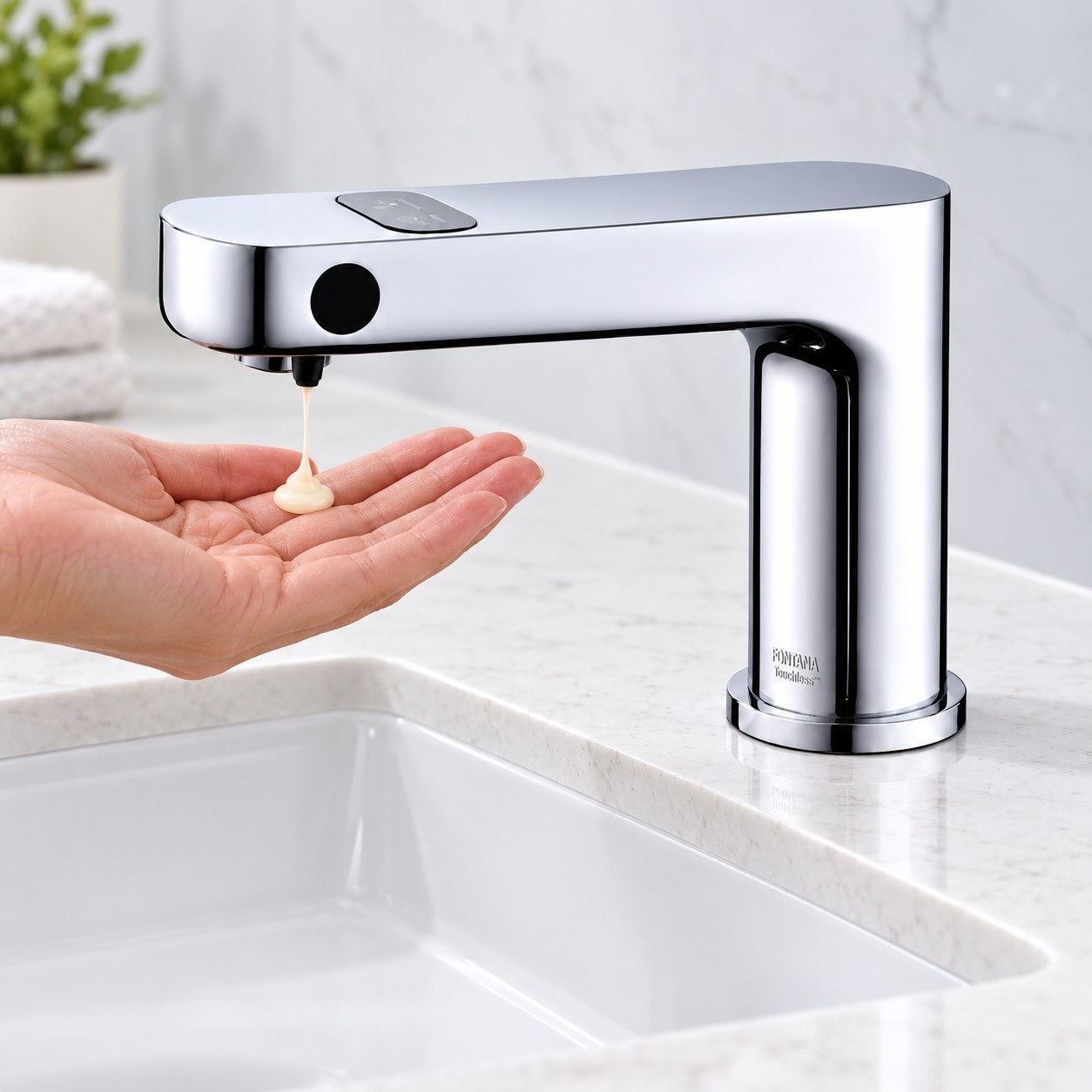
Check the Outlet Between Cycles
Evaluate where soap lands, how promptly delivery stops and whether
residue collects at the nozzle. A satisfactory demonstration should
include repeated hand approaches and an idle period, rather than a
single successful activation.
Explore More
Use the intended soap during the mock-up. Observe delayed drips,
stringing and unintended second doses. Record any
manufacturer-approved adjustments and confirm that the cleaning
procedure reaches the outlet without damaging its finish.
· Replenishment Method
Evaluate the Refill Interface
Compare sealed cartridges, removable bottles and shared reservoirs
by their handling steps, consumable availability and cleaning
instructions. Identify which components are reusable and which are
replaced with each refill.
Explore More
Clinical refill procedures need particular attention:
CDC guidance for healthcare workers
advises against adding soap to partially empty dispensers.
Require a written refill method for the chosen assembly and
train staff before occupancy.
Review Shared-Reservoir Systems →
· Surface Durability
Match the Finish to Cleaning Chemistry
Request the care instructions for the exact finish. The exposed
housing, sensor window and refill seals may have different cleaning
restrictions; approval for one surface should not be assumed to
cover the complete dispenser.
Explore More
Compare the facility’s proposed cleaning products with the
manufacturer’s permitted agents, dilution and application
method. Confirm whether spraying directly onto openings is
allowed and retain the finish-care instructions with the
housekeeping schedule.
· Repair Strategy
Define the Replaceable Service Unit
Determine whether the pump, sensor and power module can be replaced
separately. Review part availability and the physical removal route
before specifying a concealed assembly or a tightly packed
under-counter arrangement.
Explore More
Ask the installer to demonstrate component removal with the
basin, cabinet and access panel in their finished positions.
Keep part numbers and fault-recovery instructions accessible
to the maintenance team.
Explore Fault-Diagnosis Guidance →
Installation Review
Resolve the User Path and the Service Path
Locate the outlet so users can collect soap comfortably and return
to the basin. Separately, reserve the space staff need to unlock,
refill and repair the unit. Both paths should work with the finished
counter and cabinetry in place.
-
Deck installation:
check the bottle’s withdrawal space as well as its installed
dimensions.
-
Wall installation:
check cover-opening clearance and access to the refill lock.
-
Electrical routing:
keep connections accessible and protect cables according to
the installation instructions.
Explore More
Complete the accessibility review using the applicable reach
and operability criteria in the
U.S. Access Board’s operable-parts guide
.
Assess the dispenser in its actual position relative to the
counter obstruction and permitted approach.
|
|
Fontana Commercial Hygiene · AEC Specification
Best Soap Dispensers
Measured Dose
Accessible Operation
Refill Control
Service Planning
The best soap dispenser for a commercial project is the one that
matches the approved soap formulation, installed reach conditions
and facility service plan. Assess the dispenser as a complete
assembly: sensor, pump, outlet, reservoir, power supply and
mounting hardware. Finish selection follows confirmation of
those operating requirements.
For workplaces covered by OSHA’s general-industry sanitation
standard,
29 CFR 1910.141(d)
requires sanitary washing facilities and provision of hand soap
or similar cleansing agents. The operational priority is an
accessible, stocked and functioning dispensing point.
Architecture · Engineering · Facility Operations
Criteria for a Defensible Specification
Resolve these items before approving a model, issuing mounting
details or standardizing dispensers across a building portfolio.
Architectural Coordination
Reach and Activation
Locate the usable dispensing point within the accessible reach
envelope. The U.S. Access Board identifies a 15–48-inch range
for unobstructed adult reach; counters and other obstructions
change the applicable limits. Review approach space, reach
depth and the actual activation location rather than applying
one mounting height to every layout.
Reference:
U.S. Access Board — Operable Parts
.
Hygiene Operations
Controlled Refill Practice
Define the refill method, cleaning procedure and responsibility
for each dispenser. In healthcare guidance, CDC advises against
adding soap to partially empty dispensers because topping off
has been associated with bacterial outbreaks. Incorporate the
manufacturer’s reservoir-cleaning instructions into the
facility’s refill procedure.
Reference:
CDC — Clinical Hand Hygiene and Refilling Soap Dispensers
.
Consumable Selection
Formulation Compatibility
Confirm whether the pump accepts liquid soap or a specified
foaming formulation, including documented viscosity limits and
compatible wetted materials. For routine consumer handwashing,
FDA reports insufficient evidence that OTC antibacterial washes
prevent illness better than plain soap and water. Clinical
product selection should follow the facility’s own approved
protocols.
Reference:
FDA — Plain Soap and Antibacterial Washes
.
Controls Engineering
Repeatable Dispensing
Record delivered soap volume per cycle, permitted adjustment
settings and repeat-trigger behavior. Test the sensor against
the installed basin, adjacent fixtures and lighting conditions.
Confirm that a normal hand approach produces one useful dose
without unintended activation or dripping after the cycle.
Submittal evidence: dose range, sensing adjustment, priming
procedure and documented acceptance criteria for the exact model.
Electrical Coordination
Power and Fault Recovery
Schedule the approved adapter or battery supply, cable route
and accessible service location. Verify low-power indication
and the reset procedure. Where backup operation is proposed,
confirm that the selected model supports it and establish the
expected behavior after power loss and restoration.
Submittal evidence: input ratings, adapter details, applicable
electrical listing and manufacturer-defined installation
environment.
Operations and Maintenance
Accessible Service Components
Reserve clearance to remove the reservoir, pump and power module
without dismantling adjacent cabinetry. Confirm refill-key
access, tubing routes and replacement-part availability. Keep
stored supplies and service components out of required lavatory
knee and toe clearances.
Reference:
U.S. Access Board — Lavatories and Sinks
.
Commissioning Evidence to Request
Use the installed assembly and approved consumable for acceptance
checks. Retain the results with the operating manuals and model
schedule.
|
Verification Item
|
Field Check
|
Handover Record
|
|
Dispensed Volume
|
Field Check
Measure repeated cycles using a suitable method. For foam,
quantify liquid consumption rather than expanded foam volume.
|
Handover Record
Approved soap, dose setting, sample count and observed variation.
|
|
Detection Behavior
|
Field Check
Check normal hand approach, removal and nearby movement at
the installed wash station.
|
Handover Record
Sensor setting, unintended activations and adjustment outcome.
|
|
Priming and Restart
|
Field Check
Run the manufacturer’s procedure after initial filling,
reservoir replacement and approved power interruption.
|
Handover Record
Priming steps, restart observations and any faults.
|
|
Outlet Condition
|
Field Check
Observe the nozzle immediately after dispensing and following
the specified idle period.
|
Handover Record
Dripping, residue, cleaning action and corrective work.
|
|
Refill Access
|
Field Check
Demonstrate the complete refill or cartridge-change procedure
in the finished installation.
|
Handover Record
Access route, required tools, cleaning procedure and
responsible team.
|
|
Consumable Identity
|
Field Check
Match the installed product to the dispenser’s compatibility
documentation and owner approval.
|
Handover Record
Formulation, supplier reference and permitted substitution
process.
|
Technical Insights
Calculate the Service Interval
Estimate refill demand from usable liquid capacity and measured
soap consumption. Use the same volume units throughout.
Estimated cycles = usable soap capacity ÷ measured liquid
dose per cycle
Divide cycles by expected daily activations, then allow for
priming, unusable residual volume and a service reserve.
Treat the result as a planning estimate and validate it
against occupied-building usage.
Compare Delivered Cost
Evaluate consumable cost per measured dose alongside refill
labor, battery replacement, cleaning and spare components.
Foam expansion alone is not a measure of soap savings.
Confirm the required dose with the approved product
instructions and compare systems on the same operating
assumptions.
Resolve the Installation Before the Finish
Use mounting and service conditions to narrow the selection, then
coordinate the visible finish with the architectural schedule.
Individual Wash Stations
For independently supplied dispensers, confirm mounting holes
or wall backing, outlet position and removal clearance for
the local reservoir. Document deck thickness and the
relationship between the dispenser, basin rim and user
approach.
Explore Countertop Foam Dispensers →
Multiple Dispensing Points
For a shared-supply layout, review permitted reservoir
elevation, tubing lengths and routing, pump arrangement and
refill access. Establish the maintenance procedure for the
whole network and assess the number of stations affected by
a supply or component fault.
Review Multi-Feed Soap Systems →
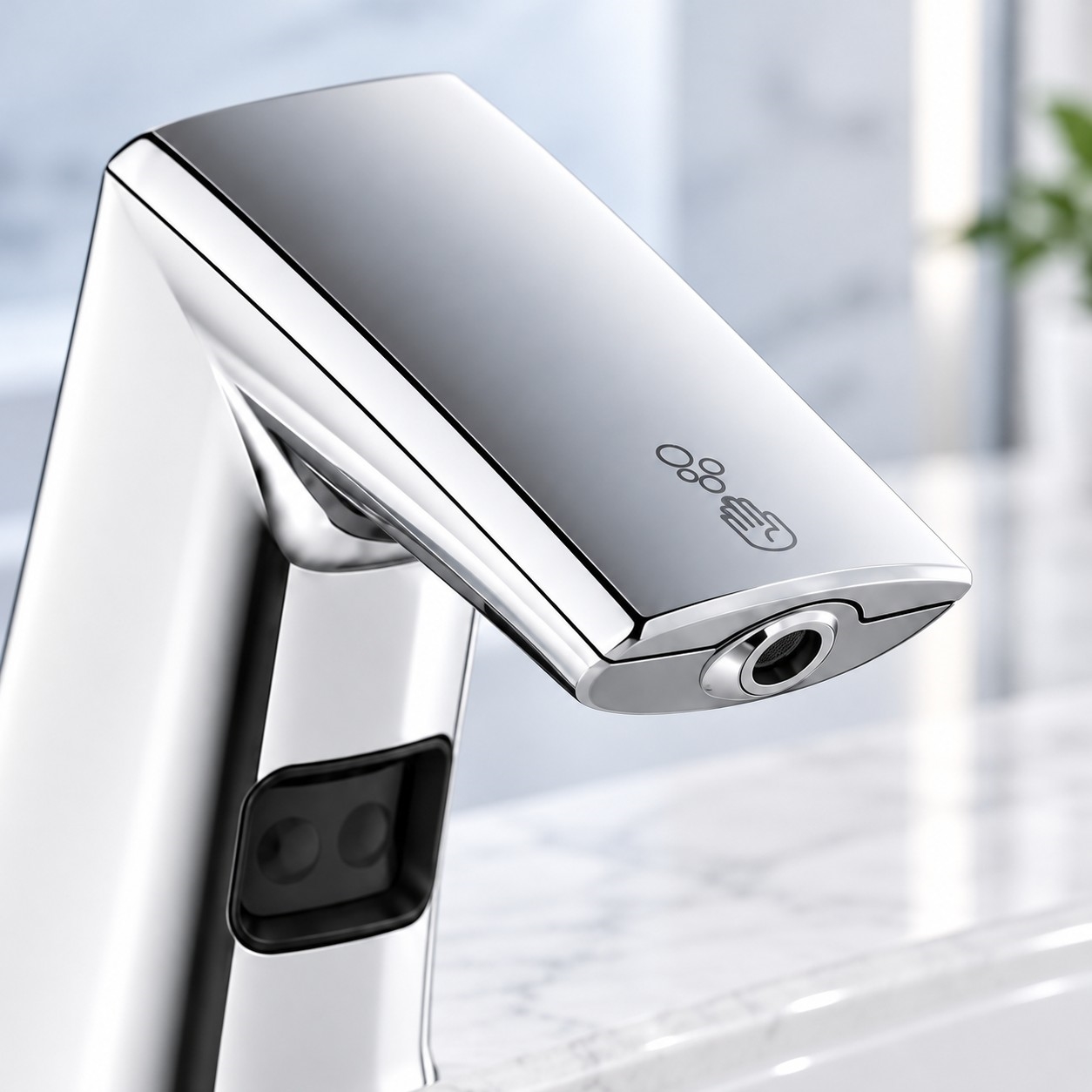
BEST SOAP DISPENSERS
Explore the Best Soap Dispensers
As hygiene and building performance standards continue to evolve, soap dispensing systems are increasingly evaluated for dispensing consistency, sensor reliability, refill efficiency, and maintenance requirements. These considerations align with wellness and sustainability objectives supported by
WELL, LEED, and industry guidance from NSF, AIA, and NKBA, helping inform specification decisions for modern restroom environments.
|
|
|