Complete Guide to Automatic Soap Dispensers in Commercial Restrooms (2025) | FontanaTouchlessFaucets.com
Overview & Benefits
Hygiene: Touchless activation limits cross-contact on high-touch surfaces; proper handwashing with soap helps reduce gastrointestinal illness by up to ≈30% and respiratory illness by ≈16–21% in community settings [1] Consistency: Metered doses (typ. 0.8–1.2 mL ) standardize product usage and reduce waste.Operations: High-capacity reservoirs and visible level windows minimize service rounds; optional lockable covers deter tampering.Compatibility: Foam, liquid, or spray formats support varied facility policies (e.g., healthcare favors foam or dye-free, fragrance-free products).
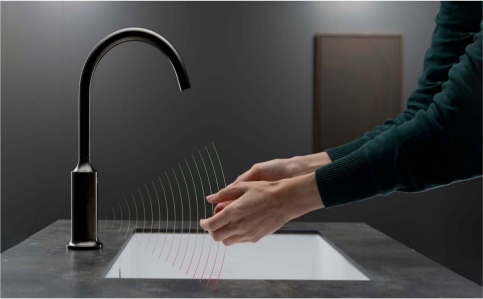
Pair automatic soap dispensers with touchless faucets and paper towel dispensers or high-efficiency dryers for a cohesive hands-free workflow.
Quick Specs Snapshot
Metric
Typical
Better
Dose per Actuation
0.8–1.0 mL
Adjustable (0.6–1.2 mL)
Reservoir
800–1000 mL
1200–1500 mL (bulk) or sealed cartridges
Power
4×AA or 6×AA
AC adapter + battery backup
Ingress Protection
IP44
IP54–IP65 (splash-prone zones)
Materials
ABS
Metal/SS cover, PVD finishes
How Automatic Soap Dispensers Work
Presence Detection: Infrared (IR) sensor detects hands within a set range (commonly 3–10 cm).Metering Pump: A peristaltic/gear pump or valve dispenses a calibrated dose (liquid) or air-soap mixture (foam).Control Logic: A microcontroller enforces lockout time (e.g., 1–2 s) to prevent repeated triggers.Power: Battery or AC (with optional backup). Some units offer low-battery indicators and jam detection.
Soap Formats
Foam: Air + soap mixture; lower product consumption per wash, gentler on drains.Liquid: Broad compatibility; works across viscosities ~200–3500 cP (check spec).Spray: Light mist; common for sanitizer format or very low-dose policies.
Use manufacturer-approved soaps to avoid clogging, especially with high-viscosity or particulate formulations.
Categories & Use-Cases
High-Traffic Public
Airports, stadiums, malls
Large reservoirs (≥1200 mL), IP54+, AC power
Vandal-resistant covers & lockable housings
Explore high-traffic models →
Healthcare
Fragrance-free, dye-free policies
Sealed cartridges to reduce contamination risk
Audible/visual dose confirmation
Healthcare-ready options →
Hospitality & Office
Finish-matched to faucets (black, brushed gold, SS)
Moderate capacity (800–1000 mL)
Battery power for flexible placement
Hospitality selections →
Popular Automatic Soap Dispensers from Fontana
Fontana Deck-Mount Auto Soap
Adjustable 0.7–1.1 mL dose, 1000 mL reservoir, battery or AC, chrome/matte black.
View product →
Fontana Pro Wall-Mount
IP54 body, 1200–1500 mL, lockable cover, AC with backup; ideal for stadiums & airports.
View product →
Fontana Designer Series
Finish-matched to popular Fontana faucets—matte black, brushed nickel, PVD gold.
View product →
Finish Options
Chrome · Brushed Nickel · Matte Black · Brushed Gold
PVD coatings for extra abrasion resistance
Smart Features
Low-level & low-battery LEDs
Adjustable dose and lockout
Cleaning mode (temporary disable)
System Pairings
Touchless faucets (match finish & power)
Touchless flush valves & dryers
Sealed cartridge soap programs
Key Specs & Standards
Capacity: 800–1500 mL typical; high-traffic prefers ≥1200 mL.Dose: 0.6–1.2 mL adjustable. Foam often uses less product per wash than liquid.Power: Battery (AA) or AC; look for low-battery indicator and jam detection.Ingress Protection: Consider IP ratings per IEC 60529; IP54+ recommended near splash zones [5] Hand Hygiene Guidance: Follow CDC/WHO technique & duration recommendations [1] [2] Performance Tests (soaps/sanitizers): ASTM methods such as E1174 (healthcare personnel handwash), E2784 (in-vivo antibacterial), E2755 (alcohol-based hand rubs) [3] Accessibility: ADA 2010 Standards & ANSI A117.1—reach ranges/operable parts; touchless helps with “no tight grasping/pinching” requirements [4]
Spec Sheet Checklist
Soap format & viscosity range (cP)
Dose & lockout adjustability
Reservoir size & window visibility
Material/finish & vandal resistance
Power (battery/AC) & indicators
IP rating & operating temp range
Mounting type (deck vs wall) & clearance
Warranty & service parts availability
Installation & Placement
Mount: Wall near sink (common) or deck-mounted next to faucet. Align to avoid drips on counter edges.Height: Follow ADA reach guidance; maintain clear approach zones.Prime & Test: Fill reservoir or insert cartridge, prime pump, verify dose and sensor range (avoid mirror reflections).Power: Insert batteries or connect AC with GFCI-protected outlet; confirm cable strain relief.
For retrofits without outlets, battery models install fastest; plan battery service schedules by traffic level.
Recommended Accessories
Drip trays or concealed drip control
Sealed soap cartridges for healthcare
Keyed/lockable covers (public venues)
Matching finish touchless faucet
Maintenance & Troubleshooting
No dispense? Check batteries/power, reservoir level, tubing seating, and sensor window cleanliness.Drip or clog? Reduce dose, clean nozzle; verify soap viscosity meets spec and is compatible.False triggers? Lower sensitivity; angle away from reflective surfaces (chrome/mirrors); increase lockout.Routine care: Wipe exterior daily; sanitize nozzles per facility policy; monthly check on seals & tubes.
Service Intervals
Task
Typical Frequency
Exterior clean & sensor wipe
Daily
Nozzle descale (hard water)
Monthly/Quarterly
Battery replacement
6–18 months (traffic dependent)
Tubing/valve inspection
Biannually
Usage, Cost & Dosage Planning
Scenario
Assumptions
Result
Daily consumption per unit
800 uses/day · 1.0 mL dose
≈800 mL per day
Refill frequency
1200 mL reservoir · 600 uses/day · 1.0 mL
About every 2 days
Battery life estimate
6×AA · 1000 uses/day · 1 s motor
~6–12 months (model-specific)
These are planning estimates; check the product datasheet for measured runtimes and dosing curves.
Comparison Matrix (Snapshot)
Brand / Model
Best For
Format
Dose
Capacity
Power
IP
Notes
Fontana Pro Wall-Mount
Airports, stadiums
Foam or Liquid
0.8–1.2 mL (adj.)
1200–1500 mL
AC + Backup
IP54
Lockable cover, level window
Fontana Deck-Mount Auto
Hotels, offices
Liquid
0.7–1.1 mL
1000 mL
Battery or AC
IP44
Finish-matched to faucets
Fontana Designer Series
Premium interiors
Foam
0.6–1.0 mL
800–1000 mL
Battery
IP44
PVD finishes, compact
BathSelect
Basic commercial
Liquid
~1.0 mL
800–1000 mL
Battery
—
Budget-oriented alternative
See more options at FontanaTouchlessFaucets.com .
FAQs
Foam vs. liquid—what should I choose?
Foam often uses less product per wash (lower mL per dose) and rinses quickly—good for high-traffic sites. Liquid is broadly compatible and can handle a wider viscosity range; confirm the dispenser’s spec.
How much soap should each dispense deliver?
Many facilities use 0.8–1.0 mL per actuation. For healthcare or visibly soiled hands, policies may increase dose or encourage two actuations.
Are automatic dispensers ADA compliant?
Touchless operation helps meet operable parts criteria. Ensure placement meets ADA reach ranges and clear floor space. Check local enforcement for specifics.
Can one unit work with both foam and liquid?
Some can, but many are optimized for one format. Using the wrong format/viscosity risks clogs or under-dosing. Always follow the manufacturer’s compatibility chart.
How do I prevent clogs?
Use compatible soap, avoid particulates, keep the nozzle clean, and periodically run warm water (if permitted by model) or a manufacturer-recommended maintenance cycle.
What about sanitizer?
Many wall units can dispense alcohol-based sanitizer (≥60% alcohol recommended for ABHR effectiveness). Confirm seals and tubing are alcohol-compatible and follow fire/life-safety rules.
References
CDC – Handwashing & Hand Hygiene: Evidence and Guidance (reductions in GI and respiratory illness, technique & duration). cdc.gov/handwashing
WHO – Guidelines on Hand Hygiene in Health Care & 5 Moments for Hand Hygiene. who.int
ASTM International – E1174, E2784, E2755 and related methods for evaluating handwash/rub products. astm.org
2010 ADA Standards for Accessible Design & ANSI A117.1—reach ranges and operable parts requirements. ada.gov
IEC 60529 – Ingress Protection (IP) Ratings overview. iec.ch/ip-ratings
Always confirm local codes and your AHJ (Authority Having Jurisdiction) requirements before specifying.
::contentReference[oaicite:0]{index=0}