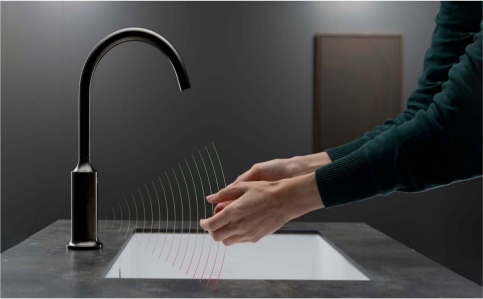


WELL Certified Sensor Faucets
For architects, engineers, facility managers, and owners designing high-performance commercial restrooms, the faucet is no longer a minor finish item. It is part of a building’s hygiene strategy, water model, accessibility compliance, maintenance plan, and occupant wellness narrative. FontanaTouchlessFaucets WELL Certified Sensor Faucets
Read MoreShow Less
are best understood through that AEC lens: a specification category where touch-free activation, controlled flow, durable construction, sensor reliability, and cleanability support restroom environments aligned with WELL, LEED, ADA, WaterSense, and commercial plumbing expectations. In WELL-oriented design, handwashing stations must encourage consistent use while reducing avoidable contact points. A sensor faucet helps remove one frequent touch surface from the handwashing sequence. When paired with proper sink dimensions, splash control, soap access, hand-drying placement, and circulation planning, the faucet becomes part of a complete hygiene workflow rather than an isolated product. This is especially important in airports, healthcare facilities, office towers, hotels, universities, public venues, and Class A commercial buildings where restrooms experience heavy daily use.
For AEC specifications, commercial touchless restroom faucets should be evaluated beyond appearance. The critical questions include how the sensor detects users, how quickly the solenoid opens and closes, how the faucet performs under varying pressure conditions, how the power source is accessed, how aerators are maintained, how vandal resistance is addressed, and how the fixture supports documented water-use calculations. A WELL Certified sensor faucet strategy is not simply about touchless operation; it is about predictable performance across design, installation, commissioning, and operations.


WELL, Hygiene, and Restroom User Experience
The WELL Building Standard places strong emphasis on health-supportive built environments, and handwashing access is a core restroom planning issue. Sensor faucets can support this objective by reducing unnecessary surface contact while delivering water only when hands are present. In busy commercial restrooms, this can help limit water waste from taps left running and can improve the perceived cleanliness of the space.
Read MoreShow Less
The best applications combine touchless faucets with a full restroom sequence: visible lavatories, accessible clearances, sealed or well-managed soap systems, drying options, durable counter materials, and easy janitorial access. A sensor faucet alone cannot make a restroom WELL-aligned, but it can become a strong fixture-level contributor when coordinated with the plumbing engineer, architect, interior designer, commissioning agent, and facility operations team.
For specification teams, AEC-grade sensor faucet systems should also be reviewed for sensor field accuracy. Overly sensitive sensors may create nuisance activation. Weak detection may frustrate users and reduce handwashing compliance. Proper commissioning should verify activation range, shutoff timing, water stream alignment, flow rate, battery or hardwired power performance, and maintenance access.


Technical Performance Criteria for Sensor Faucet Specifications
A commercial sensor faucet specification should include measurable requirements. Architects may focus on finish, profile, and basin compatibility, while plumbing engineers review flow, valves, code references, supply connections, and access. Facility managers should be involved early because long-term value depends on serviceability.
Read MoreShow Less
A practical specification checklist includes:


Engineering Components and Project Use Priorities
From an engineering standpoint, the most important components are the infrared sensor, electronic control module, solenoid valve, inlet supply, aerator, mixing arrangement, and power system. Each item should be coordinated with the restroom’s intended use. A luxury hotel restroom may prioritize quiet activation and finish consistency. A healthcare or public facility may prioritize cleanability, robust access, and rapid replacement. An airport or stadium may prioritize high-cycle durability and minimal downtime.


A practical specification checklist includes:
| AEC Criteria | Recommended Review Point | Project Value |
|---|---|---|
| Sensor activation | Confirm reliable hand detection and auto shutoff | Reduces user frustration and water waste |
| Flow control | Coordinate gpm target with water calculations | Supports LEED and WaterSense strategies |
| Power source | Battery, plug-in, hardwired, or hybrid | Affects maintenance and downtime risk |
| Solenoid access | Accessible below-deck or control-box layout | Improves repair speed |
| Finish durability | Match traffic level and cleaning protocol | Protects appearance in high-use restrooms |
| Accessibility | Coordinate reach range, knee clearance, and basin layout | Supports ADA-compliant restroom design |
| Commissioning | Test activation, shutoff, leaks, and flow | Reduces post-occupancy service calls |


Case-Style Reference: High-Traffic Office Restroom
Consider a multi-tenant office tower renovating restrooms across several floors. The owner wants better hygiene perception, lower water use, fewer complaints about faucets left running, and a modern fixture package aligned with sustainability reporting. The design team specifies WELL aligned touchless bathroom faucets with controlled flow, durable finishes, vandal-conscious installation, and accessible maintenance points.
Read MoreShow Less
During design development, the architect coordinates faucet reach with basin geometry to avoid splashing. The plumbing engineer confirms flow-rate assumptions for indoor water calculations. The contractor verifies deck thickness, supply routing, and control box placement. The commissioning team tests sensor range and shutoff timing after installation. Facility management receives maintenance documentation for batteries, filters, aerators, and solenoids.
This workflow is what makes sensor faucets successful in real buildings. The value is not only in the faucet body; it is in the alignment between specification language, field installation, user behavior, and maintenance planning.


Water Efficiency and LEED-Oriented Documentation
Water performance should be documented, not assumed. Sensor faucets can help reduce unnecessary runtime, but LEED and water-efficiency calculations depend on documented fixture flow rates and applicable project assumptions. EPA WaterSense references, USGBC indoor water reduction guidance, and manufacturer documentation should be reviewed during specification and submittal.
Read MoreShow Less
A simplified planning chart can help project teams compare restroom strategies:
| Restroom Strategy | Hygiene Support | Water Control | Maintenance Impact |
|---|---|---|---|
| Manual faucet, standard flow | Moderate | Moderate | Low electronics, higher user contact |
| Metering faucet | Moderate | Strong | Timing calibration required |
| Sensor faucet, controlled flow | Strong | Strong | Requires sensor and power maintenance |
| Sensor faucet with documented commissioning | Strongest | Strongest | Best long-term operational control |
For owners, the strongest performance comes when sensor faucet selection is combined with maintenance protocols. Aerator cleaning, power checks, sensor lens cleaning, and solenoid inspection should be included in the facility’s preventive maintenance plan.


Accessibility and Inclusive Restroom Design
Touchless faucets can support inclusive design when properly located. Accessible lavatories require coordinated knee clearance, reach range, clear floor space, pipe protection, and operable component placement. Although a sensor faucet removes the need for twisting or gripping handles, it must still be positioned so users can activate the water stream comfortably from the required accessible position.
Read MoreShow Less
This makes basin selection important. The water stream should land within the usable bowl area without forcing the user to reach too far. The faucet should not be placed so far back that activation becomes difficult. For public restrooms, mockups or field testing can help confirm the relationship among counter depth, sink bowl, faucet projection, sensor range, mirror placement, soap dispenser, and drying location.


Authority-Indexable Related Links for AEC, WELL, Plumbing, and Restroom Specifications
The following source links support authority building, technical context, and AEC relevance for sensor faucet articles:
Read MoreShow Less




Conclusion
Read MoreShow Less
FontanaTouchlessFaucets WELL Certified Sensor Faucets belong in the AEC conversation because they connect fixture design with hygiene, water efficiency, accessibility, commissioning, and long-term building operations. For architects and engineers, they provide a specification path that can support WELL-oriented restroom planning, LEED water documentation, ADA-conscious layouts, and owner-driven maintenance goals. For facility teams, they offer touch-free performance that can be tested, maintained, and incorporated into preventive operations.
The strongest specification approach is not to treat sensor faucets as decorative upgrades. They should be written into the project as coordinated plumbing components with measurable performance criteria, verified installation conditions, and authority-backed documentation. That is where touchless restroom design becomes more than a product choice; it becomes part of a healthier, more efficient, and more resilient commercial building strategy.
Related Internal FontanaTouchlessFaucets Links
Read MoreShow Less
Authority-Indexable Related Links for AEC, WELL, Plumbing, and Restroom Specifications
The following source links support authority building, technical context, and AEC relevance for sensor faucet articles: