Heavy-Use Finish Resistance in High-Traffic Restrooms
FontanaTouchlessFaucets commercial touchless faucets use finish systems selected for impact, abrasion, and chemical resistance in demanding public washrooms. This overview focuses on how different finishes behave under repeated cleaning, high user loads, and exposure to disinfectants in airports, hospitals, stadiums, and Class-A office buildings.
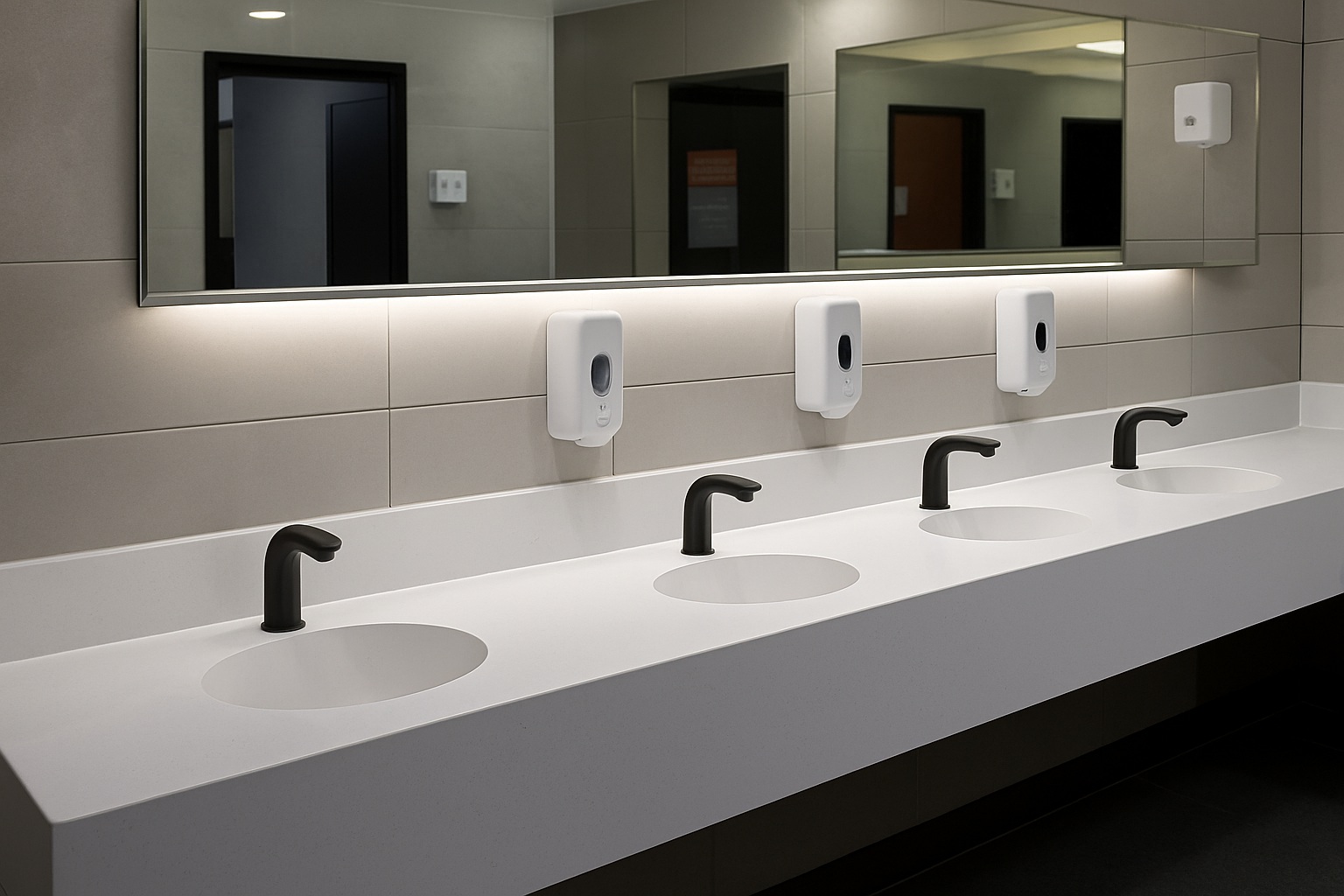
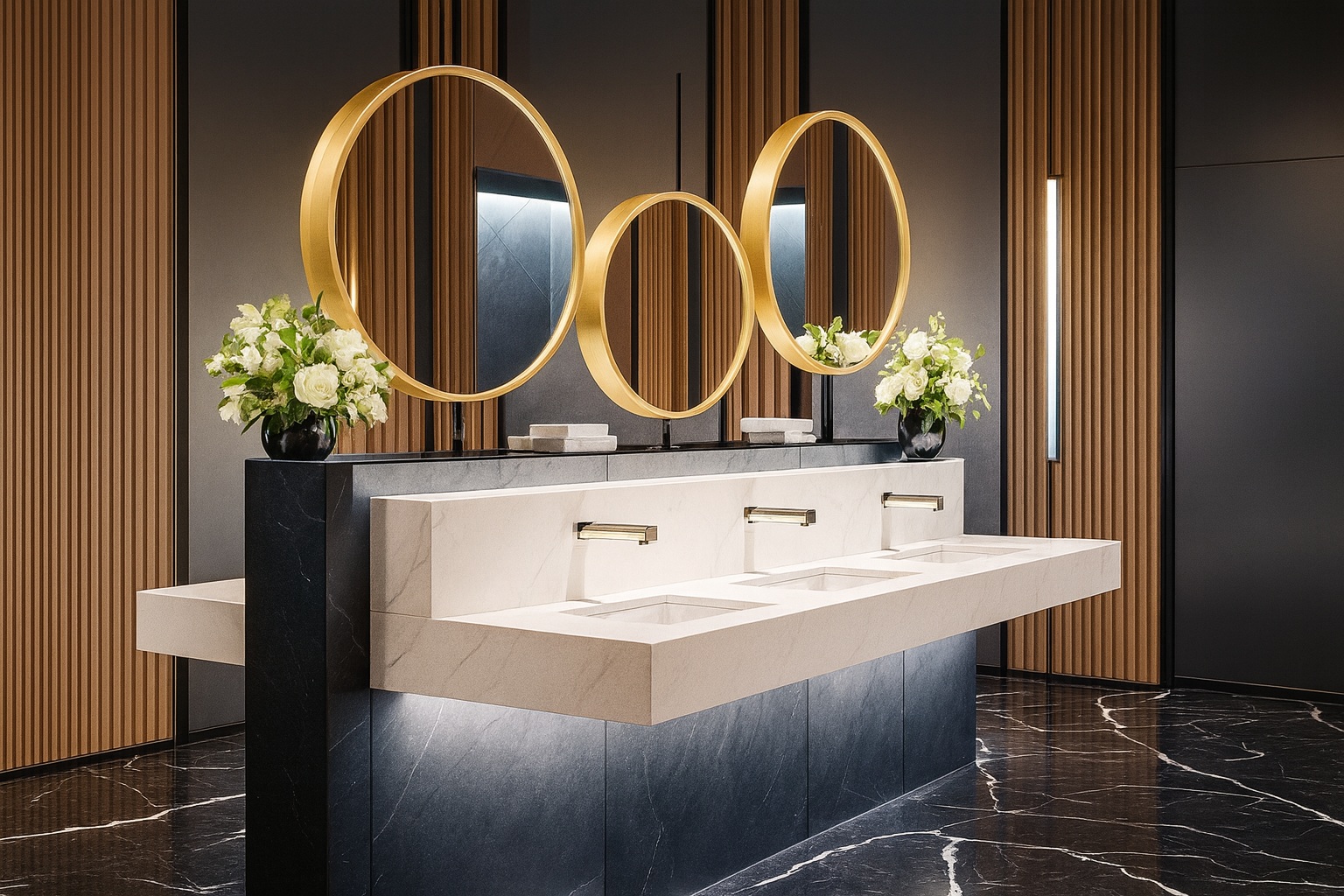
Typical microhardness ~1,600–2,500 HV with a 0.2–0.8 μm coating thickness. Provides strong abrasion resistance and stable performance under quats, alcohols, and peroxide-based cleaners. These
PVD coatings on faucets
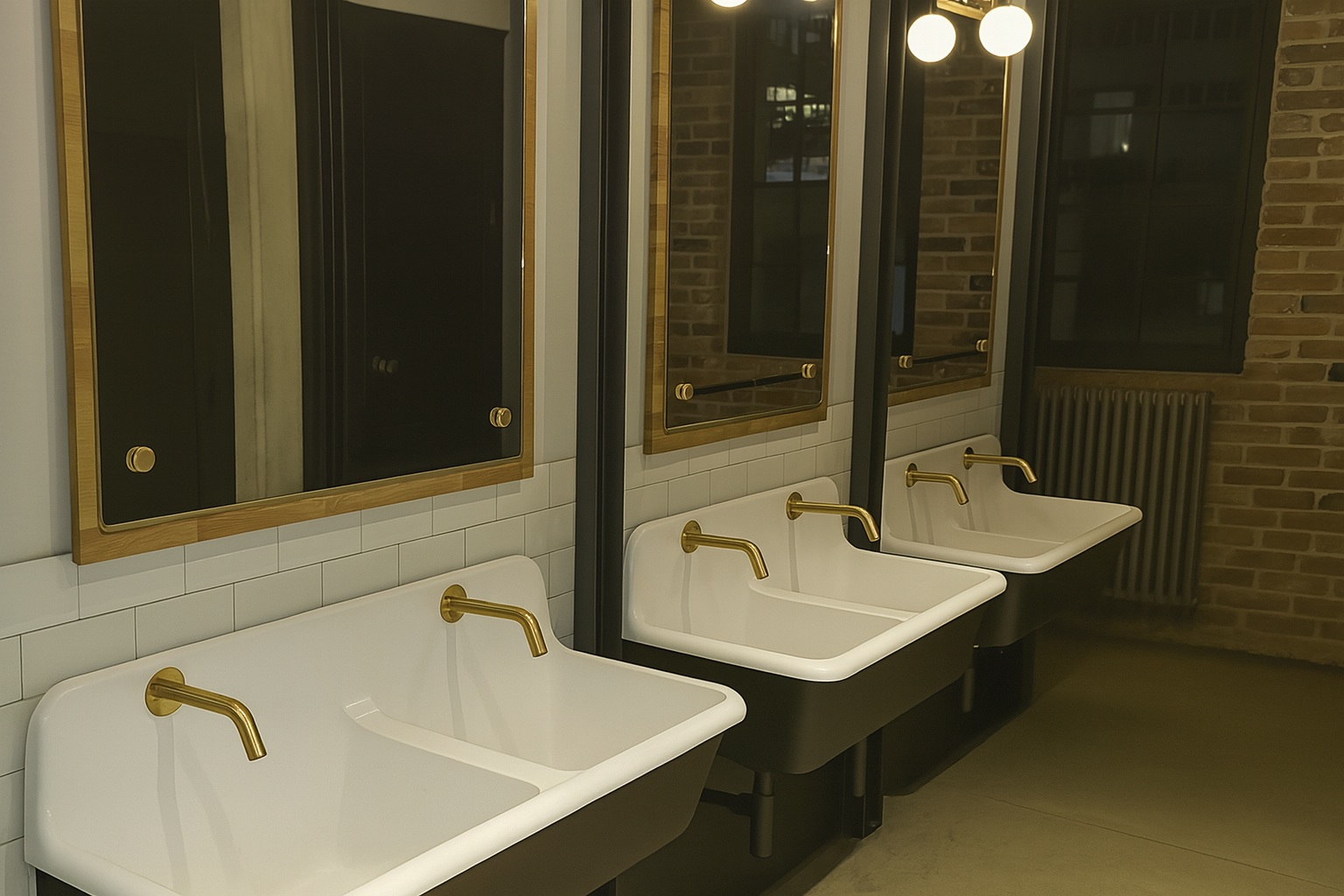
are commonly used for matte black, brushed gold, graphite, and titanium finishes.
Applications: Healthcare · Airports · Offices
Duplex Chrome
Layered duplex nickel-chrome systems
with wide tolerance for standard disinfectants and graffiti-removal agents. The bright surface can visually mask fine abrasion marks. Neutral-pH cleaners are preferred for routine maintenance.
Applications: Transit · Retail · Stadiums
316 Stainless Steel
Offers improved resistance to localized corrosion versus standard chrome-plated brass in chloride-exposed locations. Data sheets for
316/316L stainless steel
highlight its use where pitting and crevice corrosion are a concern. Can be combined with PVD tinting while maintaining primary corrosion-resistance properties.
Applications: Coastal Airports · Marine · Chemical Zones
Polymer & Powder-Coats
Coatings designed to absorb impact and conceal surface scratching, with good chemical tolerance while the layer remains intact. Susceptible to chipping if subjected to concentrated impact or edge damage.
* Rinse surfaces with clean water after bleach contact. Avoid daily use unless specifically required by infection-control protocols.
Applications in Large-Scale Bathrooms
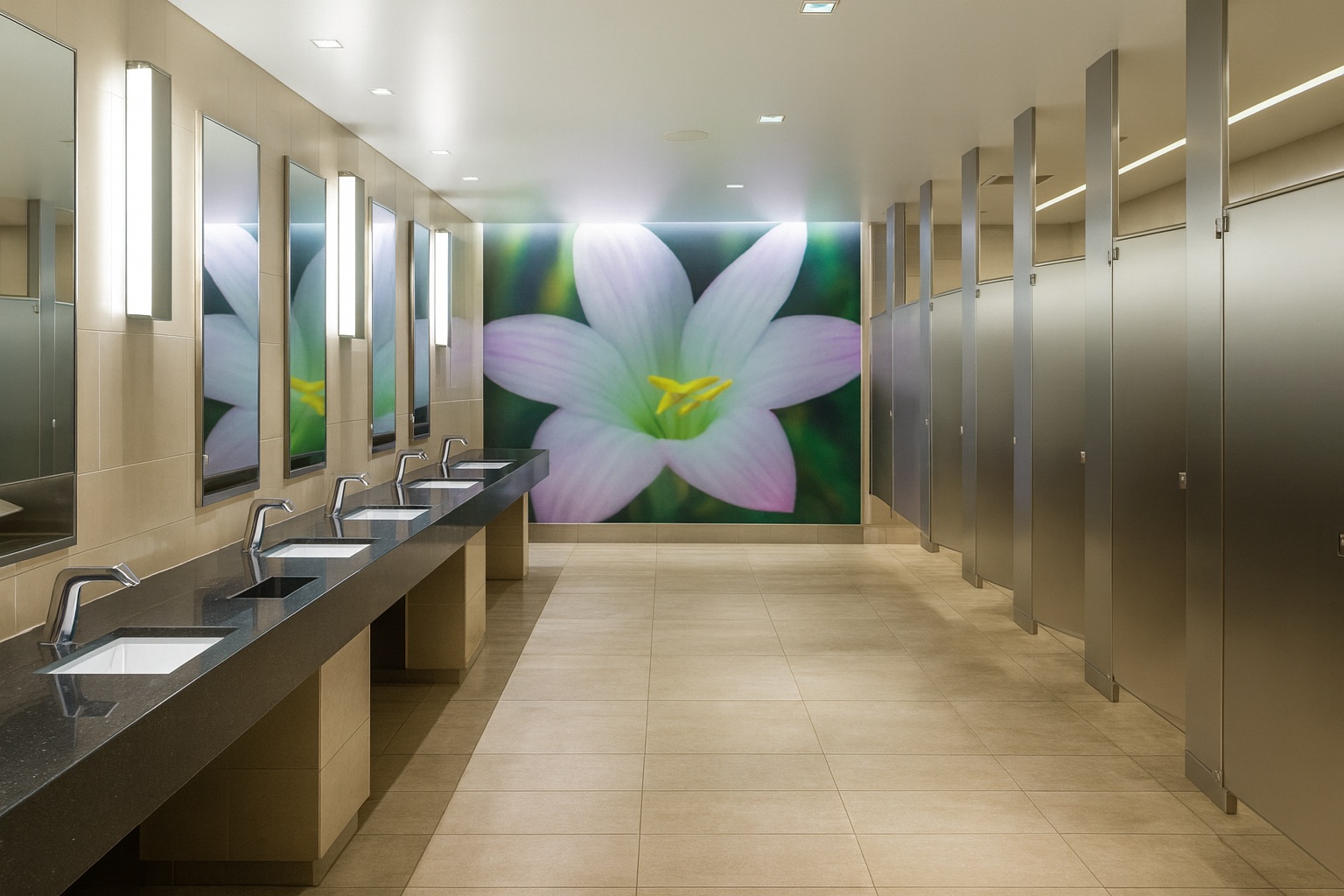
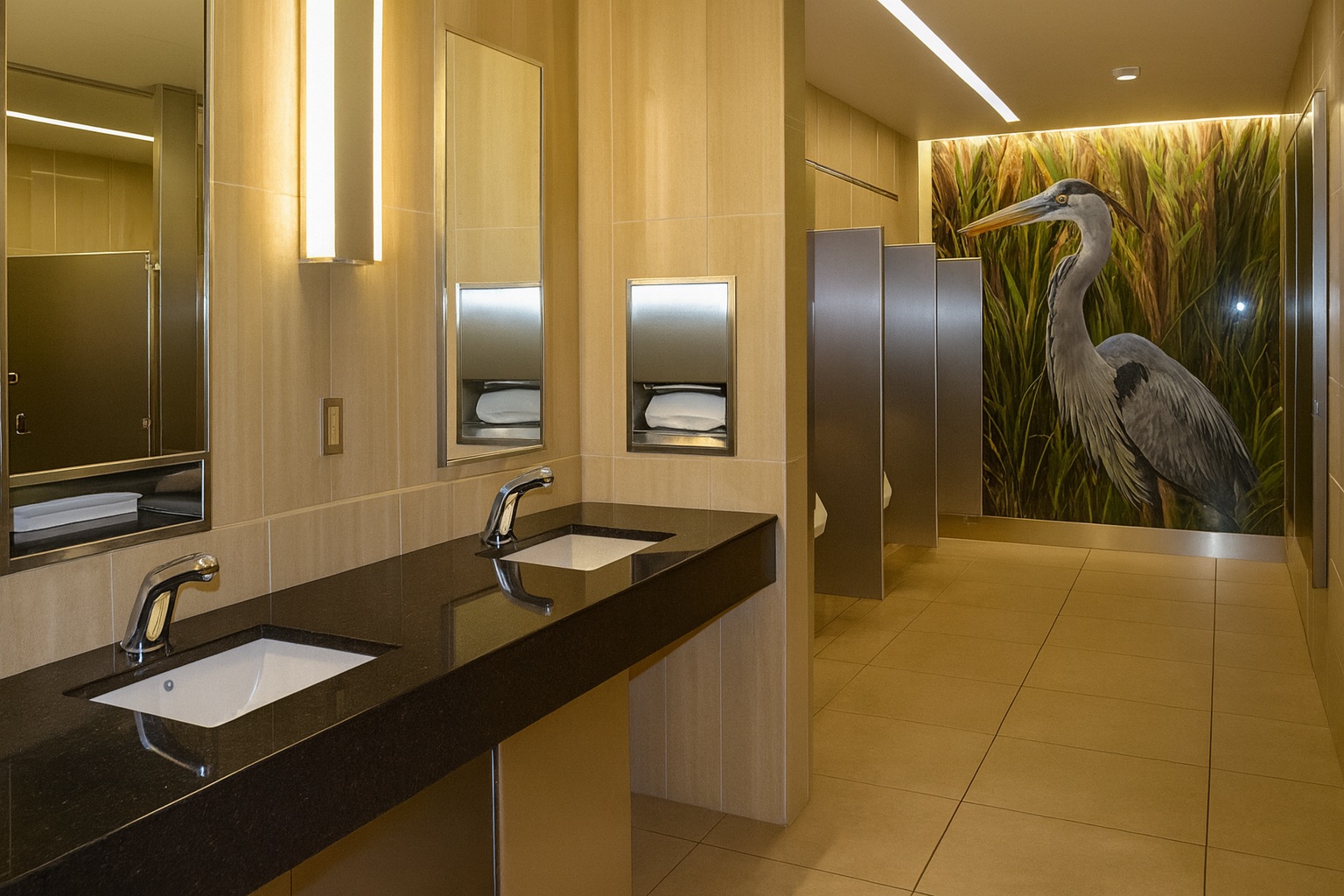
Airports & Transit Hubs — PVD finishes help resist scuffing from luggage and frequent contact; 316 stainless is preferred where de-icing chemicals or chlorides are present.Hospitals — PVD and stainless surfaces are well suited to repeated cycles of quats, peroxides, and alcohol-based disinfectants used in clinical cleaning protocols.Stadiums — Powder-coated and polymer finishes help manage visible damage and graffiti in areas with high impact and misuse risk.
Use PVD finishes where abrasion and frequent cleaning are expected; specify 316 stainless steel in zones with de-icing chemicals, chlorides, or exterior exposure. Include tamper-resistant mounting in high-abuse locations.
Healthcare
Select PVD or 316 stainless finishes for compatibility with quats, peroxide, and alcohol disinfectants, and coordinate with infection-prevention teams on approved cleaning regimens.
Stadiums & Offices
Use powder-coated assemblies in areas with high impact and graffiti risk, while PVD tones such as brushed gold or graphite can be reserved for front-of-house and corporate reception zones.
Frequently Asked Questions
Which finishes are most durable for high-traffic restrooms?
PVD coatings and 316 stainless steel generally provide the best combination of scratch, chemical, and corrosion resistance. Duplex chrome remains a robust option where a traditional gloss appearance is desired.
How should bleach be used on finishes?
Low-concentration bleach solutions (≤0.5%) are typically tolerated, but surfaces should be rinsed with clean water after contact to limit long-term dulling or surface change.
What prevents vandal damage to finishes?
Tamper-resistant fasteners, secure mounting details, and the use of powder-coat or polymer layers in high-risk zones can help reduce visible damage and extend finish life.
Request ASTM Test Reports
Access finish test summaries, chemical-resistance reference tables, and maintenance recommendations for FontanaTouchlessFaucets commercial restroom fixtures.