Airline and transit stop toilets must absorb bursts: quiet periods can switch to 200–300 arrivals within minutes. Size facilities to prevent chokepoints and sanitation issues.
See FAA AC 150/5360-13 airport terminal planning guidance.
Demand swings follow flight/rail banks. Treat throughput as the core metric to avoid chokepoints, queues, and sanitation issues; size for bursts, not averages.
Rule of thumb: ~1 lav per 40–60 peak-hour passengers per gate clusters; flex by dwell times/gate usage. Provision soap/paper to ≥1.2× faucet activations to avoid stockouts.
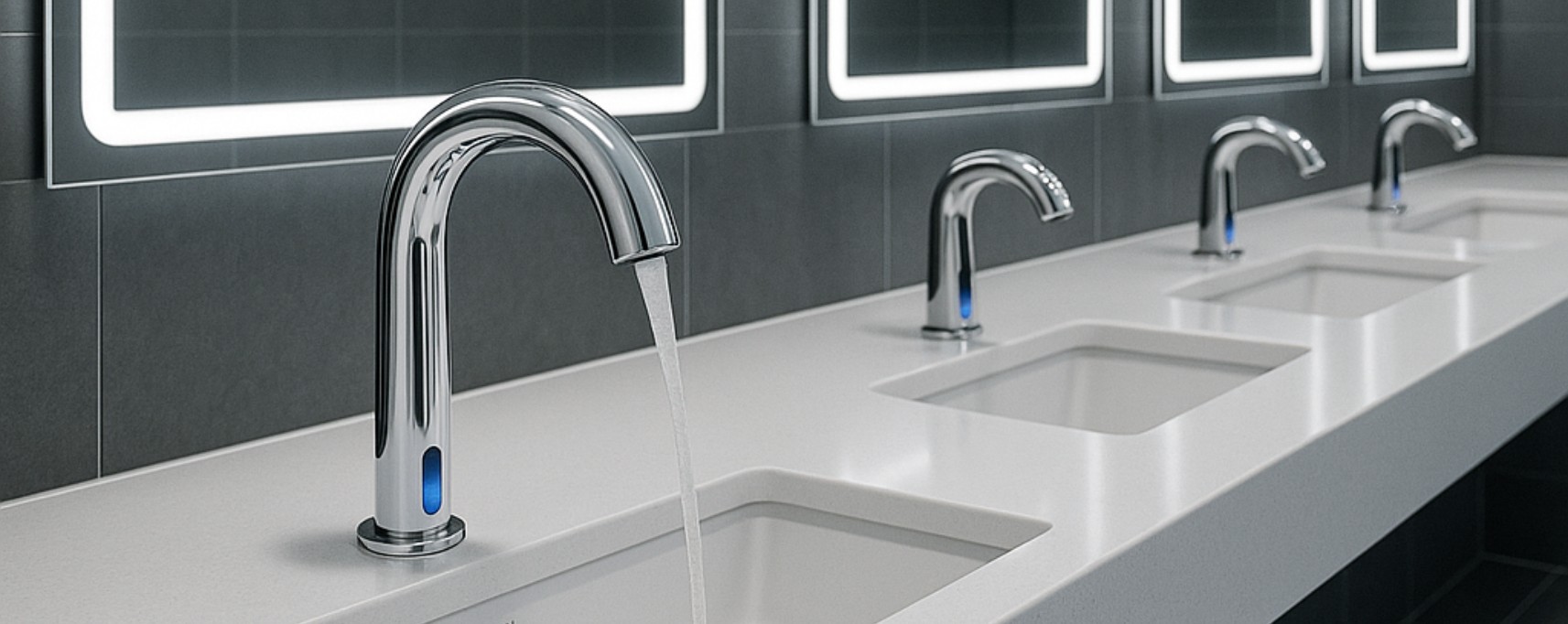
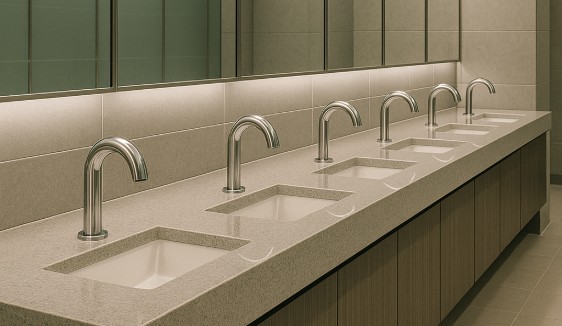
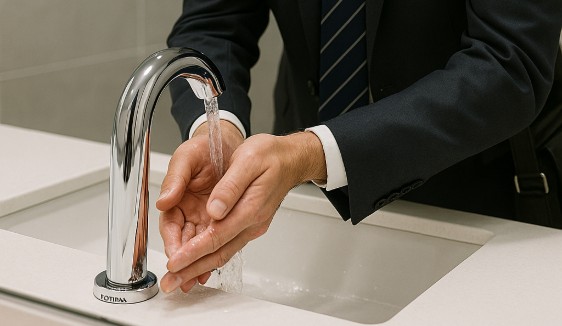
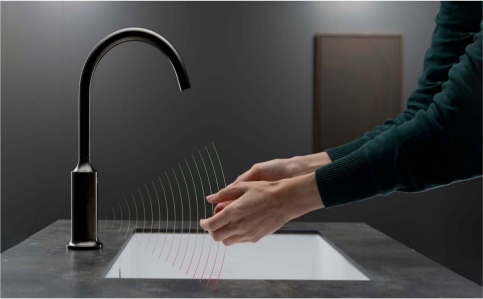
Apron sinks with multiple spouts, ≥600 mm center spacing, and adequate apron depth increase simultaneous washing and reduce bottlenecks; stage dryers/towels downstream.
Distribute capacity. Example: 12-gate concourse at ~3,000 pph → ~50–75 lavs across smaller facilities. Use IoT tracking and alerts; schedule cleaning by flight banks.
This page summarizes design guidance; links jump to sections above.
Project Gallery
Singapore Changi — Intelligent monitoring keeps facilities clean even in peak waves.London Heathrow — Spread clusters across terminals to avoid clog points.Hamad International, Doha — Family rooms, prayer wash, and high-occupancy toilet rooms.
Tip: keep filenames descriptive (e.g.,
gallery-airport-restroom-01.jpg) and compress to <300KB for performance.
Video Showcase
Apron Sinks & Multi-Spout Design
Demonstrates ≥600 mm spout spacing, apron depth for splash control, and one-way circulation around wash areas to reduce queues.
Smart Ops: Inventory & Cleaning
IoT dispensers track soap/paper and water usage; dynamic cleaning aligns with flight banks; on-demand alerts prevent issues before passengers see them.
Note: host MP4 at ≤1080p for faster first play; add WebVTT captions for accessibility and SEO.
Provide ADA-accessible stalls, family rooms, and gender-neutral options to balance demand and improve inclusivity across the terminal.
Maintenance & Inventory
Use IoT-enabled dispensers, dynamic cleaning aligned to flight banks, and on-demand alerts to fix issues before passengers notice.
Frequently Asked Questions
Why is throughput the core metric?
Usage spikes coincide with flight/train schedules. Designing for peak throughput prevents queues, stress, and sanitation issues that degrade terminal performance.
What is a good lavatory-to-passenger ratio?
Target ~1 lavatory per 40–60 peak-hour passengers per gate clusters; flex for dwell times, culture, and gate usage patterns.
How do apron sinks reduce queues?
Multiple spouts over a shared basin allow simultaneous washing. Maintain ≥600 mm center spacing and sufficient apron depth to prevent cross-triggering and splashing.
How should maintenance be scheduled?
Use intelligent scheduling aligned to flight banks, monitor soap/paper levels in real time, and dispatch on alerts rather than fixed hourly intervals.
Download the Checklist
Get a one-page airport restroom sizing checklist based on the guidance above.