Soap Dispenser Not Working
When a soap dispenser is not working, the problem is usually connected to power, soap flow, sensor detection, refill installation, or a blocked pump/nozzle. This troubleshooting guide helps you identify the most common causes and follow simple steps to restore proper dispensing performance.
Whether you are maintaining a touchless soap dispenser in a commercial restroom, hotel, office, healthcare facility, restaurant, or public washroom, this guide provides practical checks before replacing the unit.
Automatic Soap Dispenser Help
Touchless Sensor Troubleshooting
Battery & Refill Checks
Commercial Restroom Support
|
|
Common Reasons Your Soap Dispenser Is Not Working
A soap dispenser not working does not always mean the dispenser is damaged. In many cases, the issue can be corrected by checking the batteries, cleaning the sensor, clearing the nozzle, or confirming that the soap refill is installed correctly.
Low or Dead Batteries
Automatic soap dispensers often stop responding when batteries are weak, incorrectly installed, or corroded.
Blocked Nozzle
Dried soap, thick liquid soap, or debris can clog the outlet and prevent soap from dispensing.
Empty or Incorrectly Installed Refill
If the soap cartridge, refill bottle, or reservoir is empty, loose, or not seated correctly, the pump may not draw soap.
Sensor Obstruction
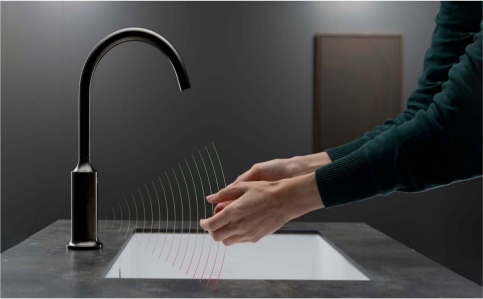
A dirty sensor window, water spots, fingerprints, or poor hand placement can stop a touchless soap dispenser from detecting motion.
Incorrect Soap Viscosity
Soap that is too thick may not flow through the pump. Foam dispensers and liquid soap dispensers require the correct soap type.
Internal Pump Issue
If the motor runs but no soap comes out, the pump tube may have air inside, blockage, wear, or internal damage.
Maintenance Tip: For commercial installations, inspect soap dispensers regularly. Heavy-use restrooms may need more frequent battery checks, nozzle cleaning, and refill replacement.
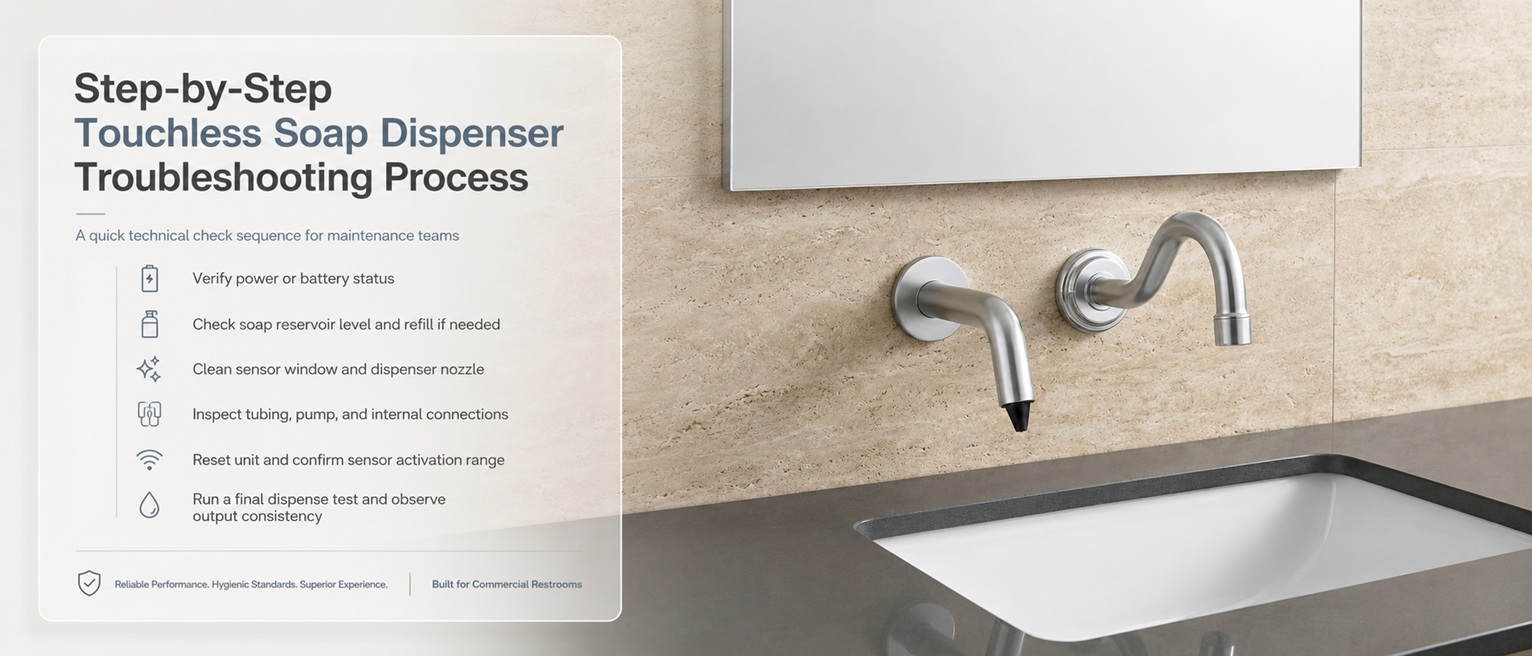
Step-by-Step Troubleshooting
Follow these steps in order when your soap dispenser is not working. Start with the easiest checks first before assuming the unit needs replacement.
-
Check the power source.
Open the battery compartment and confirm that the batteries are installed in the correct direction. Replace old batteries with fresh batteries of the recommended type. If there is corrosion on the contacts, clean them carefully before testing again.
-
Confirm the dispenser is turned on.
Some automatic soap dispensers have an on/off button, reset button, or control switch inside the cover. Make sure the unit is powered on and the cover is securely closed.
-
Inspect the soap level.
Check whether the refill bottle, cartridge, or internal reservoir has enough soap. If the soap level is low, refill the dispenser or replace the cartridge according to the product instructions.
-
Check the refill installation.
A soap dispenser may not work if the refill is not locked into place. Remove the refill and reinstall it firmly. Make sure the pump tube, cap, or cartridge connection is aligned correctly.
-
Clean the sensor area.
Wipe the sensor window with a soft damp cloth. Avoid abrasive cleaners. A blocked or dirty sensor can make a touchless soap dispenser appear completely unresponsive.
-
Clear the nozzle.
Look for dried soap around the dispensing outlet. Gently clean the nozzle with warm water and a soft cloth. If the nozzle is removable, rinse it according to the manufacturer’s instructions.
-
Prime the pump.
After replacing soap or batteries, activate the dispenser several times. It may take multiple cycles for soap to travel through the pump and reach the nozzle.
-
Check the soap type.
Make sure the dispenser is using the correct soap. A liquid soap dispenser should not be filled with foam soap unless designed for foam. Soap that is too thick can prevent normal dispensing.
-
Listen for the motor.
If the sensor activates and you hear the motor but no soap dispenses, the issue may be a blockage, air in the pump, an empty refill, or a pump failure. If there is no motor sound at all, the issue is more likely power, sensor, or control related.
How to Reset the Soap Dispenser
Resetting an automatic soap dispenser can help clear minor electronic or sensor-related issues. The exact reset process may vary by model, but the following general steps work for many touchless soap dispensers.
- Turn the dispenser off if it has a power button.
- Remove the batteries from the battery compartment.
- Wait 30 to 60 seconds to allow the unit to fully power down.
- Check the battery contacts for moisture, corrosion, or loose connections.
- Install fresh batteries in the correct direction.
- Close the dispenser cover securely.
- Turn the unit back on and place your hand under the sensor to test operation.
If the soap dispenser still does not work after resetting, clean the sensor window and nozzle again, then test the unit with the correct soap refill installed. If the dispenser activates but does not dispense soap, the issue is likely related to soap flow rather than the sensor.
Important: Do not pour water directly into the battery compartment or electronic housing. Moisture can damage the sensor, circuit board, or motor components.
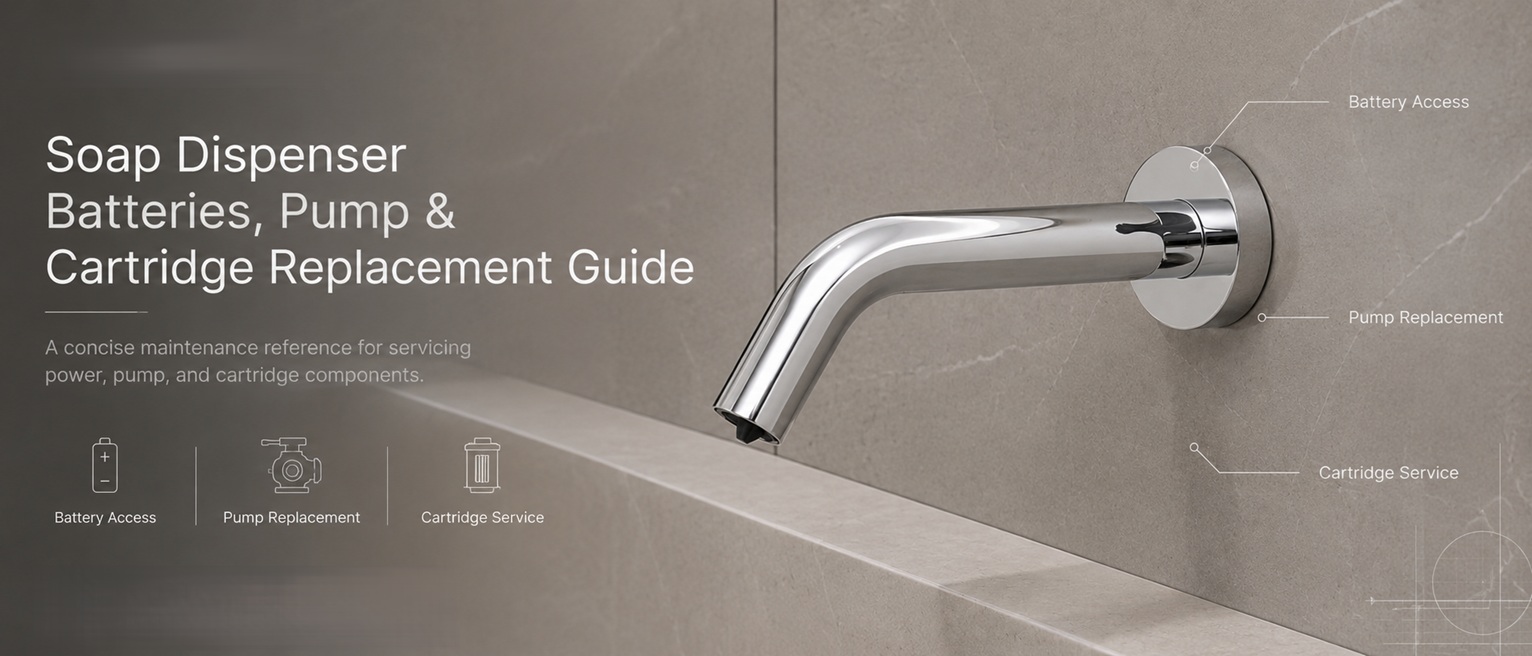
When to Replace Batteries, Pump, or Soap Cartridge
If your soap dispenser is not working after basic troubleshooting, one of the main service components may need replacement. Knowing the signs can help you avoid unnecessary product replacement.
Replace the Batteries When:
- The dispenser does not respond to hand motion.
- The indicator light is blinking or dim.
- The motor sounds weak or inconsistent.
- The dispenser works only occasionally.
- Batteries are old, leaking, or corroded.
Replace or Reinstall the Soap Cartridge When:
- The dispenser activates but no soap comes out.
- The refill is empty, collapsed, loose, or not locked into place.
- The soap is too thick for the dispenser.
- The cartridge outlet is blocked or sealed.
- The wrong soap type is being used for the dispenser model.
Inspect the Pump When:
- The motor runs but soap does not move through the tube.
- The dispenser has been unused for a long period and soap has dried inside.
- Soap output is weak, inconsistent, or delayed.
- The nozzle clogs repeatedly even after cleaning.
- The unit makes noise but fails to dispense after priming.
In commercial settings, replacing batteries and refills on a maintenance schedule can reduce downtime. If a high-traffic restroom depends on touchless operation, keeping spare batteries, compatible soap refills, and replacement dispensers available can help maintain hygiene standards.
Recommended Automatic Soap Dispenser Solutions
If your soap dispenser is not working because of age, repeated clogging, damaged electronics, or heavy commercial use, replacing it with a reliable automatic soap dispenser may be the best long-term solution. Fontana Touchless Faucets offers commercial-ready soap dispenser options designed for modern restroom environments.
For commercial restrooms, hotels, airports, offices, schools, healthcare facilities, and hospitality projects, automatic soap dispensers help reduce touchpoints and support a cleaner handwashing experience. Choose a dispenser based on soap type, traffic level, installation style, refill capacity, sensor reliability, and compatibility with your restroom design.
Related Troubleshooting Guides
If your soap dispenser is not working, the issue may be part of a more specific problem. Use the related guides below to narrow the cause and find the right solution.
FAQs
Why is my soap dispenser not working?
The most common reasons are dead batteries, an empty refill, a clogged nozzle, a dirty sensor, incorrect soap viscosity, or a pump issue. Start by replacing the batteries, checking the soap level, cleaning the sensor, and clearing the nozzle.
Why does my automatic soap dispenser make noise but no soap comes out?
If the motor runs but no soap dispenses, the pump may not be primed, the refill may be empty or installed incorrectly, the nozzle may be clogged, or the soap may be too thick for the dispenser.
How do I fix a touchless soap dispenser sensor?
Clean the sensor window with a soft damp cloth, replace the batteries, remove objects near the sensor, and test the dispenser with your hand placed directly under the sensor area. If it still does not respond, the sensor or control board may need service.
Can thick soap stop a dispenser from working?
Yes. Soap that is too thick can restrict flow and prevent the pump from dispensing properly. Always use the soap type recommended for your dispenser, especially when choosing between liquid soap and foam soap.
How many times should I activate the dispenser after refilling?
After refilling or replacing a cartridge, activate the dispenser several times to prime the pump. It may take multiple cycles before soap reaches the nozzle and dispenses normally.
When should I replace my soap dispenser?
Consider replacing the dispenser if it repeatedly fails after new batteries, proper refills, sensor cleaning, nozzle cleaning, and pump priming. Frequent failures in commercial restrooms may indicate that a more durable automatic soap dispenser is needed.
|
|
|