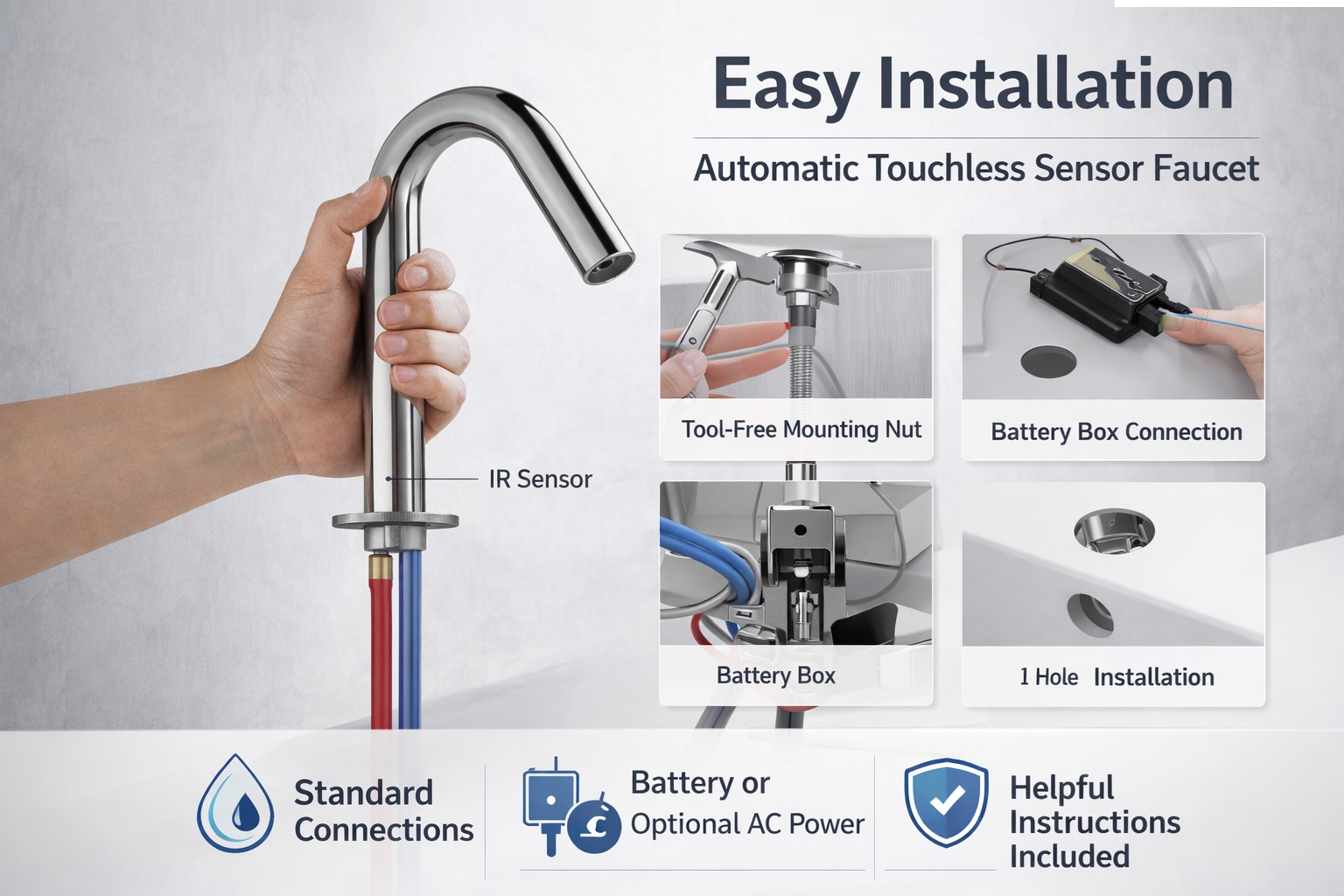
Touch free faucet and soap systems built for busy facilities. Plan for power, flow rate, service access, and finish durability without overcomplicating the spec.
Brushed nickel finish choices for projects that need a neutral, low glare look. Good for campuses and civic buildings where fixtures must stay presentable.
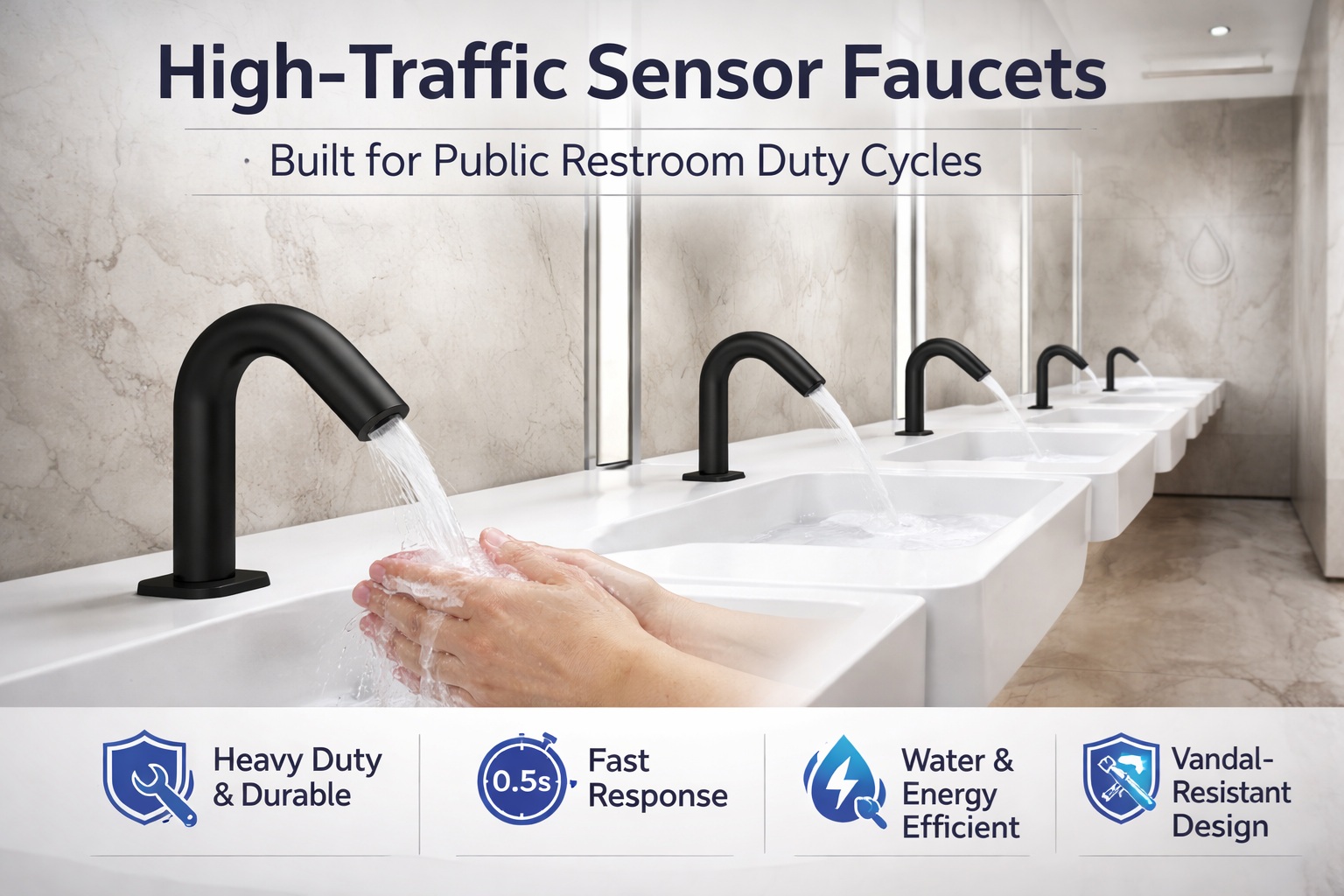
A starting point for heavy use restrooms. Prioritize stable sensing, service access, and components that can be maintained without removing the whole fixture. Pair with conservative flow targets and reliable power planning to reduce callbacks.
A flexible collection for general public restroom planning. Use it to compare spout profiles, mounting approaches, and finish coordination. Good for standardizing a “house” faucet across multiple facility types.
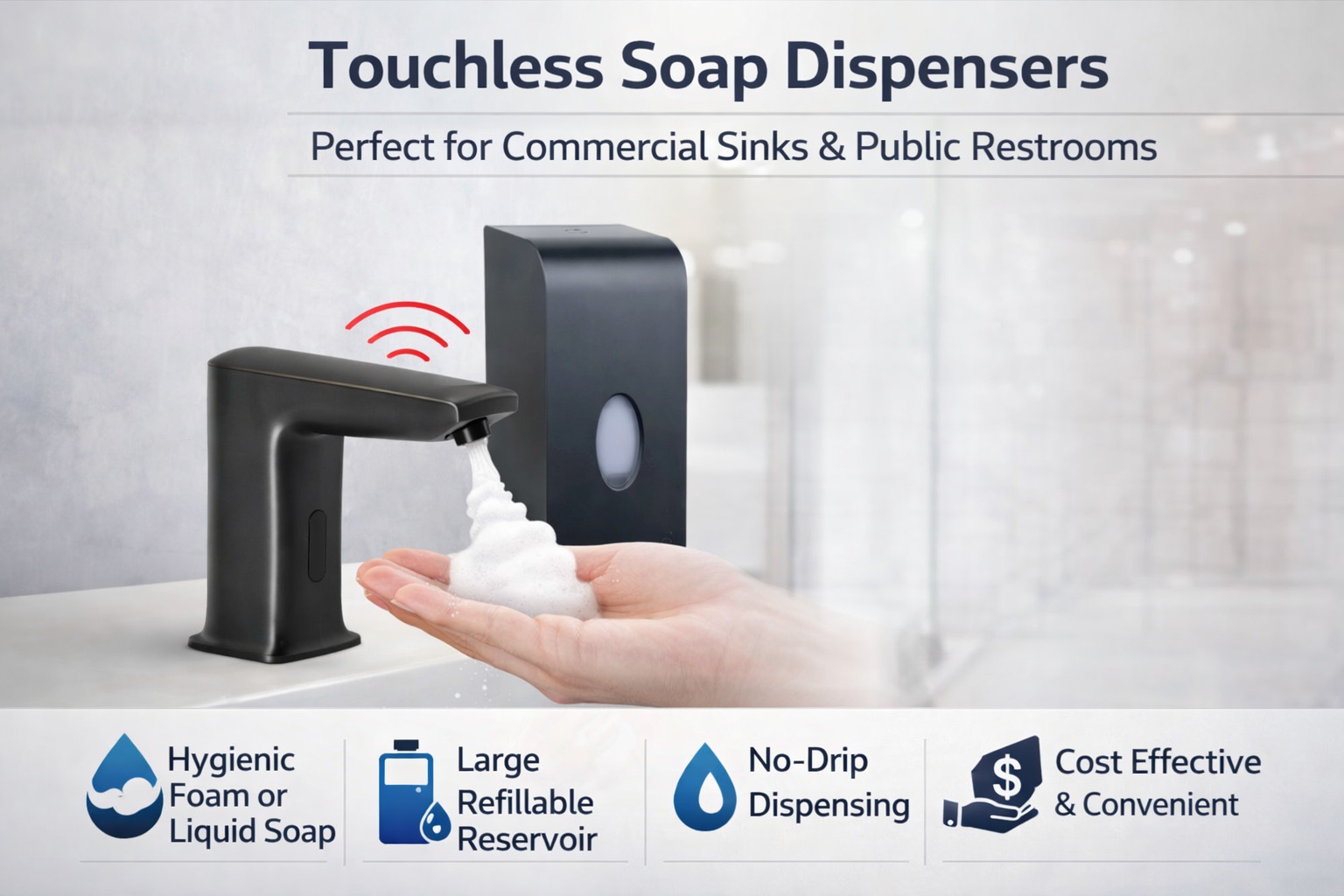
Touch free dispensers for commercial sinks. Evaluate refill method, reservoir size, and how the unit will be serviced during peak hours. Plan deck spacing so the dispenser does not crowd the faucet sensor zone.
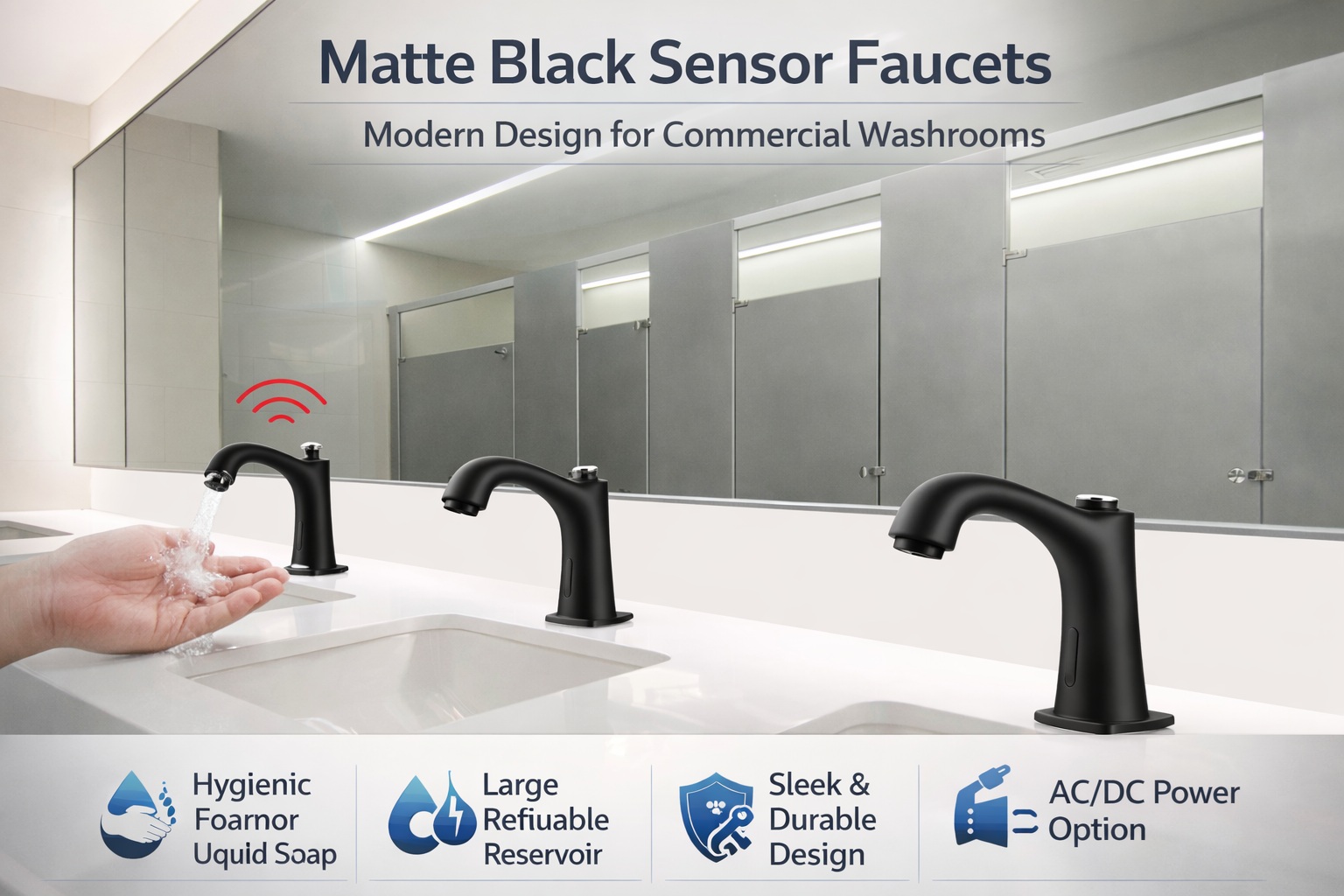
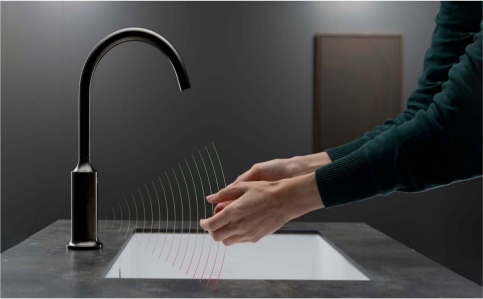
Black finish options for contemporary washrooms. Confirm the finish system and cleaning compatibility, then align accessories to avoid mismatched blacks. Keep internals commercial grade even when aesthetics lead.
Brushed nickel sets for a neutral, professional look. Often a safe finish choice for schools and civic spaces. Combine with practical flow targets and accessible power to keep operations predictable.
A starting point for heavy use restrooms. Prioritize stable sensing, service access, and components that can be maintained without removing the whole fixture.
Touch free dispensers for commercial sinks. Evaluate refill method, reservoir size, and deck spacing so the dispenser does not crowd the faucet sensor zone.
Black finish options for contemporary washrooms. Confirm finish durability and cleaning compatibility, then align accessories to avoid mismatched blacks.
Brushed nickel sets for a neutral, professional look. Combine with practical flow targets and accessible power so operations stay predictable.
All links point to FontanaTouchlessFaucets.com categories.
Install Gallery
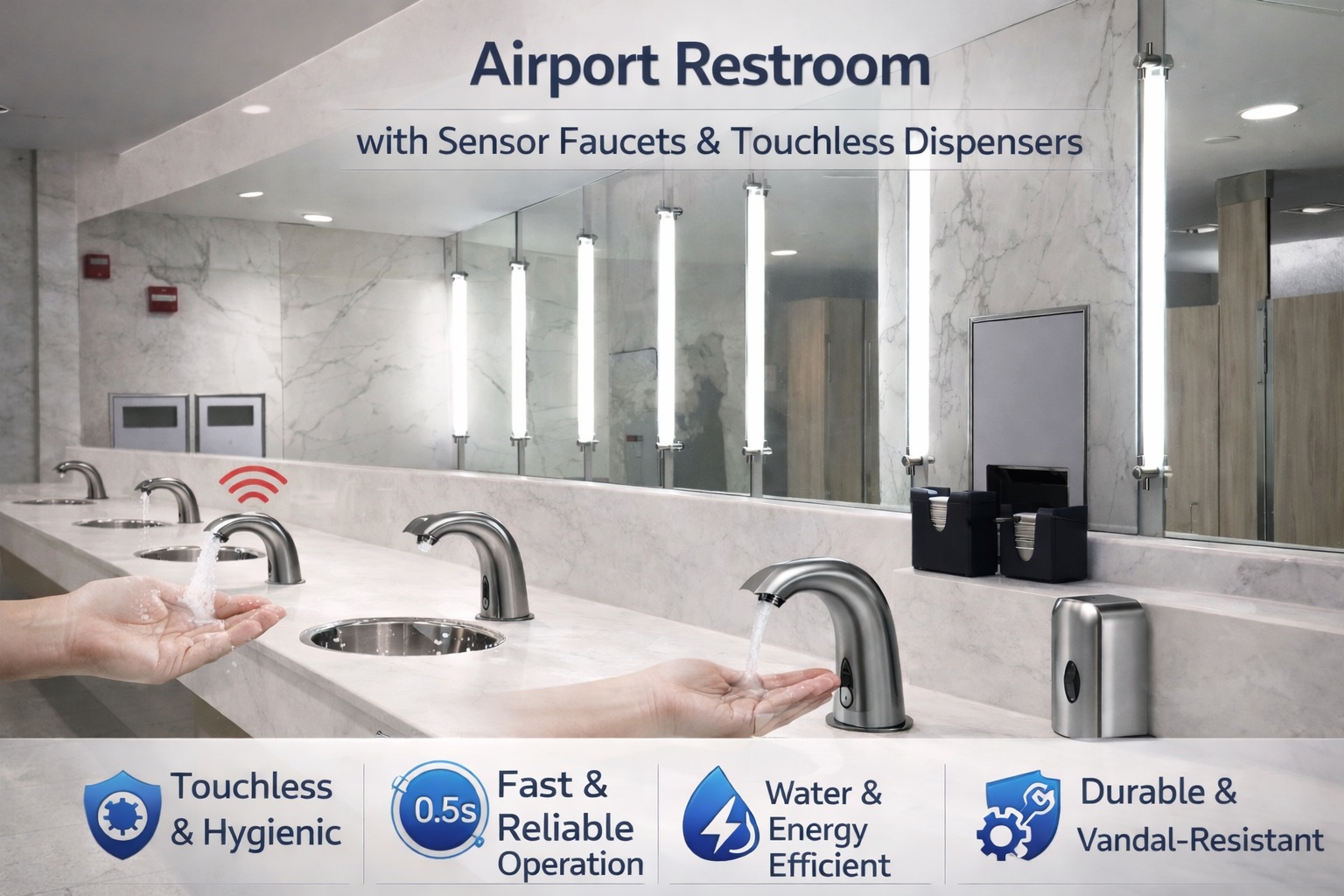
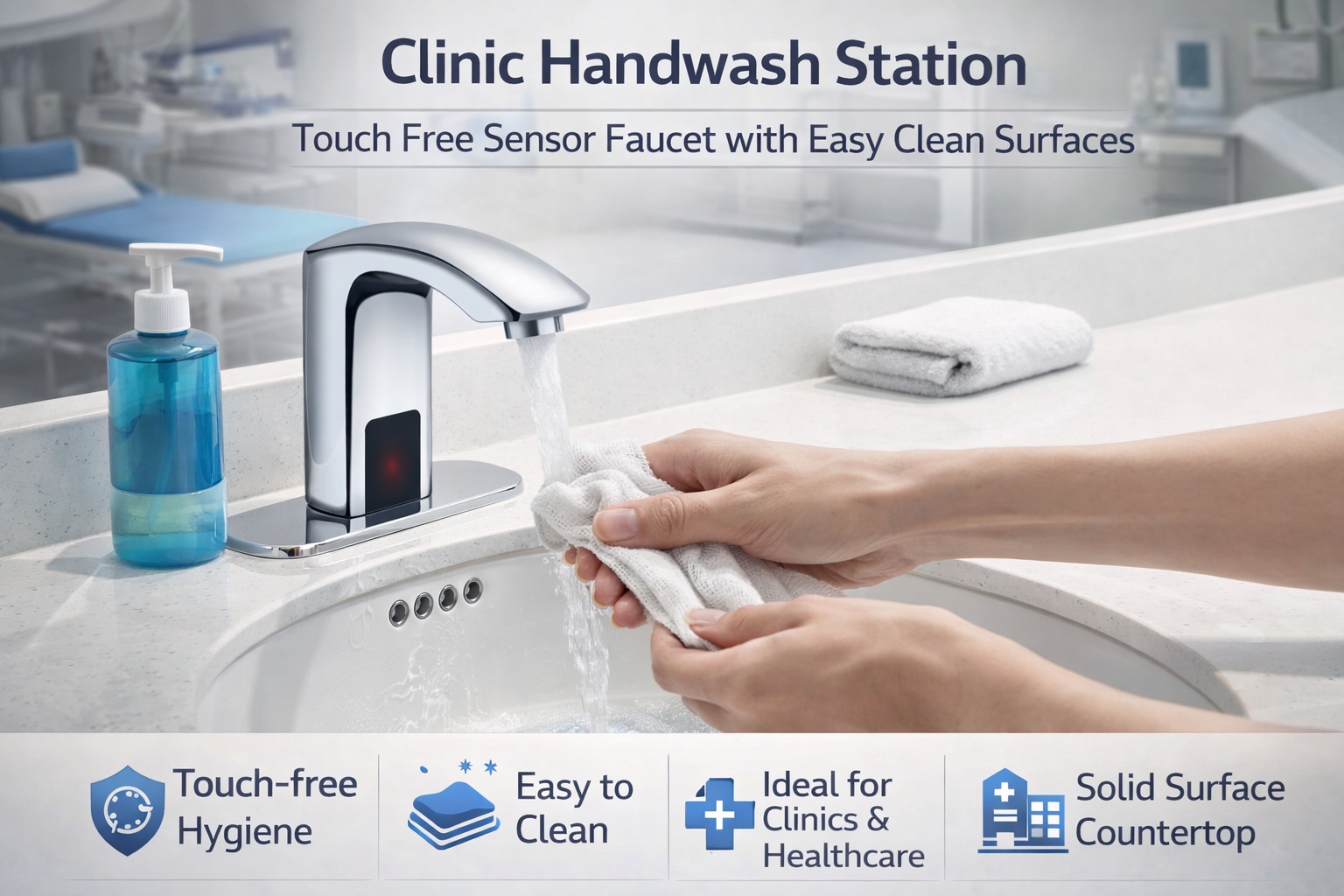
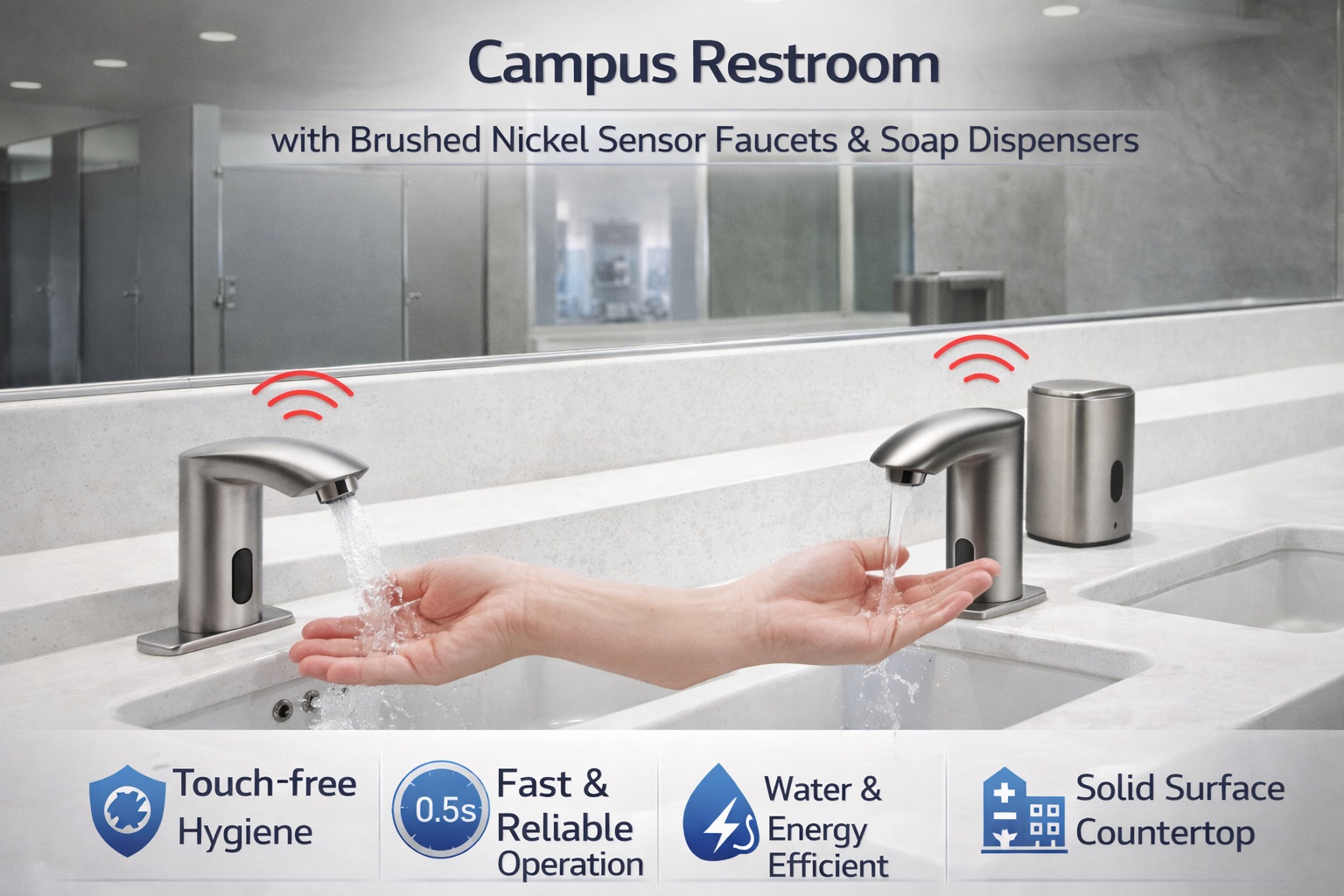
Airport Restroom — Plan AC power where possible, then keep battery access clear for fast service.Clinic Handwash — Favor easy clean surfaces, predictable sensing, and laminar flow where splash must be controlled.Campus Restroom — Standardize a finish and service method to reduce spare parts and training overhead.
Video Showcase
Sensor Faucet — Quick Demo
A short look at activation distance, response time, and what to check during commissioning in commercial restrooms.
Touchless Soap Dispenser — Refill and Service
What to confirm in the field: refill access, dosing consistency, and cleaning patterns around the nozzle and sensor window.
Note: host MP4 at ≤1080p for faster first play; add WebVTT captions for accessibility and SEO.
Quick Spec Guidance
Airports & Transit
Choose rugged, vandal-resistant touchless faucets with flow limits (0.35–0.5 GPM) and integrated thermal/line-flush features where required. Prefer AC power with battery backup. Pair with bulk-fill touchless dispensers to reduce labor.
Healthcare & Education
Favor sealed sensors, easy-sanitize finishes, and laminar outlets to limit aerosolization. Ensure ADA clearances and thermostatic mixing valves. Use touchless dispensers with anti-drip nozzles and level windows for inspections.
Hospitality & Corporate
Specify design finishes (black, brushed nickel) over robust internals. Balance aesthetics with lifecycle: ceramic/solenoid reliability, replaceable aerators, and serviceable cartridges. Consider multifeed soap systems for multi-lav runs.
Frequently Asked Questions
How do touchless fixtures improve hygiene in public restrooms?
Infrared/ToF sensors reduce touchpoints, lowering cross-contamination risk. Paired with controlled flow and auto-shutoff, they also limit water waste while supporting cleaning protocols in high-traffic facilities.
Which finishes are most resilient for commercial use?
Architectural PVD coatings (e.g., black, brushed nickel) provide scratch and corrosion resistance while maintaining appearance in heavy-duty environments.
What power options are recommended?
AC with battery backup is preferred for reliability and reduced maintenance; DC-only can work where wiring is constrained. Choose accessible battery compartments.
What flow rates suit code and sustainability goals?
Common commercial specs target 0.35–0.5 GPM for lavatory faucets, balancing user experience with water savings. Verify local codes and project sustainability frameworks.
Request Spec Kit & BIM
Get cut sheets, Revit families, ADA clearances, and CSI specs aligned to your category selection.