Soap Dispenser Not Dispensing Soap
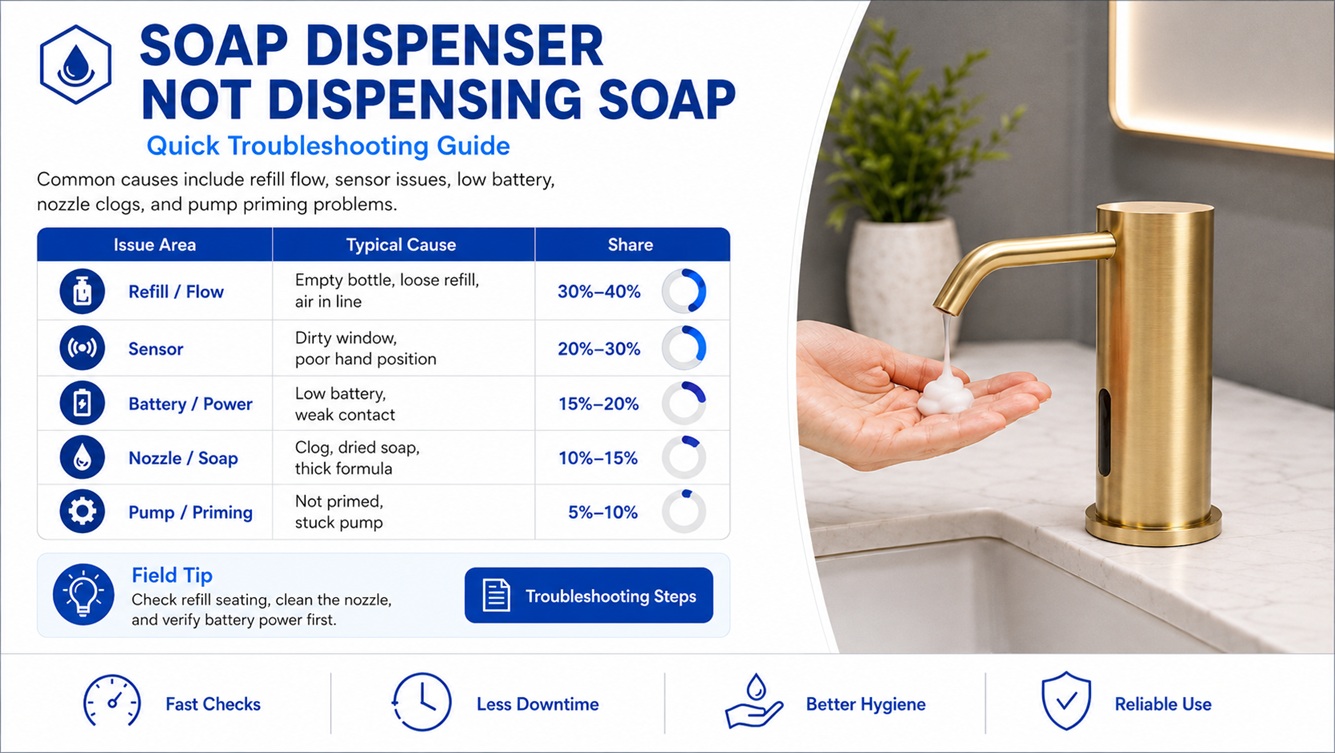
If your soap dispenser is not dispensing soap, the issue is usually related to soap flow, refill placement, nozzle blockage, pump priming, battery strength, or sensor activation. This guide explains how to identify the cause and restore normal dispensing performance step by step.
This troubleshooting page is designed for automatic, touchless, and commercial soap dispensers used in restrooms, offices, hotels, restaurants, healthcare facilities, schools, and other high-traffic environments where reliable handwashing access is important.
No Soap Coming Out
Pump & Nozzle Troubleshooting
Refill and Soap Flow Checks
Touchless Dispenser Support
|
|
Why Your Soap Dispenser Is Not Dispensing Soap
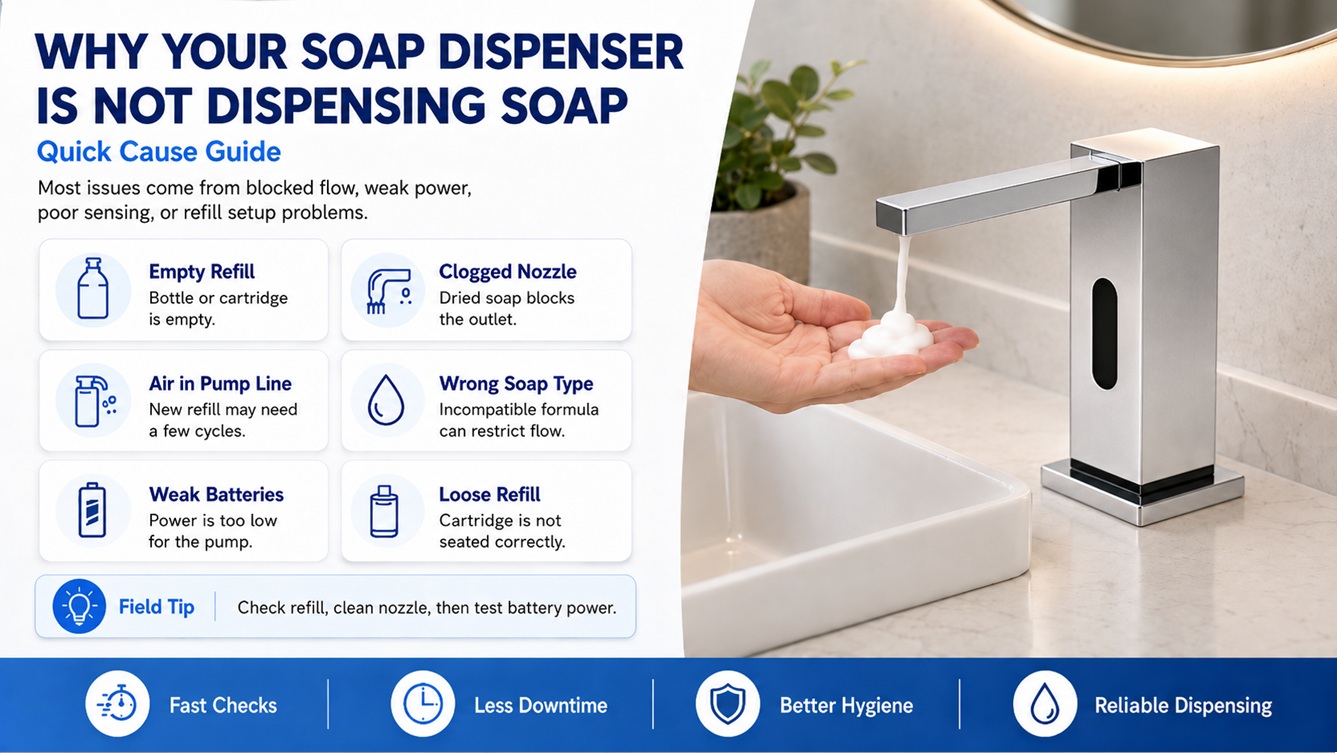
A soap dispenser not dispensing soap does not always mean the dispenser has failed. Many automatic soap dispenser problems happen because the soap cannot move properly from the refill or reservoir to the nozzle. In other cases, the dispenser may not be detecting the hand, the batteries may be too weak to operate the pump, or the wrong soap type may be restricting the flow.
Empty Soap Refill
The dispenser may activate normally, but no soap will come out if the refill bottle, cartridge, or internal reservoir is empty.
Clogged Nozzle
Dried soap around the outlet can block the dispensing path and stop soap from flowing.
Air in the Pump Line
After refilling or replacing a cartridge, the pump may need several activation cycles before soap reaches the nozzle.
Incorrect Soap Type
Liquid soap, foam soap, and sanitizer dispensers may use different pumps. Using the wrong product can prevent proper dispensing.
Weak Batteries
Batteries may have enough power for a light or small response, but not enough power to run the pump effectively.
Loose Refill Connection
If the soap cartridge is not seated correctly, the pump may not be able to draw soap into the dispensing tube.
Quick Check: If you hear the motor running but no soap comes out, focus first on the refill, nozzle, pump tube, soap viscosity, and priming process. If there is no sound or response, check the batteries and sensor.
Step-by-Step Troubleshooting
Use the following steps when your soap dispenser is not dispensing soap. These checks are arranged from the simplest causes to the more advanced service issues.
-
Check the soap level.
Open the dispenser and confirm that the refill, bottle, cartridge, or reservoir contains enough soap. If it is empty or nearly empty, replace or refill it before continuing.
-
Make sure the refill is installed correctly.
Remove the soap refill and reinstall it firmly. Confirm that the cap, valve, pump tube, or cartridge outlet is properly aligned. A loose refill is one of the most common reasons for a soap dispenser not dispensing soap.
-
Clean the dispensing nozzle.
Inspect the nozzle for dried soap, buildup, or debris. Wipe the outlet with a warm damp cloth. If buildup is heavy, gently clear the opening according to the dispenser instructions.
-
Prime the pump.
Place your hand under the sensor and activate the dispenser several times. After a refill change, it can take multiple cycles for soap to move through the internal tube and reach the outlet.
-
Check the soap viscosity.
Thick soap can block the pump or move too slowly through the dispenser. Use only the soap type recommended for the unit. If the dispenser is made for foam soap, do not use standard liquid soap unless the model allows it.
-
Replace weak batteries.
If the motor sounds slow, weak, or inconsistent, replace the batteries with fresh batteries of the correct type. Weak batteries may prevent the pump from completing a full dispensing cycle.
-
Clean the sensor window.
If the touchless soap dispenser does not activate every time, wipe the sensor area with a soft cloth. Water spots, fingerprints, dust, or soap residue can interfere with detection.
-
Inspect the pump tube or internal connection.
If accessible, check whether the internal tube is bent, loose, blocked, or disconnected. A kinked or loose tube can stop soap from reaching the nozzle.
-
Test with a compatible refill.
If the dispenser still does not dispense soap, test it with a correct replacement refill or approved soap. This helps determine whether the issue is the soap supply or the dispenser mechanism.
How to Prime a Soap Dispenser Pump
A soap dispenser may fail to dispense immediately after refilling because the pump line contains air. Priming helps move soap through the internal tube until it reaches the nozzle.
- Confirm the refill or reservoir has enough soap.
- Make sure the soap cartridge or bottle is seated securely.
- Check that the nozzle is not clogged with dried soap.
- Place your hand under the sensor to activate the dispenser.
- Repeat the activation cycle several times until soap begins to dispense.
- If the motor sounds weak, replace the batteries and try again.
- If soap still does not appear, inspect the pump tube or refill outlet for blockage.
In commercial restrooms, priming may be needed after maintenance staff replace refills, clean the dispenser, or leave the unit unused for an extended period. If the pump repeatedly loses prime, the refill connection or pump assembly may need inspection.
Important: Avoid forcing thick soap through a dispenser that is not designed for it. Using incompatible soap can cause clogs, weak output, inconsistent dispensing, or pump strain.
Liquid Soap vs Foam Soap Dispensing Issues
One major reason for a soap dispenser not dispensing soap is using the wrong type of soap for the dispenser. Liquid soap dispensers and foam soap dispensers are not always interchangeable. Each type uses a different flow design and may require a specific cartridge, bottle, or pump mechanism.
Liquid Soap Dispenser Problems
- Soap may be too thick for the pump.
- The nozzle may clog when soap dries around the outlet.
- The pump may need extra priming after a refill change.
- Low batteries may reduce the strength of the dispensing cycle.
Foam Soap Dispenser Problems
- Using standard liquid soap can prevent foam output.
- The foam cartridge may not be installed correctly.
- The air-and-soap mixing mechanism may be blocked.
- The wrong refill can create watery, weak, or no foam output.
Always confirm whether the unit is designed for liquid soap, foam soap, sanitizer, or a specific cartridge system. Matching the correct soap type to the correct dispenser improves performance and reduces maintenance issues.
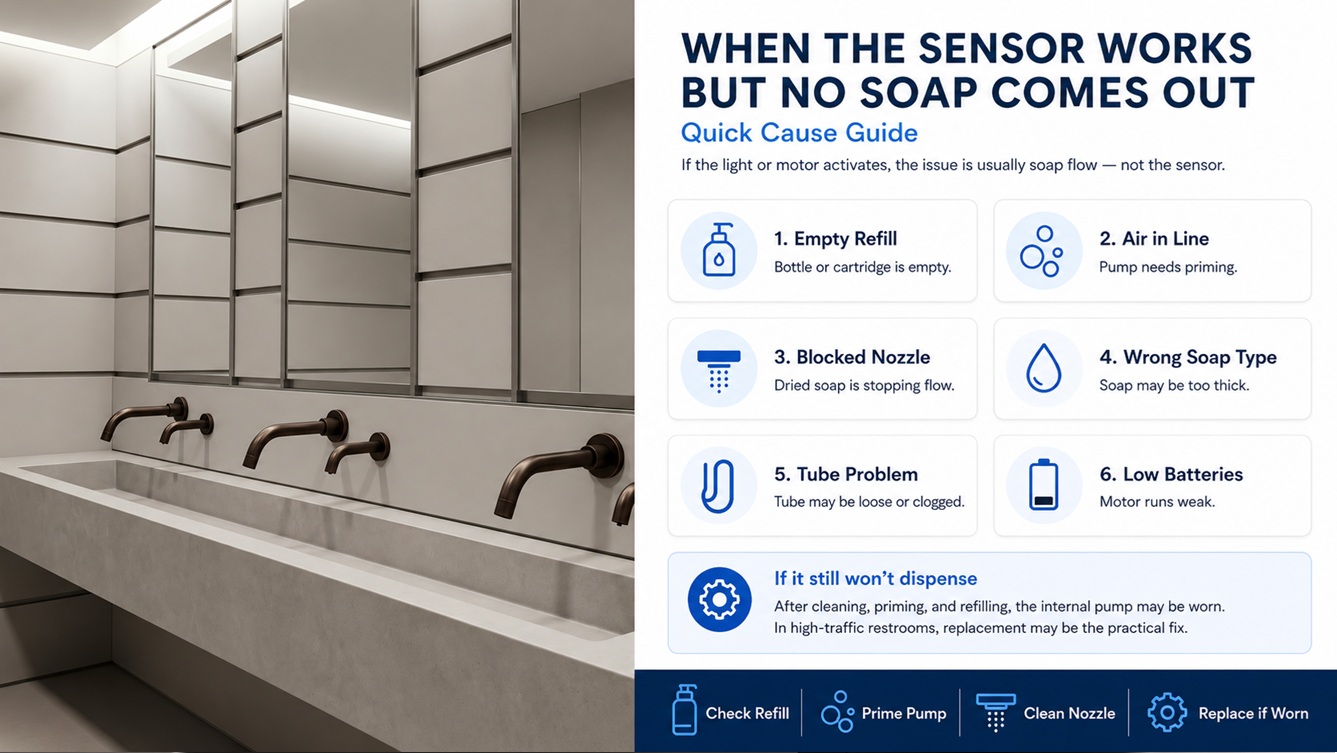
When the Sensor Works But No Soap Comes Out
If the sensor light activates or the motor runs but no soap comes out, the problem is usually not the sensor. Instead, it is more likely related to soap flow. In this case, focus on the refill, pump, nozzle, and soap type.
Possible Causes
- The soap refill is empty or not fully connected.
- The pump line has air and needs priming.
- The nozzle is blocked by dried soap.
- The soap is too thick or incompatible with the dispenser.
- The pump tube is loose, kinked, or clogged.
- The motor is weak because the batteries are low.
If the dispenser consistently activates but does not dispense after cleaning, priming, and replacing the refill, the internal pump may be worn or damaged. For high-traffic commercial restrooms, replacement may be more practical than repeated service.
When to Replace the Refill, Batteries, or Dispenser
Not every no-dispensing issue requires a new unit. However, some problems are signs that a refill, battery set, pump part, or dispenser replacement is needed.
Replace the Refill When:
- The refill is empty, collapsed, damaged, or leaking.
- The outlet seal is blocked or not opening properly.
- The cartridge does not lock securely into the dispenser.
- The soap type does not match the dispenser model.
Replace the Batteries When:
- The dispenser activates inconsistently.
- The motor sounds weak or slow.
- The indicator light flashes or dims.
- The dispenser works briefly and then stops again.
Replace the Dispenser When:
- The pump no longer draws soap after proper priming.
- The unit repeatedly clogs even with compatible soap.
- The sensor activates, but dispensing remains unreliable.
- The dispenser is damaged, corroded, or no longer suitable for heavy use.
Recommended Automatic Soap Dispenser Solutions
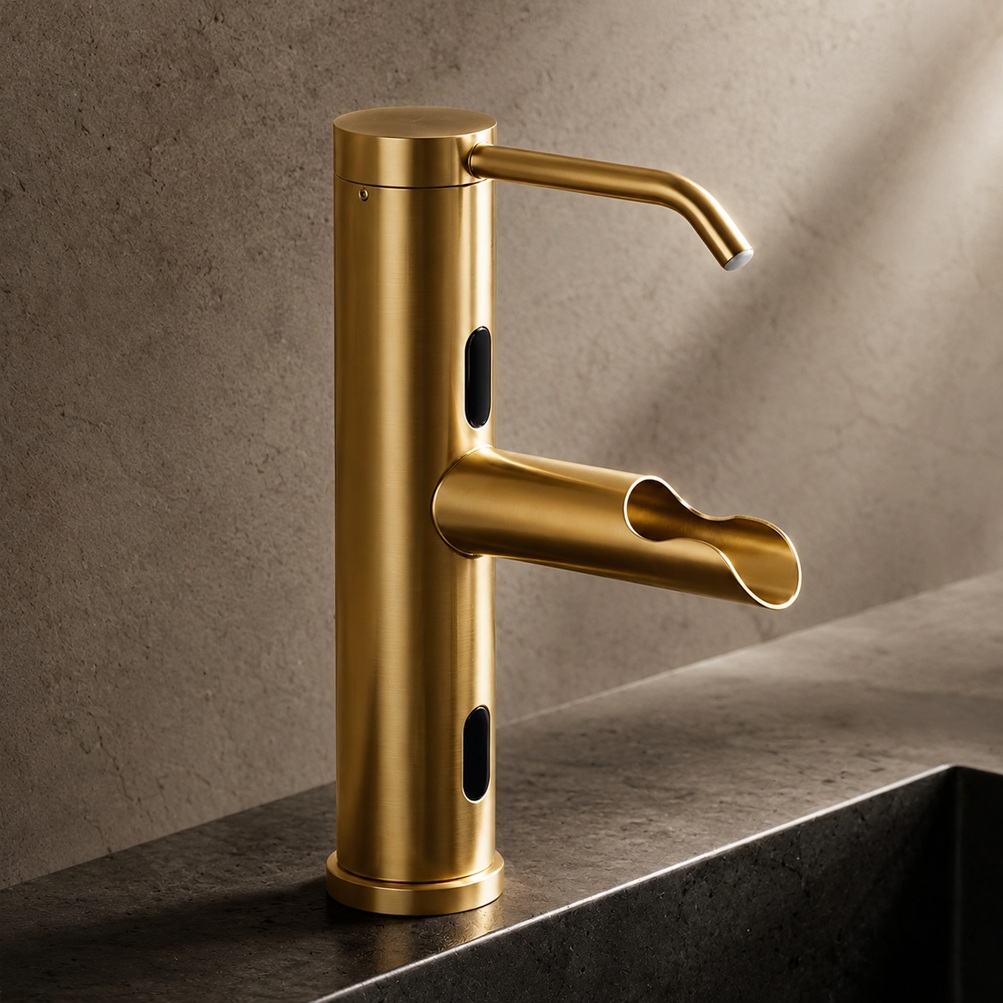
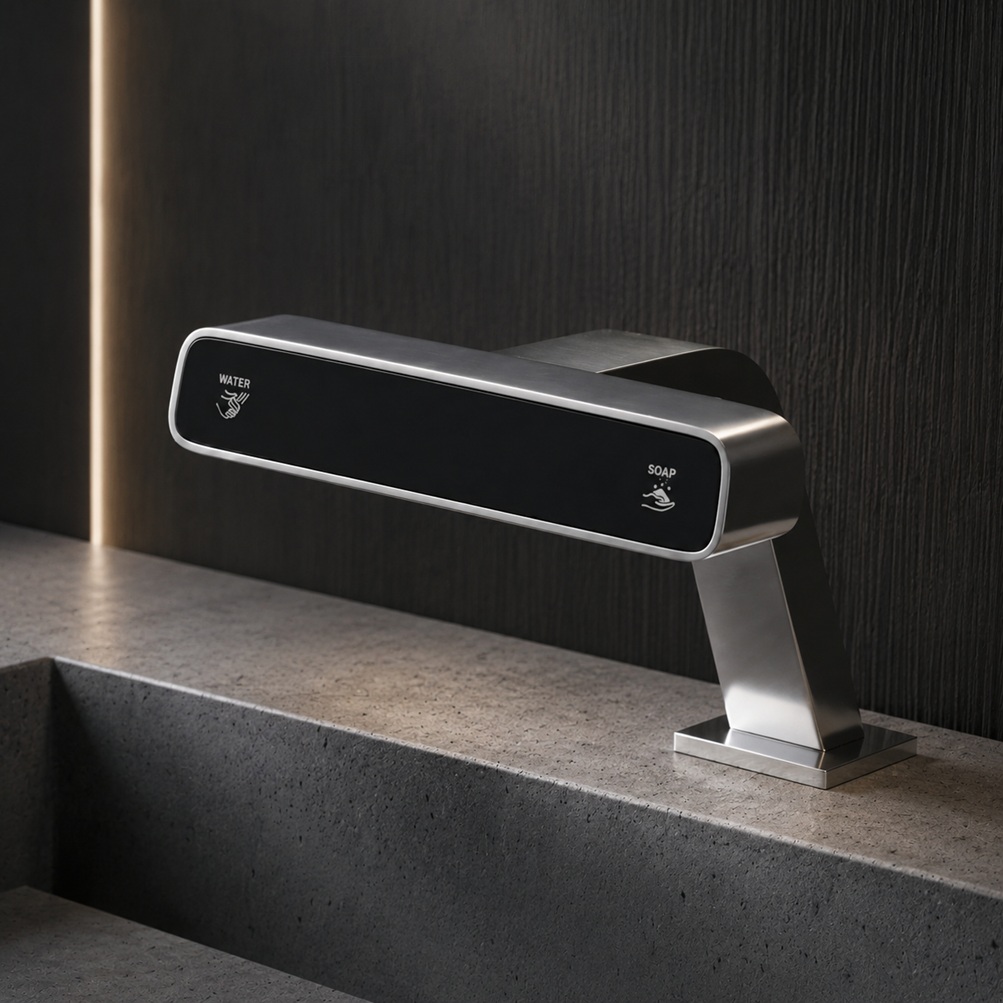
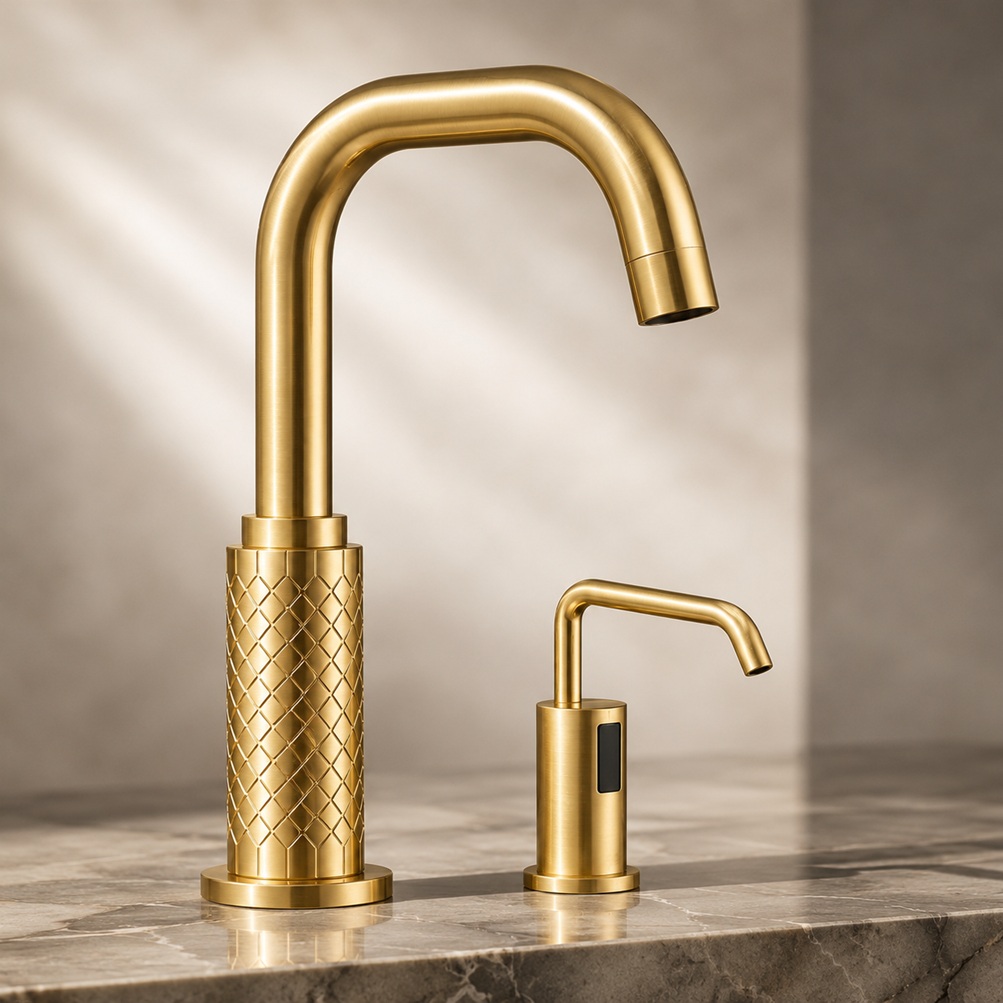
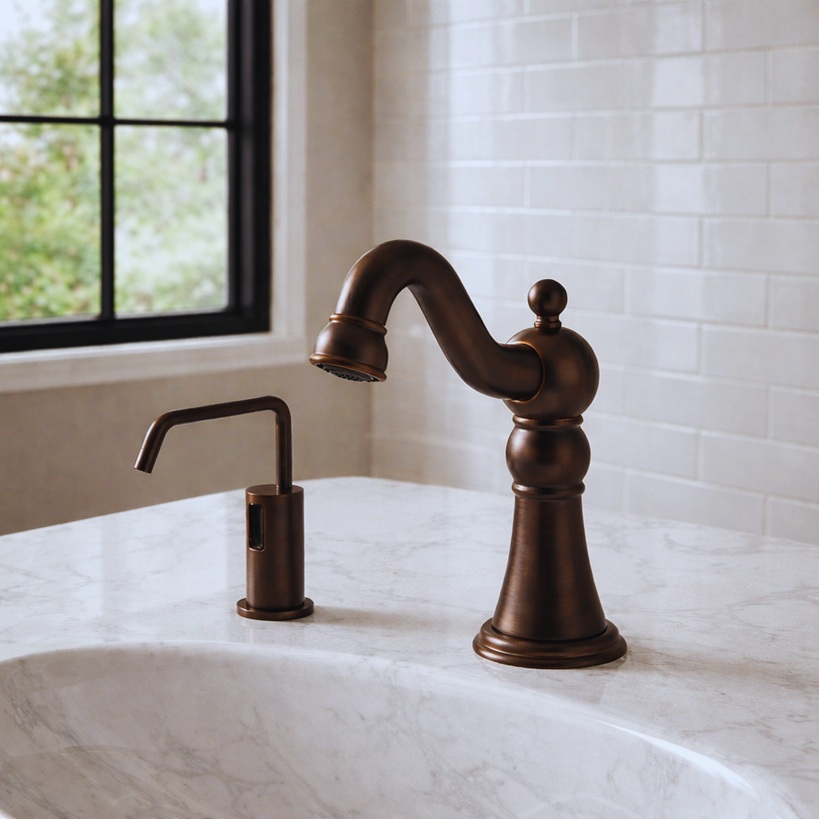
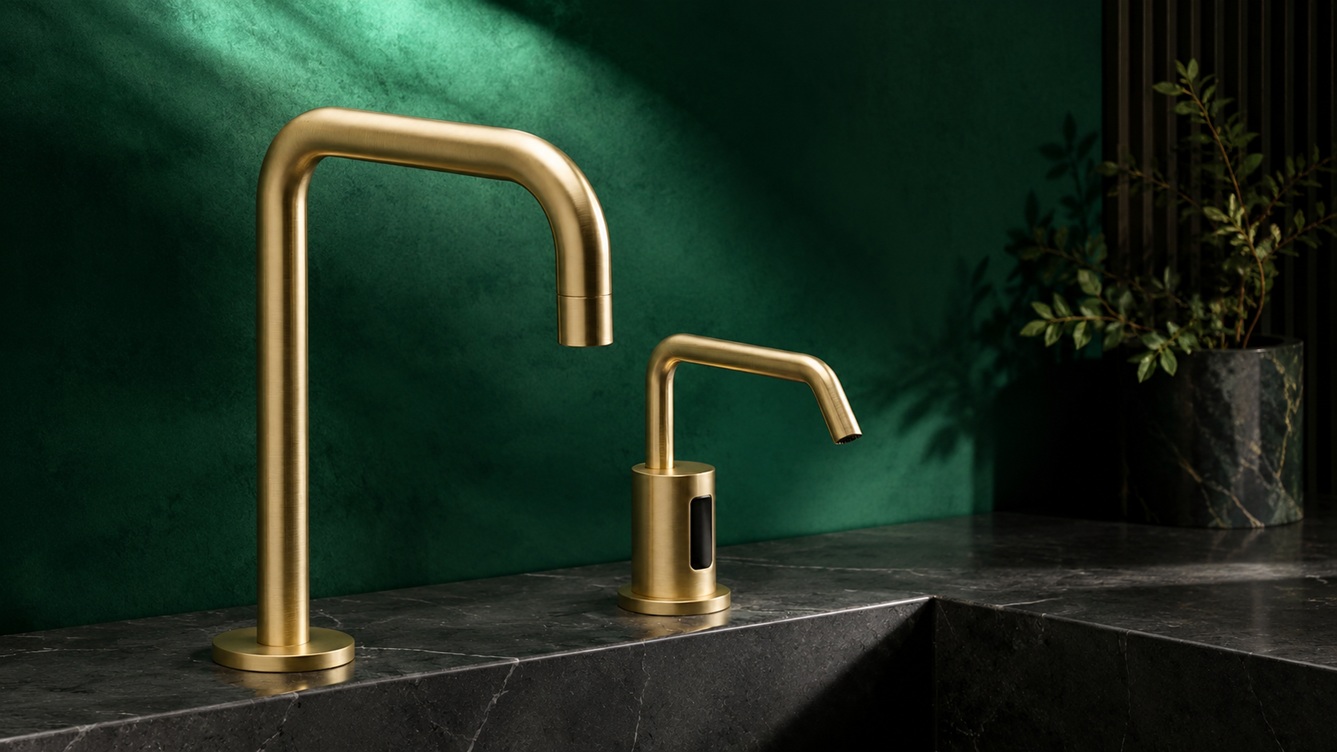
If your soap dispenser is not dispensing soap because of repeated clogging, weak pump performance, wrong refill compatibility, or heavy use, upgrading to a dependable automatic soap dispenser can help reduce maintenance issues and improve restroom hygiene.
For commercial projects, choose an automatic soap dispenser based on traffic level, refill capacity, soap type, installation style, sensor reliability, finish, and compatibility with surrounding touchless faucets. A properly selected dispenser can help create a cleaner, more efficient, and more professional restroom experience.
Related Troubleshooting Guides
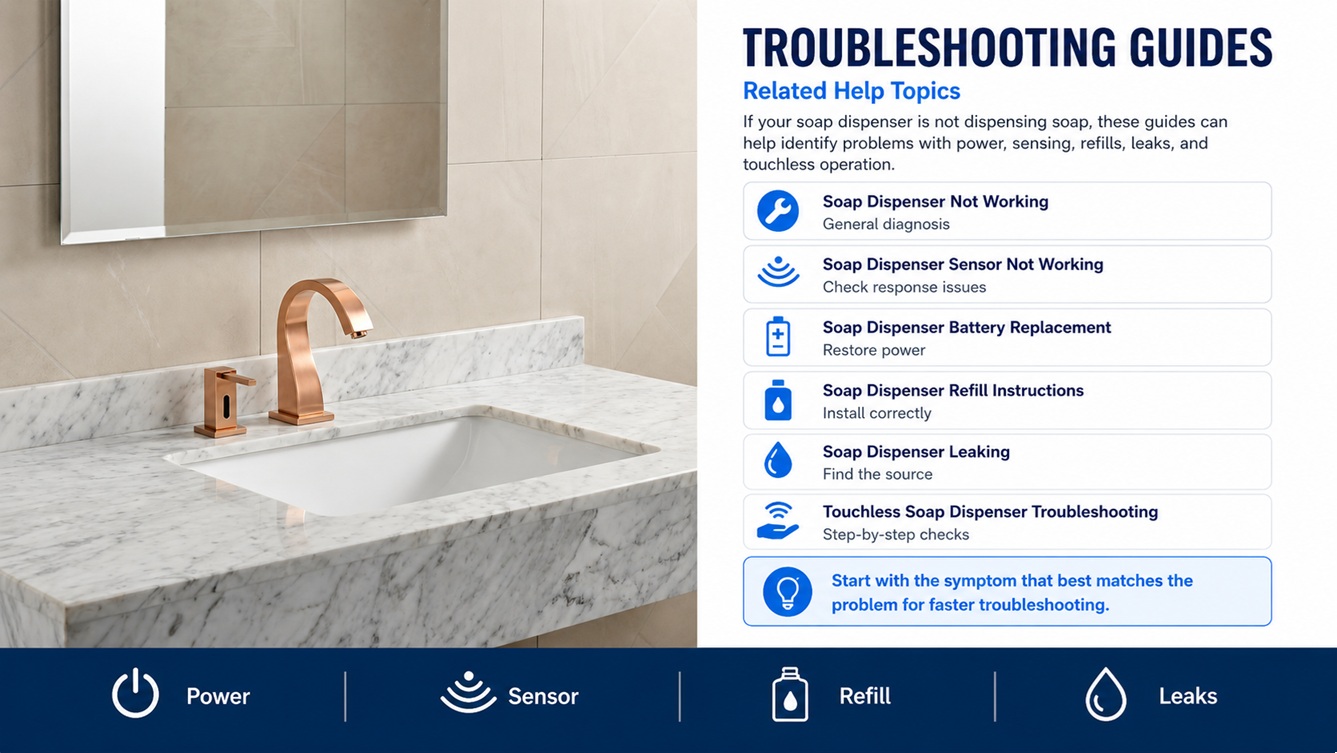
If your soap dispenser is not dispensing soap, these related guides can help you diagnose whether the problem is caused by power, sensor response, refill installation, leaking, or general touchless operation.
FAQs
Why is my soap dispenser not dispensing soap?
The most common causes are an empty refill, clogged nozzle, air in the pump line, weak batteries, incorrect soap type, or a loose cartridge connection. Start by checking the refill, cleaning the nozzle, and priming the pump.
Why does my soap dispenser make noise but no soap comes out?
If the motor runs but no soap comes out, the dispenser is likely activating correctly but the soap is not reaching the nozzle. Check for an empty refill, blocked nozzle, thick soap, air in the pump line, or a loose refill connection.
How do I unclog a soap dispenser nozzle?
Wipe the nozzle with a warm damp cloth to remove dried soap. If the outlet remains blocked, follow the dispenser instructions for safe cleaning. Avoid sharp tools that may damage the nozzle or dispensing mechanism.
Can low batteries stop soap from dispensing?
Yes. Weak batteries may allow the light or sensor to respond but may not provide enough power for the pump to dispense soap. Replace the batteries with fresh batteries and test the dispenser again.
How many times should I activate the dispenser after refilling?
Activate the dispenser several times after refilling or replacing the cartridge. It may take multiple cycles to prime the pump and move soap through the internal tube to the nozzle.
Can I use any soap in an automatic soap dispenser?
No. Use the soap type recommended for the dispenser. Liquid soap, foam soap, and sanitizer may require different pump systems. Using soap that is too thick or incompatible can stop the dispenser from working properly.
|
|
|