ADA Compliant Bathroom Sink Faucets Commercial
Looking for ADA compliant lavatory sink faucets? This category covers commercial bathroom sink faucets
engineered to support accessibility requirements and reduce touch points through modern handle options and touchless
sensor operation—ideal for restaurants, hospitals, offices, and high-traffic public facilities. Architects, facility managers, designers, and contractors should avoid non-certified or poorly engineered faucets, as they may fail accessibility standards, risking compliance, user safety, and long-term performance in commercial environments.
Fast Checklist: ADA Compliant Lavatory Sink Faucet Requirements
- Accessible operation: no tight pinching, grasping, or twisting of the wrist.
- Low activation force: commonly referenced as 5 lbs. or less for operable parts.
- Reach/mounting planning: meet the facility’s required reach range and mounting height constraints.
- Stable performance: consistent flow and reliable activation in high-traffic restrooms.
- Easy maintenance: quick access for service to reduce downtime and labor cost.
Tip: If you’re comparing products for “
ADA compliant lavatory sink faucet” clear compliance-oriented
specs and installation notes help this is the page.
|
|
What “ADA Compliant” Means for Commercial Bathroom Sink Faucets
The guidelines of the Americans with Disabilities Act (ADA) help ensure equal accessibility for individuals with disabilities.
The ADA is a civil rights law that prohibits discrimination against people with disabilities in various areas, including public
accommodations like commercial buildings and facilities.
By incorporating ADA-compliant faucets, commercial establishments can provide accessible and inclusive restroom facilities for all
individuals, regardless of their physical abilities.
Key ADA Operation & Reach Basics for Lavatory Sink Faucets
In general, ADA Commercial bathroom sink Faucets means they comply with the applicable ADA requirements as specified in the
Americans with Disabilities Act. Faucets with lever, wristblade, blade, cross/six-prong or T-handles and Touchless comply with the
actuation force Accessibility Guidelines, Section 309 Operation, of the Act. Faucets with easy-to-operate lever-style handles are a
convenience to anyone with arthritis.
 Faucets with hot limit safety stops help prevent accidental scalding by stopping the handle from moving to the hot side. According to
Title III of the Americans with Disabilities Act (ADA) it requires all public accommodations constructed after 1990 be accessible to
disabled citizens. In addition to barrier-free access to the building itself, fixtures such as faucets must also be accessible. Further,
operation of the faucet must not require tight pinching, grasping or twisting of the wrist.
Faucets with hot limit safety stops help prevent accidental scalding by stopping the handle from moving to the hot side. According to
Title III of the Americans with Disabilities Act (ADA) it requires all public accommodations constructed after 1990 be accessible to
disabled citizens. In addition to barrier-free access to the building itself, fixtures such as faucets must also be accessible. Further,
operation of the faucet must not require tight pinching, grasping or twisting of the wrist.

The force to activate the faucet must be 5 lbs. or less. Hand-operated faucets must remain open for at least 10 seconds.
Lever Operated: sensor faucet commercial Lever operated controls are ADA compliant if they meet the 5 lb. or less force requirement.
.jpg)
Browse Fontana Sensor Faucets ADA Commercial bathroom sink Faucets available in a wide range of styles and features to give you maximum
design and functional flexibility.

Why Touchless Helps with Accessibility and Hygiene
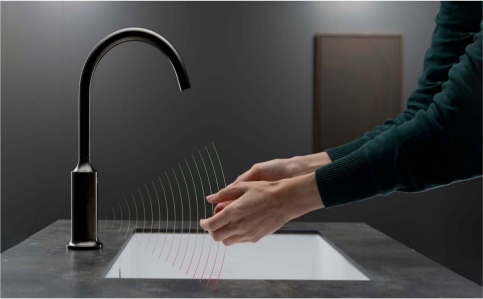
ADA touchless commercial bathroom sink faucets combine hands-free activation with accessibility-focused operation. In busy facilities,
touchless designs can reduce contact points and help maintain consistent user flow—especially in restrooms where many users share the
same fixtures throughout the day.
- Hands-free activation supports hygiene goals and reduces shared touch surfaces.
- Consistent activation improves user experience in high-traffic environments.
- Spec-friendly operation supports accessibility requirements when properly installed and configured.
The ADA sink faucet requirements must meet reach range and mounting height. A 48-inch-high limitation a reach range of 44 inches also must be applies.
The commercial bathroom sink are now Smart and sustainable.
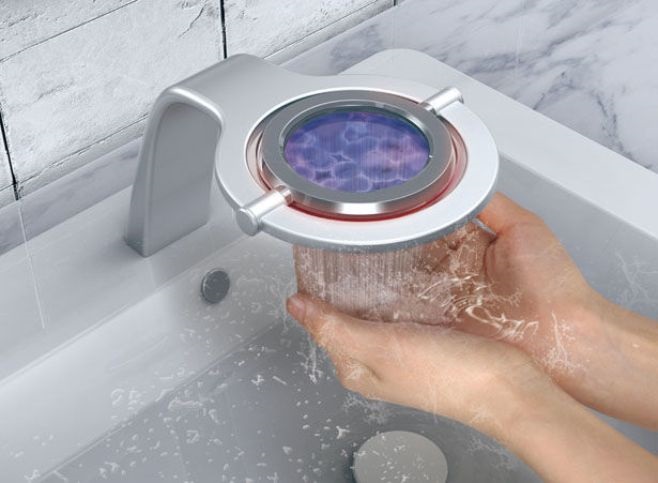
Be it Single handle or two handle; Widespread or wall mount; Chrome, Bronze Stainless or Brushed Nickle finish you will find the faucet that meets your need and style.
Sensors are single piece, self-contained fixed function devices with no customer accessible adjustments. They incorporate dual infrared sensors and up to three timers for constructing water flow sequences in response to sensor detection of hand or body. They are customized to specific water delivery products.
Fixed function has proved to be an advantage in our customers' manufacturing operations and installations. Sensors are manufactured by Scanning Devices to meet our customers' rigid specifications for sensing range, timing and switching.
Reliable installation of sensors in faucets, fountains and flush valves has been simplified by eliminating variables and adjustments.
Selection Tips & What to Avoid (ADA Compliant Lavatory Sink Faucets)
When selecting an ADA compliant lavatory sink faucet for a commercial restroom, the goal is reliable performance with accessible operation.
Consider installation type, user reach, sensor behavior, and ongoing maintenance workflow.
Avoid these common problems:
- Hard-to-operate controls that require twisting, tight grasping, or pinching
- Unstable sensor performance (false triggers, delayed response, or inconsistent activation)
- Difficult maintenance access that increases downtime and service time
- Poor placement planning that causes reach or mounting-height conflicts
- Uncontrolled hot-side movement without safety considerations (where applicable)
Specifier Notes (Design + Maintenance)
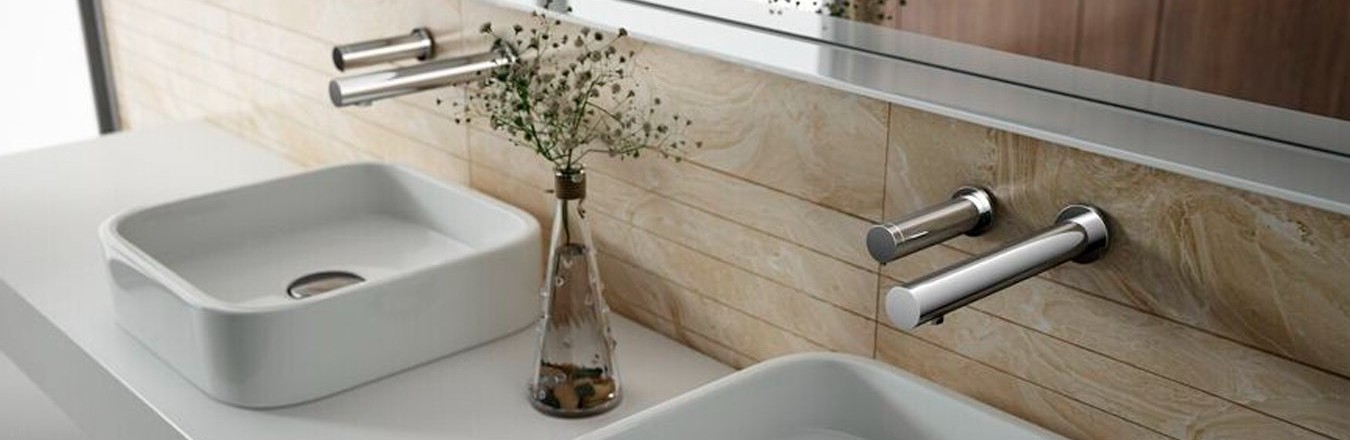
- Match faucet type to sink + countertop layout: deck mount vs. wall mount affects reach and usability.
- Plan power + service: ensure battery or AC access supports your maintenance schedule.
- Confirm sensing distance and location: avoid reflective glare or obstructions that can impact activation.
- Standardize where possible: consistent models reduce spare parts complexity and simplify training.
.jpg)
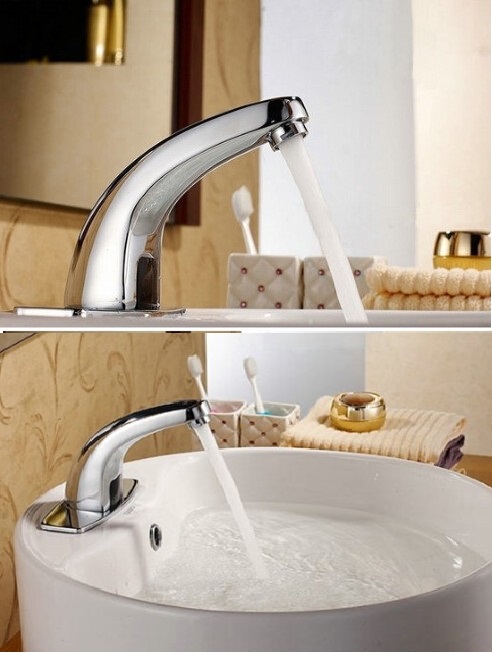
ADA Compliant Bathroom Sink Faucets are designed for commercial bathrooms that incorporate touchless technology to control water flow.
These faucets are compliant with the Americans with Disabilities Act (ADA) regulations, which ensure accessibility for individuals with disabilities.
ADA Touchless Commercial Bathroom Sink Faucets combine the convenience of touchless operation with the compliance requirements of the ADA.
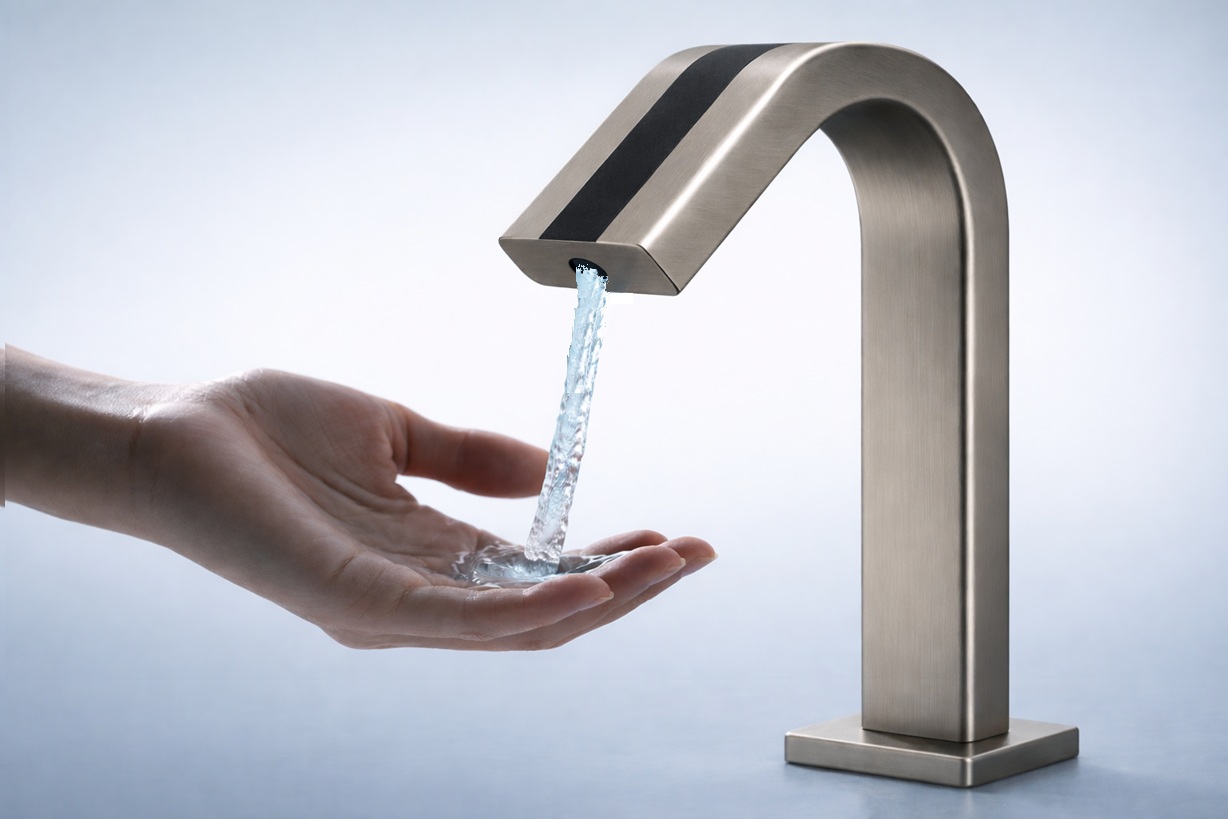
The touchless feature allows users to activate the water flow without physically touching the fixture. Instead, since the operation rely on motion sensors to detect
the presence of a person hands to initiate water flow. Overall, ADA Touchless Commercial Bathroom Sink Motion Sensor Faucets combine the convenience of touchless operation
with the compliance requirements of the ADA, making them a popular choice for commercial establishments aiming to provide accessible and hygienic restroom facilities.
Frequently Asked Questions
What is an ADA compliant lavatory sink faucet?
An ADA compliant lavatory sink faucet is designed to support accessibility requirements in public accommodations by offering operable parts that do not require tight
pinching, grasping, or twisting of the wrist, while meeting reach and mounting considerations for the installation.
Are touchless faucets ADA compliant?
Touchless faucets can support ADA compliance when properly installed and configured, because activation does not require twisting or grasping and can reduce the effort
needed to operate the faucet.
What should be avoided when selecting ADA compliant commercial sink faucets?
Avoid options with difficult-to-operate controls, unreliable sensor activation, poor service access, and installation layouts that create reach or mounting height issues.
These problems increase complaints and can raise maintenance costs.
Which environments benefit most from ADA touchless commercial faucets?
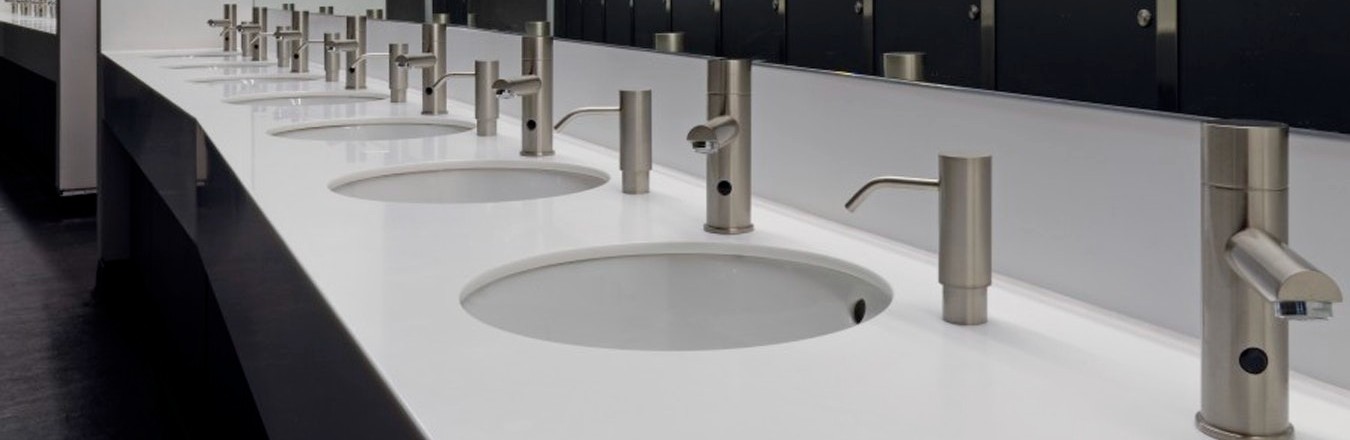
High-traffic facilities such as restaurants, hospitals, office buildings, and public venues benefit from touchless ADA commercial bathroom sink faucets because they support
accessible operation while reducing shared touch surfaces and improving restroom efficiency.
ADA Faucet Specification Guidance
ADA Compliance Resources for Commercial Bathroom Sink Faucets
ADA compliant commercial bathroom sink faucets should be specified according to applicable accessibility requirements published by the U.S. Department of Justice and the U.S. Access Board. Proper installation, reach ranges, clear floor space, operable parts, and maintenance access are critical factors in achieving accessible restroom performance.
Facility Accessibility Guidelines
For commercial restroom projects, faucet compliance should not be evaluated as a product-only decision. The installed condition matters. Specifiers should review lavatory height, knee and toe clearance, reach range, faucet control location, water supply protection, maintenance access, and how users approach the sink. A compliant faucet installed outside accessible reach range can still create a non-compliant restroom condition.
Commercial Restroom Accessibility Best Practices
- Confirm faucet controls are usable without tight grasping, pinching, or twisting.
- Coordinate faucet placement with sink depth, counter layout, and accessible reach range.
- Verify clear floor space, knee clearance, toe clearance, and approach direction.
- Use standardized commercial faucet platforms for easier maintenance and part replacement.
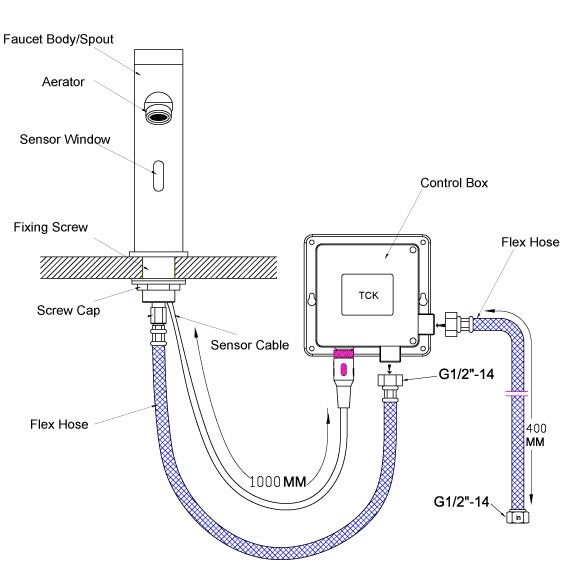
- Plan service access for batteries, transformers, solenoids, mixing valves, and control boxes.
Common ADA Faucet Specification Mistakes We See
In commercial restroom projects, one of the most common specification mistakes is selecting a faucet that appears to meet product requirements but fails installation reach-range requirements once mounted on the sink or countertop.
Another frequent issue is inadequate service access for battery replacement, control box maintenance, or sensor servicing. Facility managers often prefer standardized touchless faucet platforms because they reduce replacement part inventories, simplify technician training, and improve long-term restroom maintenance consistency across multiple locations.
Specification Note:
Always verify final ADA compliance with the project architect, accessibility consultant, authority having jurisdiction, and the latest applicable federal, state, and local accessibility requirements.
|
|
|