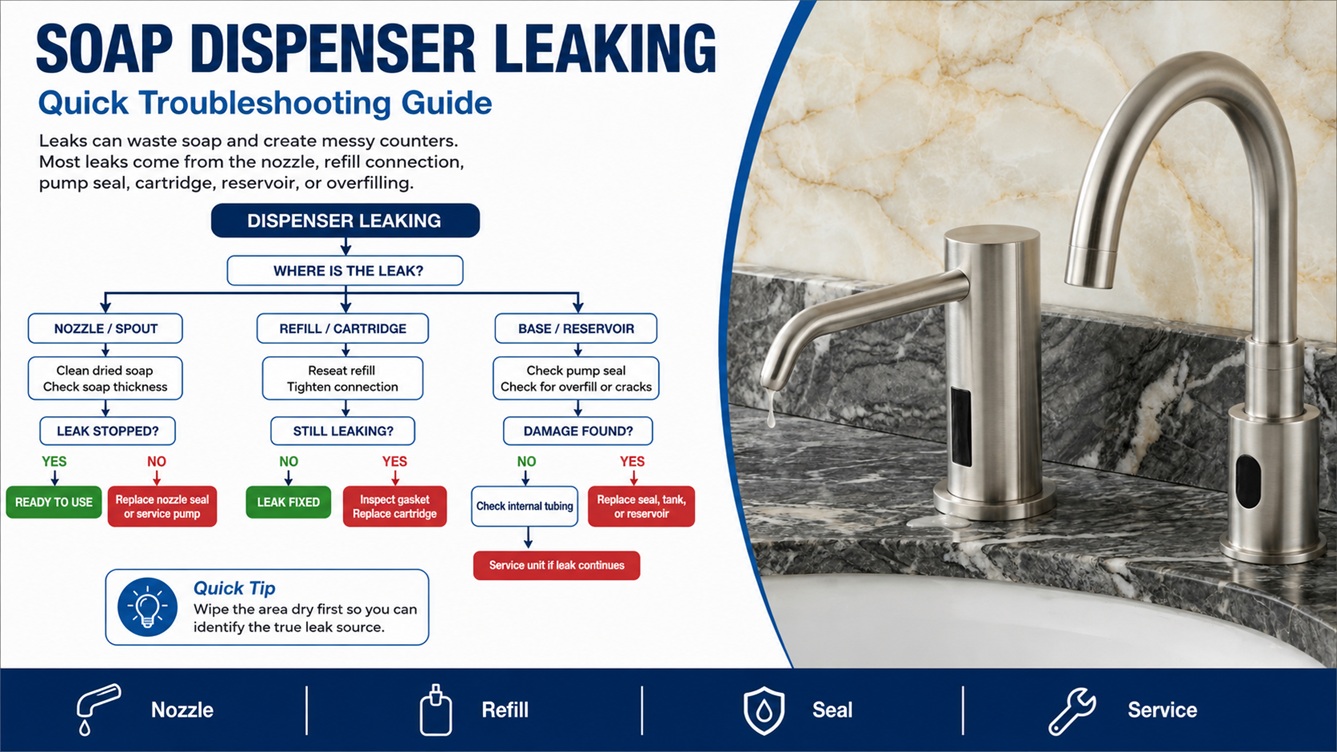
A soap dispenser leaking can create messy countertops, wasted soap, slippery floors, and extra restroom maintenance. Leaks usually come from the nozzle, refill connection, pump seal, cartridge, reservoir, or an overfilled soap chamber.
This troubleshooting guide explains how to identify where the leak is coming from and how to fix common leaking problems in automatic, touchless, and commercial soap dispensers used in offices, hotels, restaurants, healthcare facilities, schools, and public restrooms.
Nozzle Drip TroubleshootingRefill Seal ChecksPump & Reservoir LeaksCommercial Restroom Maintenance
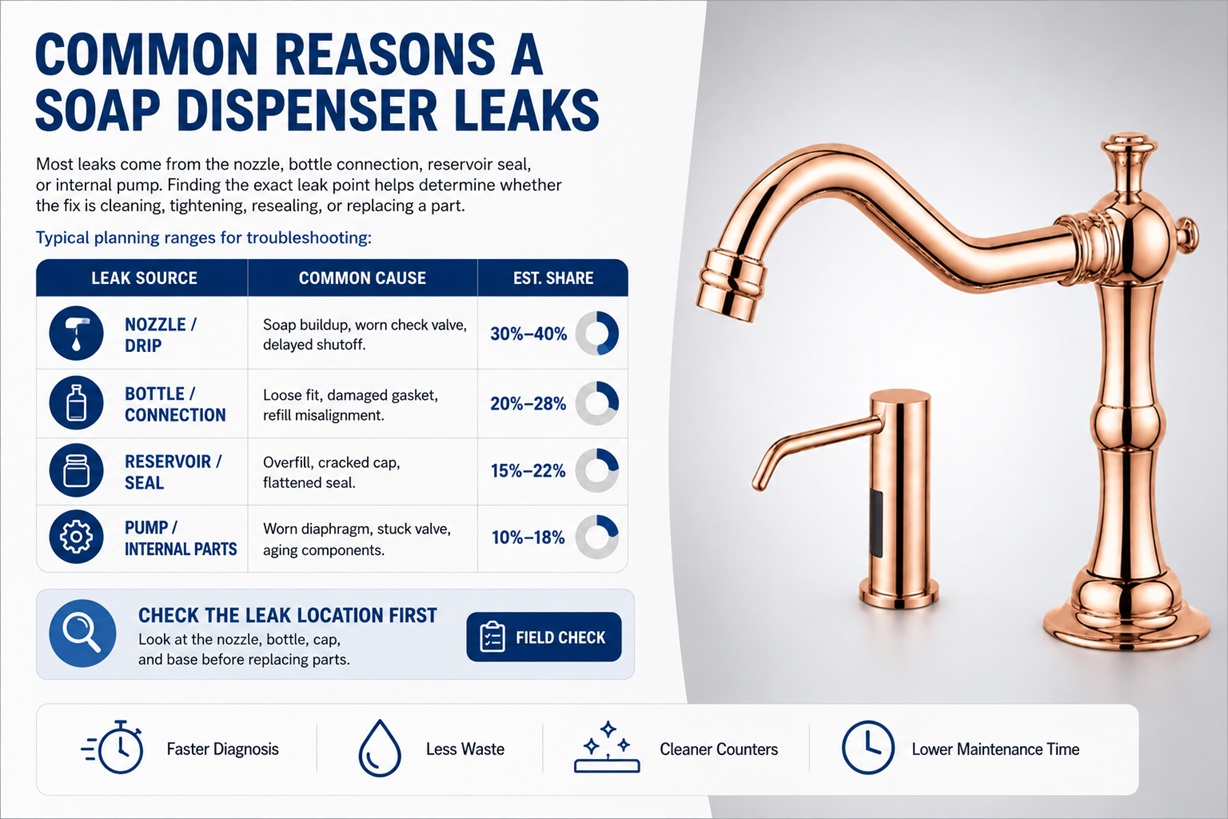
Common Reasons a Soap Dispenser Is Leaking
When a soap dispenser is leaking, the first step is to locate the source. Some leaks come from the dispensing nozzle after each use, while others come from the refill bottle, cartridge connection, internal pump, or reservoir. Identifying the leak location helps determine whether the issue requires cleaning, tightening, refilling, replacing a seal, or changing the dispenser.
Nozzle DrippingSoap residue, thick soap, or a partially blocked outlet can cause slow dripping after the dispenser activates.
Loose Soap RefillIf the cartridge or refill bottle is not seated securely, soap may leak around the connection point.
Overfilled ReservoirFilling above the recommended level can cause soap to spill, seep, or leak when the cover is closed.
Damaged Seal or GasketA worn seal, cracked cap, or damaged gasket can allow soap to escape from the refill or pump area.
Cracked Bottle or HousingA cracked internal reservoir, refill bottle, or dispenser body can create persistent leaking.
Incorrect Soap TypeSoap that is too thin, too thick, or incompatible with the dispenser may cause dripping, clogging, or poor shutoff.
Quick Diagnosis: If the leak appears only after activation, check the nozzle and pump shutoff. If soap leaks even when the dispenser is unused, inspect the refill, reservoir, cap, seal, and internal housing.
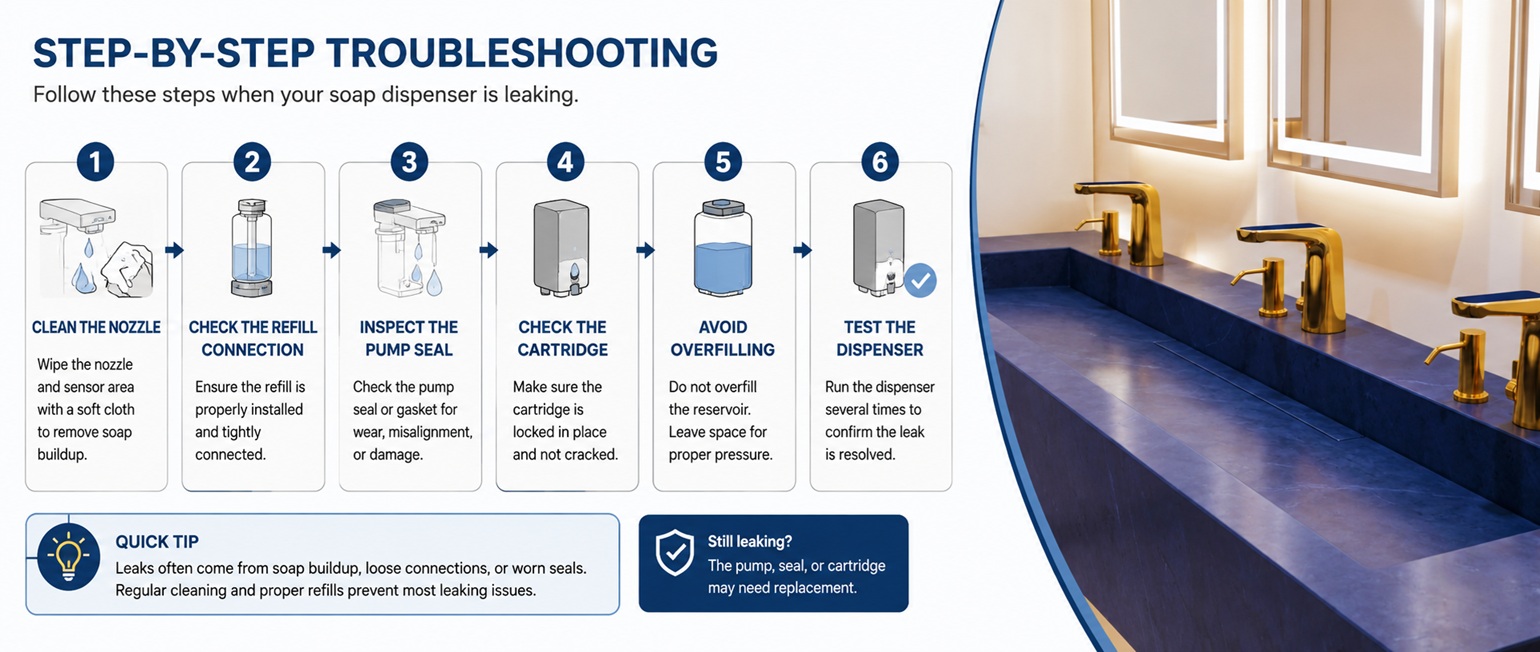
Step-by-Step Troubleshooting
Follow these steps when your soap dispenser is leaking. Start with simple cleaning and refill checks before replacing the dispenser.
Locate the leak source.
Wipe the dispenser clean and observe where soap first appears. Check the nozzle, refill connection, pump area, bottom of the unit, wall mount, countertop opening, and inside the cover.
Clean the nozzle.
Dried soap around the dispensing outlet can cause poor shutoff and dripping. Wipe the nozzle with a warm damp cloth and remove any buildup around the opening.
Check the soap refill or cartridge.
Remove the refill and reinstall it securely. Make sure it clicks, locks, or seats correctly. A loose refill connection is a common reason for a soap dispenser leaking inside the housing.
Inspect the cap, seal, and gasket.
Look for cracks, loose caps, worn rubber seals, or damaged gaskets. If the seal is damaged, soap can leak even when the dispenser is not being used.
Avoid overfilling the reservoir.
If the dispenser uses a refillable reservoir, do not fill above the recommended level. Overfilling can cause soap to spill into the housing or seep from the cover.
Check soap viscosity.
Thin soap may drip more easily, while thick soap can clog the nozzle and cause delayed dripping. Use the soap type recommended for the dispenser model.
Prime and test the pump.
After cleaning or refilling, activate the dispenser several times. Watch whether the soap stream stops cleanly. If it continues to drip, the nozzle or pump shutoff may need further inspection.
Inspect for cracks or damage.
Check the refill bottle, internal tank, pump body, and dispenser housing. A cracked reservoir or damaged pump assembly may require replacement.
Clean inside the dispenser housing.
Soap buildup inside the unit can make it difficult to see the true leak source. Wipe the inside carefully and retest after the unit is clean and dry.
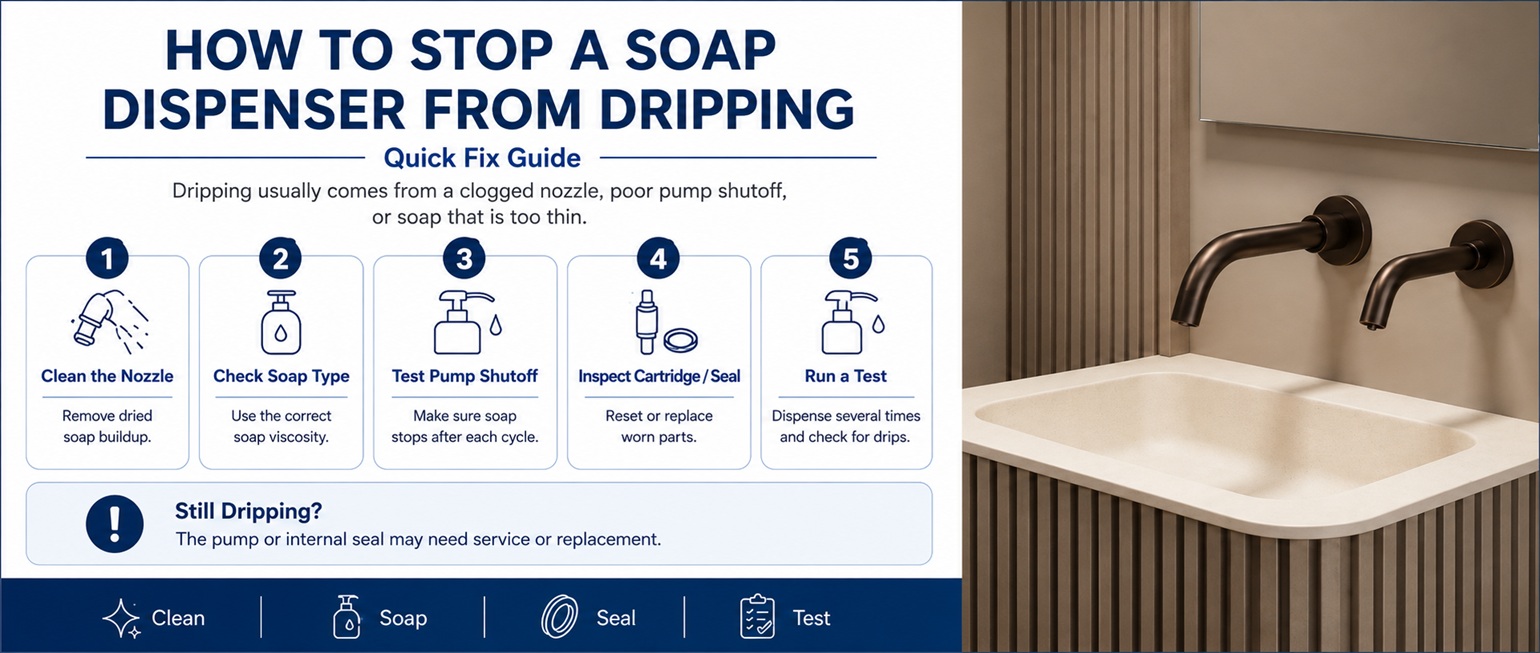
How to Stop a Soap Dispenser From Dripping
A dripping soap dispenser usually means the nozzle is partially clogged, the soap is not flowing cleanly, or the pump is not shutting off properly. Dripping may also happen when the soap is too thin for the dispenser.
Wipe the nozzle with a warm damp cloth.
Remove dried soap buildup from the outlet.
Use only the recommended liquid soap, foam soap, or sanitizer type.
Avoid watered-down soap unless the dispenser instructions allow it.
Replace soap that is too thin, separated, or contaminated.
Activate the dispenser several times to clear trapped soap residue.
Check whether the pump continues to release soap after each cycle.
If the nozzle continues dripping after cleaning and using the correct soap, the internal pump valve or shutoff mechanism may be worn. In high-traffic commercial restrooms, dispenser replacement may be more practical than repeated repair.
Maintenance Tip: Regular nozzle cleaning helps prevent both clogging and dripping. In public restrooms, add soap dispenser nozzle cleaning to the routine maintenance schedule.
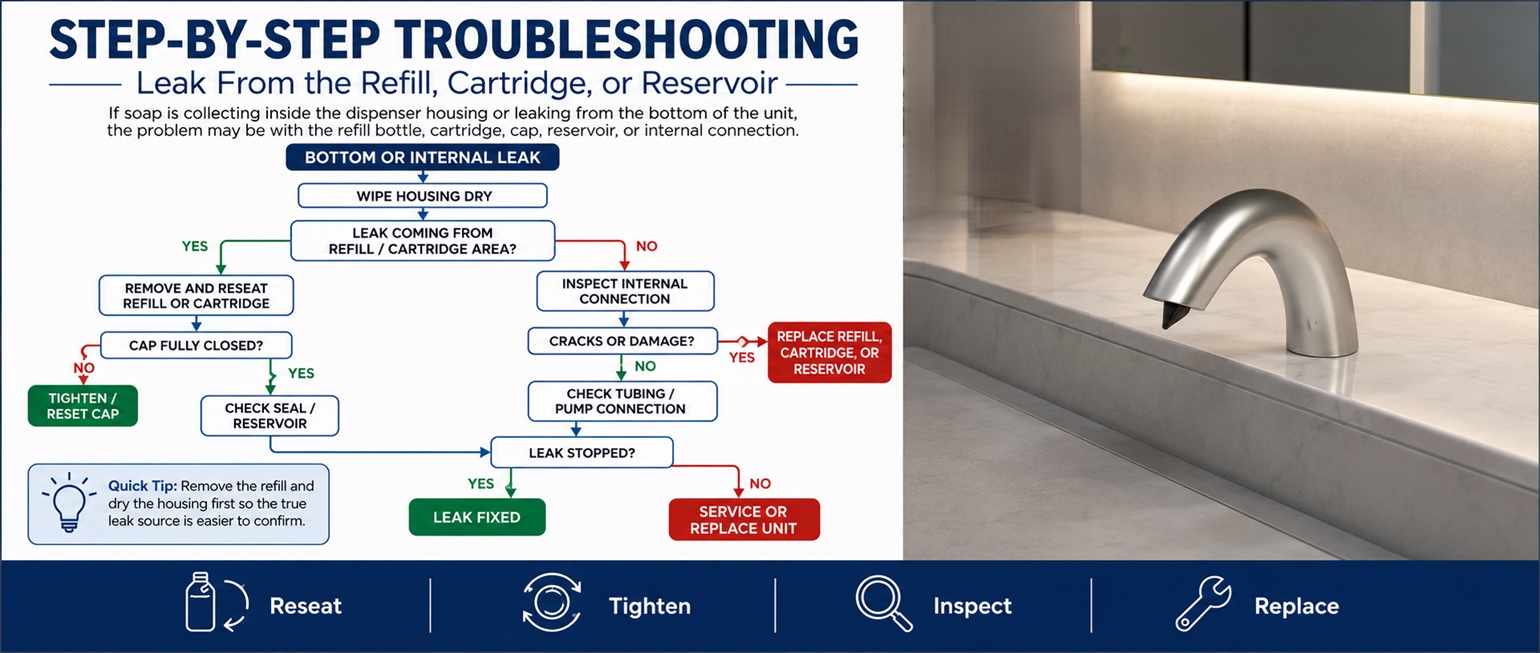
Leak From the Refill, Cartridge, or Reservoir
If soap is collecting inside the dispenser housing or leaking from the bottom of the unit, the problem may be with the refill bottle, cartridge, cap, reservoir, or internal connection.
Check the Refill Installation
Remove the refill and check whether it is damaged or cracked.
Make sure the refill is compatible with the dispenser.
Confirm that the cartridge outlet is fully seated into the pump connection.
Check whether the refill cap or valve is loose.
Replace any refill that leaks when removed from the dispenser.
Check the Internal Reservoir
Look for cracks in the tank or bottle.
Do not overfill the reservoir.
Make sure the lid or cap closes securely.
Clean old soap buildup around the opening.
Use fresh soap that matches the dispenser type.
A refill or reservoir leak should be fixed quickly to prevent soap from reaching batteries, sensors, electronic components, or mounting surfaces. Soap residue inside the housing can also attract dirt and make future maintenance harder.
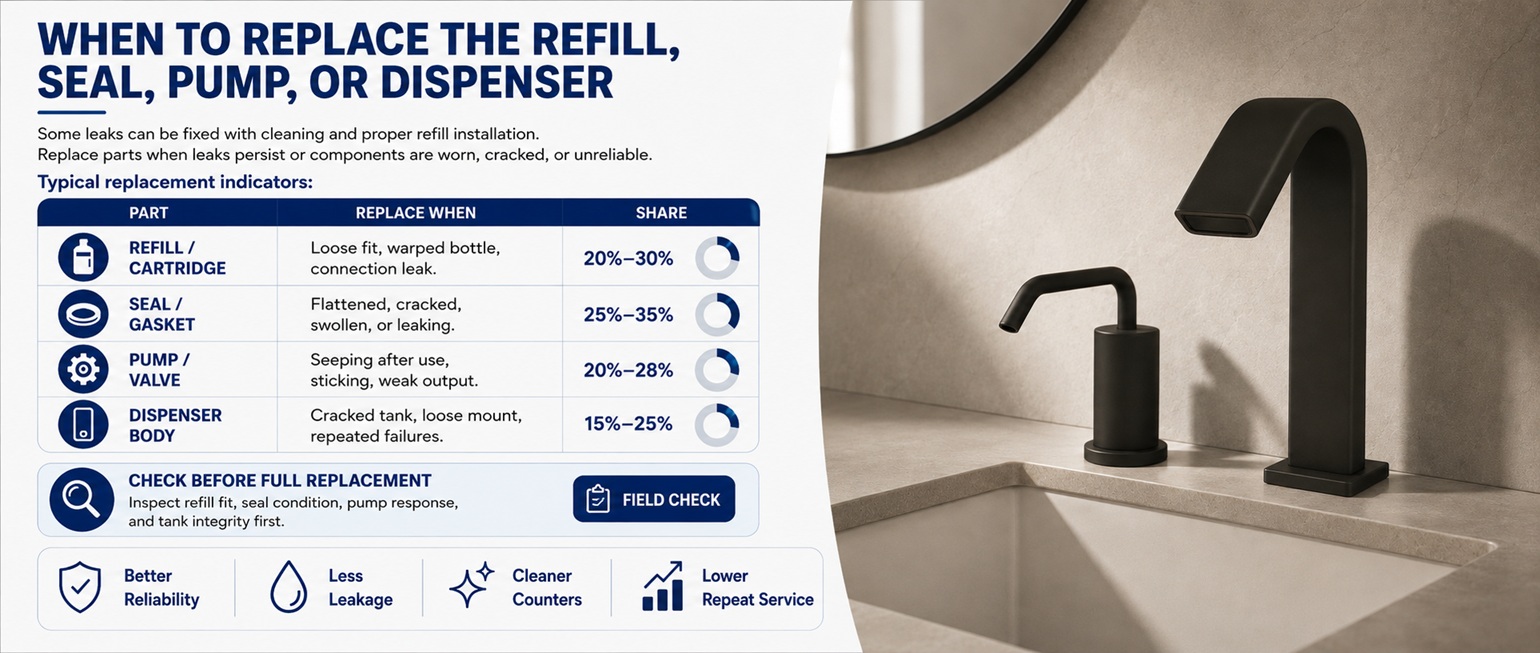
When to Replace the Refill, Seal, Pump, or Dispenser
Some soap dispenser leaks can be corrected with cleaning and proper refill installation. Other leaks indicate a worn seal, damaged pump, cracked tank, or dispenser that is no longer suitable for reliable use.
Replace the Refill When:
The cartridge or bottle leaks outside the dispenser.
The refill cap, outlet, or valve is cracked.
The refill does not lock securely into the dispenser.
The soap bag, bottle, or reservoir has collapsed or split.
The refill is not compatible with the dispenser model.
Inspect or Replace the Pump When:
The nozzle drips after every activation.
The pump does not shut off cleanly.
Soap leaks from the pump connection.
The dispenser alternates between clogging and dripping.
The pump housing shows cracks or residue buildup.
Replace the Dispenser When:
The reservoir or internal housing is cracked.
Soap repeatedly leaks into the battery or sensor area.
The dispenser continues leaking after cleaning and refill replacement.
The unit is worn from heavy commercial use.
The dispenser creates ongoing maintenance or safety concerns.
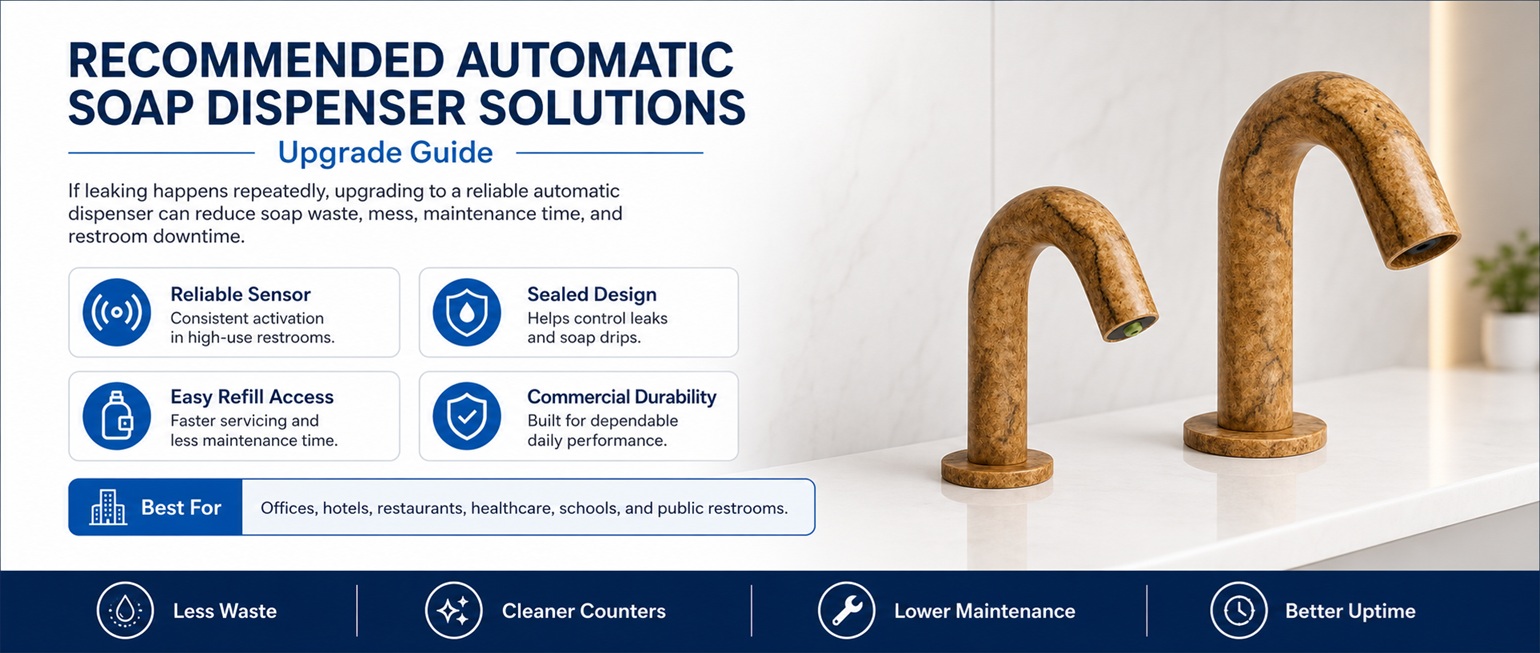
Recommended Automatic Soap Dispenser Solutions
If your soap dispenser is leaking repeatedly, upgrading to a reliable automatic soap dispenser may help reduce mess, maintenance time, soap waste, and restroom downtime. This is especially important in commercial restrooms where consistent performance and cleanliness matter.
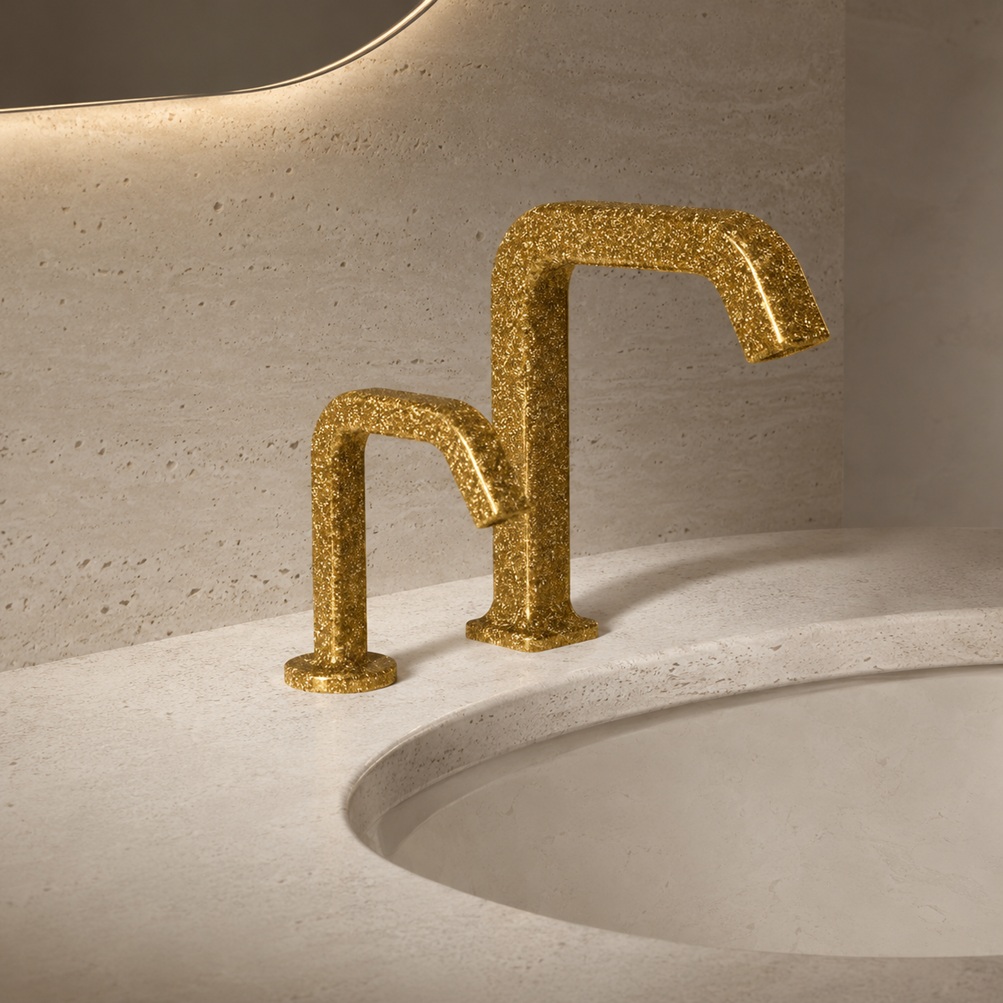
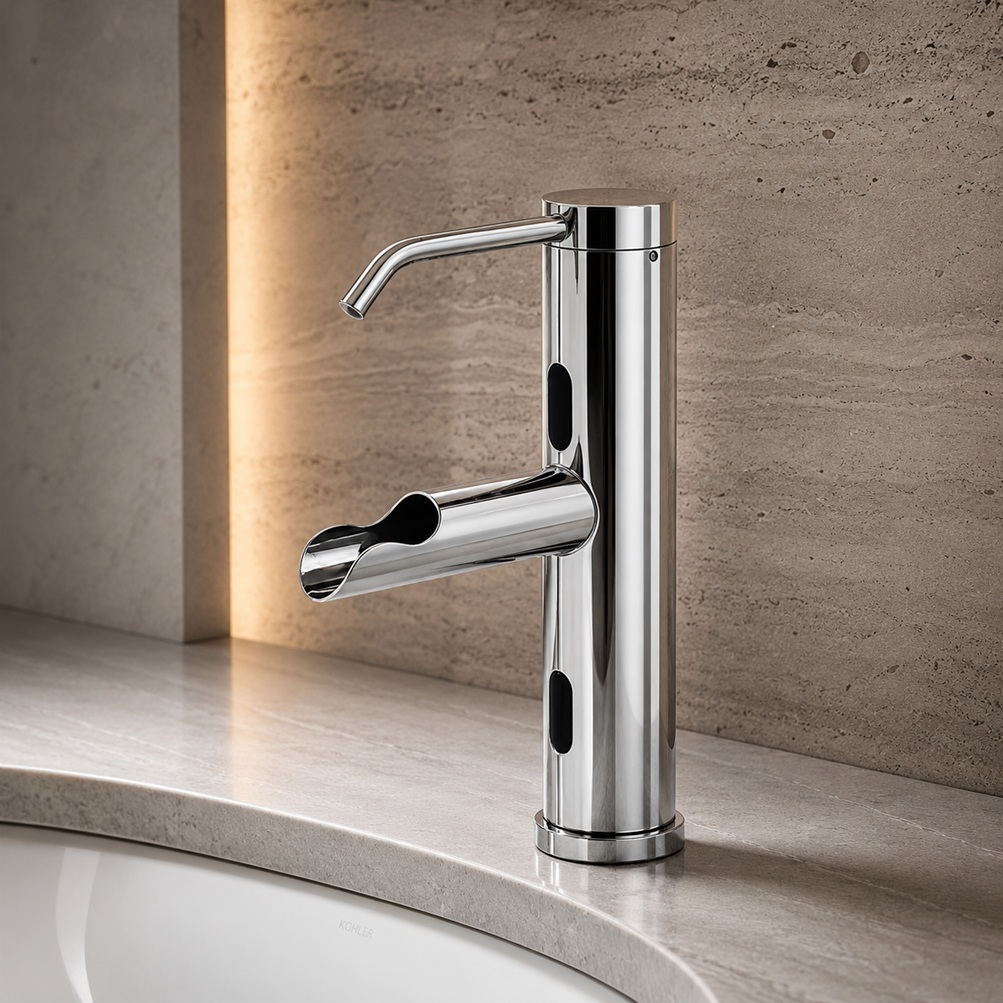
For commercial projects, choose automatic soap dispensers with durable construction, secure refill systems, dependable pump control, compatible soap options, and finishes that coordinate with touchless faucets and restroom fixtures.
Leaking can sometimes be connected to soap flow, refill installation, nozzle clogging, or sensor activation. Use these related guides to diagnose the complete issue.
A soap dispenser may leak because of a clogged nozzle, loose refill, damaged seal, cracked reservoir, overfilled tank, incorrect soap type, or worn pump shutoff mechanism.
Why does my soap dispenser drip after use?
Dripping after use is often caused by dried soap around the nozzle, soap that is too thin, trapped residue, or a pump valve that is not closing cleanly after each dispensing cycle.
Can overfilling cause a soap dispenser to leak?
Yes. If a refillable reservoir is filled above the recommended level, soap may spill into the housing or leak when the cover is closed. Always leave the proper space as directed by the dispenser instructions.
Can the wrong soap cause leaking?
Yes. Soap that is too thin may drip from the nozzle, while soap that is too thick can clog the outlet and cause delayed leaking. Use the soap type recommended for your dispenser.
How do I stop soap from leaking inside the dispenser?
Remove the refill, clean the housing, check the cap and seal, reinstall the refill securely, and inspect the reservoir or cartridge for cracks. Replace damaged refills or seals when needed.
When should I replace a leaking soap dispenser?
Replace the dispenser if it continues leaking after nozzle cleaning, correct refill installation, seal inspection, and proper soap use. Replacement is also recommended if soap reaches the electronics, batteries, or sensor area.
Need a Cleaner Automatic Soap Dispenser Solution?
If your soap dispenser is leaking repeatedly, choosing a dependable automatic soap dispenser can help reduce soap waste, improve restroom appearance, and support easier maintenance in high-traffic environments.