While designing a restroom, the faucet is an important design element that
helps enhance the overall look. But not only should a faucet for restrooms look good, but it should also be functional and durable.
Choosing the best faucet for
restrooms is crucial to ensure that your guests have a pleasant experience while using the facilities.
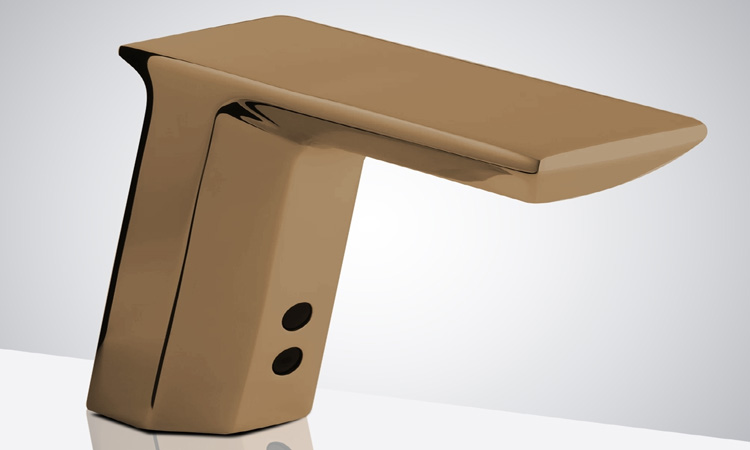
Best Faucet For Restrooms In Bronze
Bronze has become the go-to finish for many interior designers as it adds a touch
of warmth to any space. This product has a sleek modern design that fits perfectly with any decor style, and its single handle allows for easy temperature and flow control. The faucet is also WaterSense labeled, meaning it uses less water without sacrificing performance.
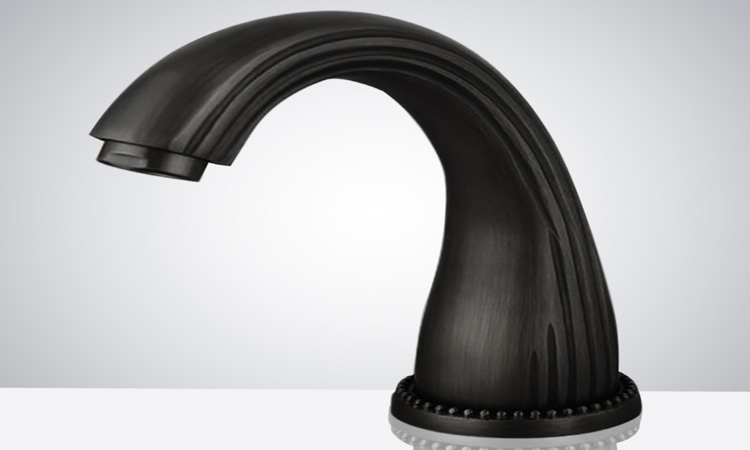
Best Industrial Touchless Faucets For Public
Restrooms
In public restrooms like industries, touchless faucets are becoming increasingly
popular due to their hygienic benefits. This touchless faucet is a great choice for industrial settings. It can measure the exact amount of water needed, which saves water and reduces costs.
Fontana Marsala Motion Sensor Faucet For Restrooms
In Chrome
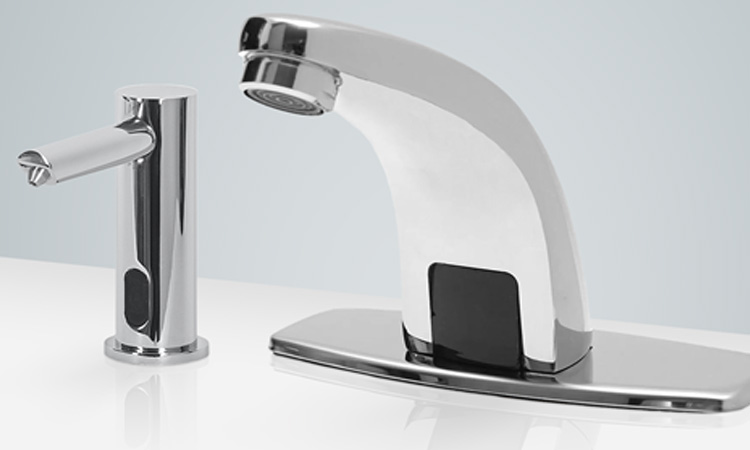
For those who want a touch of luxury in their restroom, the Fontana Marsala
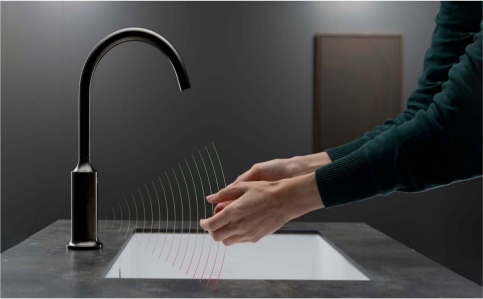
Motion Sensor Faucet in Chrome is a great option. Its modern design features a beautiful chrome finish that complements any decor style. The motion sensor technology adds a high-tech touch while promoting hygiene
Choosing the best
faucet for restrooms will enhance the overall look of your restroom, giving a great experience for your guests.
oooooooooo
Commercial Restroom Specification Guide
Best Faucet for Restrooms
The best commercial restroom faucet must support more than appearance. It should coordinate with the basin, deliver a controlled handwashing stream, remain accessible to maintenance personnel, withstand repeated cleaning, and respond consistently throughout daily use. This guide compares bronze, industrial touchless, and contemporary chrome sensor faucet options for hospitality, healthcare, education, corporate, airport, industrial, and public restroom projects.
A restroom faucet performs as part of a coordinated plumbing and architectural assembly. Water pressure, spout geometry, basin shape, sensing range, temperature strategy, mounting position, electrical access, and routine maintenance all influence how well the fixture operates after installation.
A faucet may appear suitable in a rendering yet produce excessive splash if the stream strikes a steep bowl surface. A touchless faucet may also respond inconsistently if its infrared field reflects from polished materials or if nearby lighting interferes with detection. These conditions should be addressed during specification rather than after the restroom enters service.
Design rule: Select and test the faucet, basin, flow device, drain position, power source, and service opening as one handwashing system.
Read More
The plumbing drawings should identify the water supply arrangement, shutoff location, power route, transformer or battery position, mixing method, and clear service zone. Millwork and countertop details should preserve access without requiring destructive removal.
Closeout documents should include installation instructions, wiring information, parts diagrams, cleaning limitations, commissioning settings, warranty information, and replacement component references.
Commercial Performance
What Defines a Good Faucet?
Stable Detection
Sensor fixtures should activate consistently without unnecessary triggering from mirrors, polished surfaces, lighting, or nearby movement.
Read More
Commissioning should verify the sensing field under actual room lighting and with the final basin, backsplash, mirror, and accessory arrangement installed.
Controlled Flow
The stream should support effective handwashing while limiting splash, uncomfortable velocity, excessive run time, and avoidable consumption.
Read More
Flow behavior depends on the outlet device, supply pressure, spout reach, outlet height, bowl depth, drain position, and user hand placement.
Durable Surfaces
The faucet finish should withstand routine cleaning while maintaining visual consistency with the room accessories and exposed hardware.
Read More
Cleaning instructions should identify approved products and prohibit abrasive pads, aggressive chemicals, and prolonged cleaner contact where these could damage the surface.
Accessible Use
Fixture placement should coordinate with reach, mounting height, clear floor space, knee clearance, and the complete lavatory assembly.
Read More
Accessibility should be checked across the entire sink station rather than evaluating the faucet independently from the counter, bowl, mirror, and approach space.
Serviceable Parts
Filters, batteries, transformers, solenoids, aerators, shutoff valves, and control modules should remain accessible after construction.
Read More
A service opening should be large enough for inspection, connector access, component replacement, and isolation of the individual fixture.
Lifecycle Value
Reliable operation and efficient servicing may offer better long term value than selecting a fixture solely on initial purchase price.
Read More
Lifecycle evaluation should account for battery labor, spare parts, recurring service calls, downtime, water use, finish care, and component accessibility.
Warm Architectural Finish
Bronze Restroom Faucet
Bronze finishes bring visual warmth to hospitality, executive, restaurant, boutique, and design focused washrooms. They coordinate particularly well with natural stone, warm porcelain, timber details, earth toned surfaces, and transitional interiors.
The finish should be reviewed together with the cleaning program. Aggressive chemicals, abrasive pads, and prolonged cleaner contact can affect decorative surfaces. Project teams should coordinate the faucet with drains, dispensers, mirrors, grab bars, door hardware, and other exposed metals.
Best ApplicationHospitality, executive, restaurant, and boutique restrooms
Design CharacterWarm, refined, transitional, and architectural
Planning FocusFinish coordination and cleaning compatibility
Field ReviewFlow pattern, basin splash, and valve access
Read More
A bronze faucet can serve as a focal point or blend into a complete warm metal package. The selected shade should be compared directly with drains, dispensers, mirror frames, partitions, lighting, and door hardware because manufacturers may use different terminology for similar finishes.
For commercial use, the maintenance manual should document acceptable cleaning agents and establish a routine that removes residue without dulling or chemically altering the surface.
Industrial facilities, schools, transportation hubs, stadiums, manufacturing buildings, and public restrooms require fixtures designed for frequent activation and straightforward maintenance. Touchless operation removes the need to manipulate a handle and limits water flow to the active handwashing period.
The sensing field should be checked against basin reflectivity, nearby partitions, mirrors, lighting conditions, and the normal user approach. Technicians should also have clear access to the power source, inlet filter, solenoid, shutoff valves, and temperature control components.
Best ApplicationFactories, terminals, schools, stadiums, and public facilities
Primary BenefitHands free activation with controlled operating time
CommissioningSensor range, flow, timeout, pressure, and basin response
MaintenancePower, strainers, aerator, sensor window, and solenoid
Read More
High use sites should standardize compatible batteries or power modules, maintain critical replacement parts, and record recurring service issues. Repeated false triggering may indicate an environmental condition rather than a failed sensor.
Commissioning should include repeated hand approaches from different angles, automatic shutoff verification, leakage inspection, stream alignment, splash observation, and confirmation that the fixture returns to standby correctly.
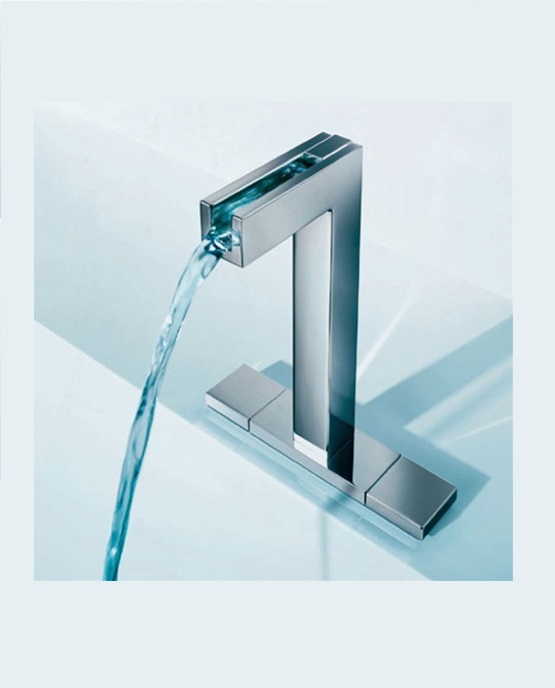
The Fontana Marsala motion sensor faucet offers a clean contemporary profile for projects requiring a bright and widely coordinated finish. Chrome pairs naturally with stainless accessories, framed mirrors, white fixtures, cool toned stone, and modern lighting.
Its hands free operating concept supports commercial restroom planning while maintaining a familiar appearance. Designers should confirm the sensing zone, mounting space, basin geometry, power access, shutoff arrangement, and project water temperature strategy before installation.
Best ApplicationCorporate, healthcare, education, hospitality, and public buildings
Finish CharacterBright, neutral, modern, and widely coordinated
User ExperienceHands free activation with a familiar commercial finish
Field ReviewSensor alignment, splash control, and power access
Read More
Chrome surfaces can support a consistent project language when combined with stainless or polished accessories, but maintenance teams should still follow approved cleaning instructions to minimize spotting and surface degradation.
The faucet outlet should align with the active handwashing area of the basin. A stream landing too close to the rear wall, drain assembly, or front edge can increase splash and reduce user comfort.
These commercial configurations illustrate several finish and fixture options for public, hospitality, institutional, corporate, and industrial restroom projects.
Chrome Sensor Faucet
A clean deck mounted format for public, corporate, hospitality, and institutional washrooms.
Read More
Chrome provides a familiar commercial appearance and coordinates easily with common restroom accessories and exposed hardware.
Bronze Commercial Finish
A warm metal option for boutique, executive, restaurant, and hospitality settings.
Read More
Physical finish samples can help project teams compare bronze tones with surrounding materials before ordering multiple fixtures.
Marsala Chrome
A polished touchless option for offices, healthcare, hospitality, and public buildings.
Read More
The basin, sensing field, power access, and outlet position should be coordinated before installation.
Public Restroom System
A sensor operated concept for high use institutional and public facilities.
Read More
Public restroom projects should prioritize repeatable operation, service access, spare parts, and straightforward isolation of individual fixtures.
Deck Mount Automation
A compact automatic faucet format for repetitive commercial handwashing cycles.
Read More
Commissioning should verify sensing response, automatic shutoff, stream alignment, leakage, and power access.
Architectural Bronze
A design focused finish for premium washroom and hospitality interiors.
Read More
The finish should be coordinated with drains, dispensers, mirror frames, partitions, and door hardware.
Project Comparison
Faucet Selection Matrix
Use this matrix for preliminary planning. Final selection should be verified against current product documentation, project requirements, basin geometry, available pressure, electrical coordination, accessibility, and maintenance procedures.
Factories, schools, terminals, stadiums, public buildings
Offices, healthcare, education, hospitality, public facilities
Finish Planning
Coordinate warm metals and approved cleaners
Prioritize durability and simple service access
Coordinate with chrome and stainless accessories
Commissioning
Flow, temperature, and basin compatibility
Sensor field, shutoff timing, pressure, and power
Sensor response, reflections, and stream alignment
Maintenance
Finish care and valve access
Power, strainers, aerator, sensor, and solenoid
Sensor window, outlet, power module, and finish care
Read More
The most suitable faucet is determined by the complete operating environment. A premium decorative finish may be appropriate for a hotel restroom, while a transportation terminal may place greater value on service access, standardized components, and power resilience.
Illustrative Planning Model
Lifecycle Priorities
The chart is a specification planning model rather than manufacturer test data. Adjust the weighting according to building traffic, maintenance staffing, operating conditions, water cost, finish expectations, and project objectives.
Operational Reliability
95%
Service Access
91%
Water Control
87%
Sensor Stability
84%
Finish Durability
76%
Initial Cost
55%
AEC Workflow
Five Step Specification
Define Use
Document the building type, traffic level, user population, hours, and potential abuse exposure.
Set Performance
Establish activation, flow, power, shutoff behavior, finish, and temperature strategy.
Provide service routes to filters, valves, solenoids, batteries, wiring, and mixing devices.
Commission
Test activation, shutoff, flow, splash, temperature, leakage, and repeatability.
Read More
Commissioning records should identify the tested fixture, date, power condition, sensor behavior, flow observation, leakage status, temperature result, and any adjustment made before turnover.
Facilities Operations
Maintenance Schedule
Interval
Recommended Review
Warning Signs
Routine Cleaning
Wipe the faucet body and sensor window using approved products.
Residue, haze, chemical spotting, or delayed detection.
Weekly
Observe activation, shutoff, flow shape, splash, temperature, and leakage.
False triggers, weak flow, dripping, or extended run time.
Monthly
Inspect the outlet, visible connections, shutoff valves, and power indicators.
Mineral buildup, loose fittings, low flow, or low power indication.
Quarterly
Review service tickets, clean strainers where required, and test representative fixtures.
Recurring clogging, sensing inconsistency, or pressure imbalance.
Annually
Audit high use faucets, verify spare parts, inspect power systems, and update records.
Repeated downtime, missing components, or incomplete service history.
Read More
Maintenance frequency should increase where traffic is extreme, water contains significant mineral content, or fixtures are exposed to frequent cleaning and disinfecting cycles.
Recurring symptoms should be logged by location so facility teams can distinguish product failure from environmental conditions, water quality problems, power issues, or installation errors.
Technical References
Authority Resources
Use these sources for plumbing, accessibility, water efficiency, public health, and green building coordination. Each resource opens in a new tab.
What faucet is best for a high traffic public restroom?
A commercial touchless faucet is often appropriate because it supports hands free activation and automatic shutoff. Final selection should also consider sensor stability, power access, basin geometry, service components, pressure, vandal exposure, and maintenance capability.
Is bronze suitable for commercial restrooms?
Bronze can work well in hospitality, executive, restaurant, boutique, and design focused washrooms. Confirm that the fixture construction and finish are compatible with the expected traffic, cleaning products, and maintenance routine.
Why does basin geometry affect faucet performance?
The bowl affects both sensing and water behavior. Reflective surfaces can influence infrared detection, while shallow or steeply curved basins can increase splash. Spout reach, outlet height, drain position, flow pattern, and sensing range should be evaluated together.
What causes inconsistent touchless activation?
Potential causes include weak power, a dirty sensor window, reflective finishes, mirrors, direct lighting, incorrect sensing range, loose wiring, obstructed strainers, pressure variation, or incomplete commissioning.
Should commercial faucets use batteries or hardwired power?
Battery power can simplify retrofit work, while transformer or hardwired operation can reduce battery management labor in high use buildings. The decision should consider traffic, infrastructure, service access, outage planning, and the approved product configuration.
How can faucet splash be reduced?
Coordinate spout reach, outlet height, flow device, basin depth, bowl slope, drain position, pressure, and rated flow. A physical mockup or representative field test is useful when a faucet and basin combination has not previously been validated.
What should be included in closeout documentation?
Include current product data, installation instructions, wiring information, parts diagrams, approved cleaning guidance, maintenance procedures, warranty documents, commissioning results, and replacement component contacts.
How frequently should commercial faucets be inspected?
Routine visual and operational checks should be incorporated into restroom servicing. Preventive maintenance frequency should then be adjusted according to traffic, water quality, power configuration, cleaning practices, and recurring service history.
Commercial Project Support
Specify by Building Need
Compare activation, construction, finish, basin compatibility, water delivery, accessibility, power, and service access before selecting faucets for a multi unit restroom project.